

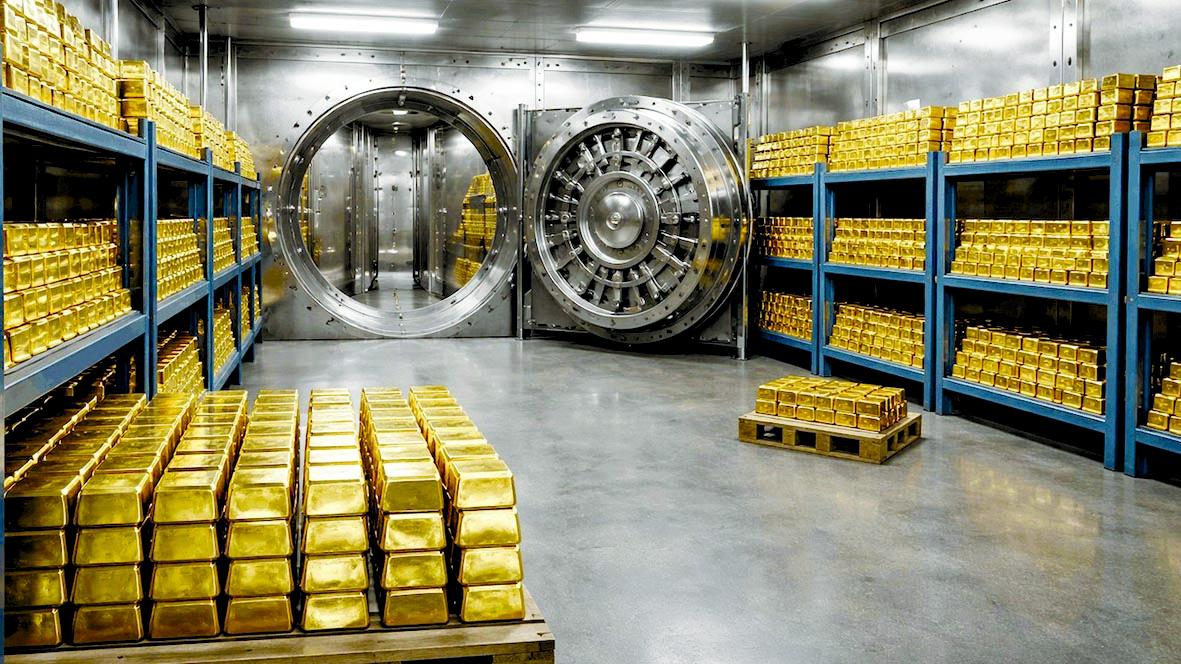
Qatar’s gold reserves rose to about 58.5 billion riyals as of last January, an increase of 22 billion riyals from January 2025, when gold reserves amounted to about 36.5 billion riyals.
According to World Gold Council data and economic reports issued in early 2026, the State of Qatar has strengthened its gold reserves to reach about 116 tons, as Qatar is among the Arab countries with the highest possession of gold.
During the year 2025, Qatar expanded the purchase of gold reserves, bringing its stock – reserves – of the yellow metal to the equivalent of about this value – 58.5 billion riyals -.
The Qatar Central Bank revealed in its reports on reserves that gold reserves were 7.5 billion riyals in 2019, rose to 12.5 billion riyals in 2020, and remained the same in 2021, but rose to about 20 billion riyals in 2022, then continued to rise to 24.4 billion riyals in 2023.
This value continued in 2024, but rose to about the equivalent of 36.5 billion riyals in January 2025, reaching 58.5 billion riyals last January.
Financial and economic experts confirm that Qatar’s desire to buy and store gold confirms its ability to secure and protect the economy from any crises or challenges, and they stress that the current period is witnessing a demand by governments, investment funds, sovereign funds and individuals to buy and store gold, and invest in the yellow metal, as it is the optimal investment in light of the current global crises, and the most attractive safe haven throughout history, which achieves financial returns, without any risk compared to other financial, commercial and real estate investments.
Financial and economic expert Abdullah Al Khater confirms that Qatar’s expansion in buying gold over the past year represents good investment opportunities for both governments and individuals, and it is a policy followed by major countries, as the yellow metal is considered a store of value without any risk at all, as gold prices do not decline, especially in the long term.
Al Khater adds that there are investment opportunities that are good during crises, and purchasing gold and including it with countries’ international reserves is considered one of the most important of these opportunities. Therefore, the state has followed a flexible reserve management policy, based on monitoring global markets and choosing investments that are not affected by financial and economic fluctuations.
Al Khater points out that Qatar’s gold reserves have increased significantly over the past two years and are expected to rise in the current year 2026. He confirms that investing in gold prevents risks to Qatar’s international reserves, and also contributes to the rise in the value of these reserves, as a result of the rise in gold prices in global markets.
He pointed to the successful management of gold reserves followed by the Qatar Central Bank, as the bank increased its gold reserves with expectations of an increase in its prices, which is considered a protection for the Qatari economy against any expected fluctuations in global markets.
Expectations of rising prices
For his part, Abdul Aziz Al-Emadi, former Vice President of the Qatar Chamber of Commerce, confirms the Qatar Central Bank’s keenness to invest well in the international reserve, including gold reserves, as they are the most important safe havens. He adds that the rise in this reserve confirms the strength and durability of the Qatari economy, and that the state has succeeded in steering the ship during crises, including Corona and the current fluctuations in global markets, as it continued to implement the plans it had decided before.
Al-Emadi explains that, according to international financial institutions, gold prices are expected to record increases during the current year, and to continue, as futures contracts for the precious metal are expected to rise, with investors becoming increasingly concerned about interest rates by the US Federal Reserve.
The Qatar Central Bank confirms that it manages the foreign reserves, including gold balances, in a careful manner, in order to maintain the exchange rate of the riyal against the dollar and other currencies. The Central Bank adds that the basic principles of the investment policy include preserving capital and maintaining the availability of liquidity, in addition to ensuring the achievement of an appropriate return for the reserve’s investment portfolio, including foreign currencies, bonds, securities and gold. The reserve is managed by the bank’s investment committee, which is chaired by His Excellency the Governor. The committee is responsible for directing the management of the reserves, and the responsibility for monitoring the financial portfolio. For the bank, in addition to ensuring investment and diversification in financial instruments that are compatible with the objectives of the general investment policy and in accordance with the investment policy followed by the bank.