


The World Health Organization has officially declared the elimination of human sleep, known as the Human Human Tribal disease, as a general health problem in the country, to become the tenth country in Africa in Africa that achieved this achievement.
The announcement came on June 16, 2025, while a certificate of recognition of the elimination of the disease was delivered during a national celebration in the capital, Nairobi, on Friday, August 8, in the presence of government officials and international health partners.
Years of field work and monitoring
Sleep disease, caused by the Tribanuanuma parasites, which was transmitted by the tsi tsi fly bites, posed a fatal threat to the population of rural areas near the natural reserves such as Masai Mara, where the population relies on agriculture, fishing and livestock raising.
Thanks to efforts that lasted, Kenya has been able to reduce the number of cases to semi -non -existent levels, without registration of any local situation since 2009, while the last expatriate case dates back to 2012.
Health interventions included the establishment of 12 monitoring centers in 6 highly dangerous provinces, as well as carrier anti -fly campaigns and improving access to diagnosis and treatment.
Official praise and international partnerships
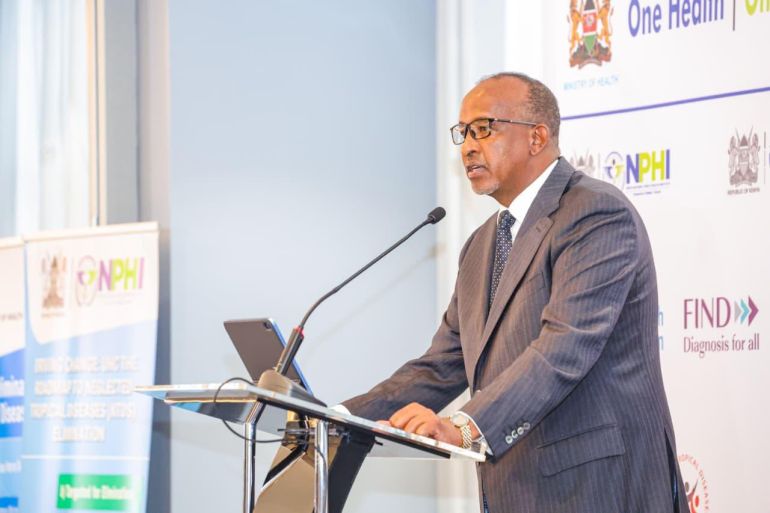
The Minister of Health, Adana, described the event as “the beginning of a new stage in fighting diseases,” stressing that “success is achieved thanks to the concerted efforts, the empowerment of health workers, and the investment in smart health systems.”
For his part, the Director General of Health, Dr. Patrick Amot, stressed the importance of maintaining the gains achieved, saying that “the celebration is worth, but the road does not end here. Continuous monitoring, good care, and community awareness remains necessary to prevent the return of the disease.”
After eliminating the disease
Despite the announcement of the elimination of the disease, parasites are still present in the environment, and this requires the continuation of preventive measures.
The Ministry of Health has announced a 5 -year monitoring plan, which includes maintaining the control of the TSI TESE fly even in low -risk areas, and training health workers to early detection of any possible cases.
In this context, the Secretary -General of Health, Mary Methoni, stressed that “this achievement enhances our belief that comprehensive health coverage is no longer a slogan, but has become an effective tool for change,” adding that the government “renews its commitment to combating other diseases that still affect citizens.”
The World Health Organization announced during previous periods that 9 African countries managed to eliminate “sleep disease”, namely: Togo in 2020, Benin and Cote d’Ivoire in 2021, Uganda and Equatorial Guinea in 2022, then Ghana in 2023, and Chad in 2024 next to Cameroon and Congo.
This achievement is a pivotal step towards the complete elimination of the disease on the continent, especially since the sleep disease was recorded thousands of injuries annually in the past decades, and leads to serious neurological disorders that may end with death if it is not treated in time.