

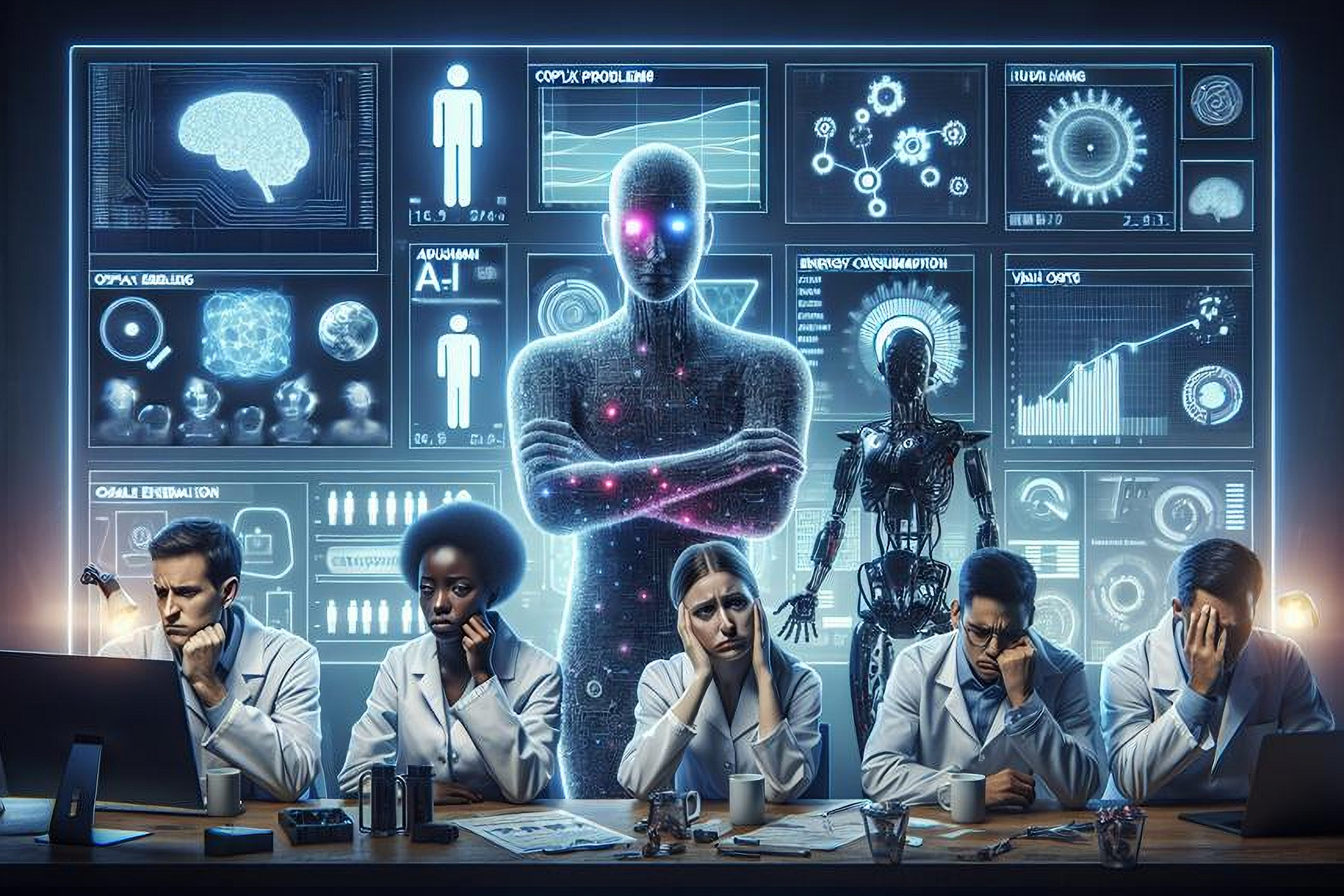
A new study revealed that the regular use of artificial intelligence may weaken the skills of health care workers.
Academics expressed their concern about this discovery due to the rapid spread of artificial intelligence in the health care sector.
The study was conducted by researchers from the Department of Diseases of the Digestive System, College of Medicine, Celsea Academy, Poland, and published in the Lancet Magazine for Digestive and Liver Diseases on August 11, and the Independent newspaper wrote about it.
The study dealt with health care workers who are testing an early signs of colon cancer.
Doctors conduct a test called colonoscopy to search for polyps, which are a developing diets in the inner lining of the colon, and they are considered a precedent former benign tumors, that is, they are not cancerous but can turn into cancer.
Through colonoscopy these scales can be detected and removed, and this prevents them from switching to bowel cancer.
The progress in artificial intelligence technology has led to the development of the computer detection systems with the help of computer, which was found to help these health care workers discover more polyps.
The researchers wanted to evaluate whether the continuous use of artificial intelligence leads to a decrease in performance when internal the endoscopy doctors of colonoscopy without artificial intelligence by analyzing the work conducted in Poland.
Artificial intelligence excels
The research team analyzed 1442 colonoscopy conducted by experienced doctors before and after the introduction of artificial intelligence systems in some centers in 2021.
The researchers reported that the rate of discovery of the polytheists decreased by 6% after the introduction of artificial intelligence into the endoscopy and non -auxiliary intelligence.
“As a science, this is the first study indicating a negative impact on the regular use of artificial intelligence on the ability of doctors to complete a patient related to medicine of any kind.”.
He added: “Our results are concerned due to the rapid spread of artificial intelligence in medicine, and we urgently need more research on the impact of artificial intelligence on the skills of healthcare professionals in various medical fields.”
He explained that they need to know the factors that may cause or contribute to problems when healthcare and artificial intelligence systems do not work well together, and to develop ways to fix or improve these interactions.
Omar Ahmed, a consultant of digestive system diseases, interventional endoscopy specialist, and clinical research fellow at the University College of London in a linked opening article: “These results reduce the current enthusiasm of the rapid adoption of artificial intelligence -based technologies, and the importance of studying the unintended clinical consequences carefully highlights, the study provides the first realistic evidence of the phenomenon of decreased skills, which may affect the results related With patients.