

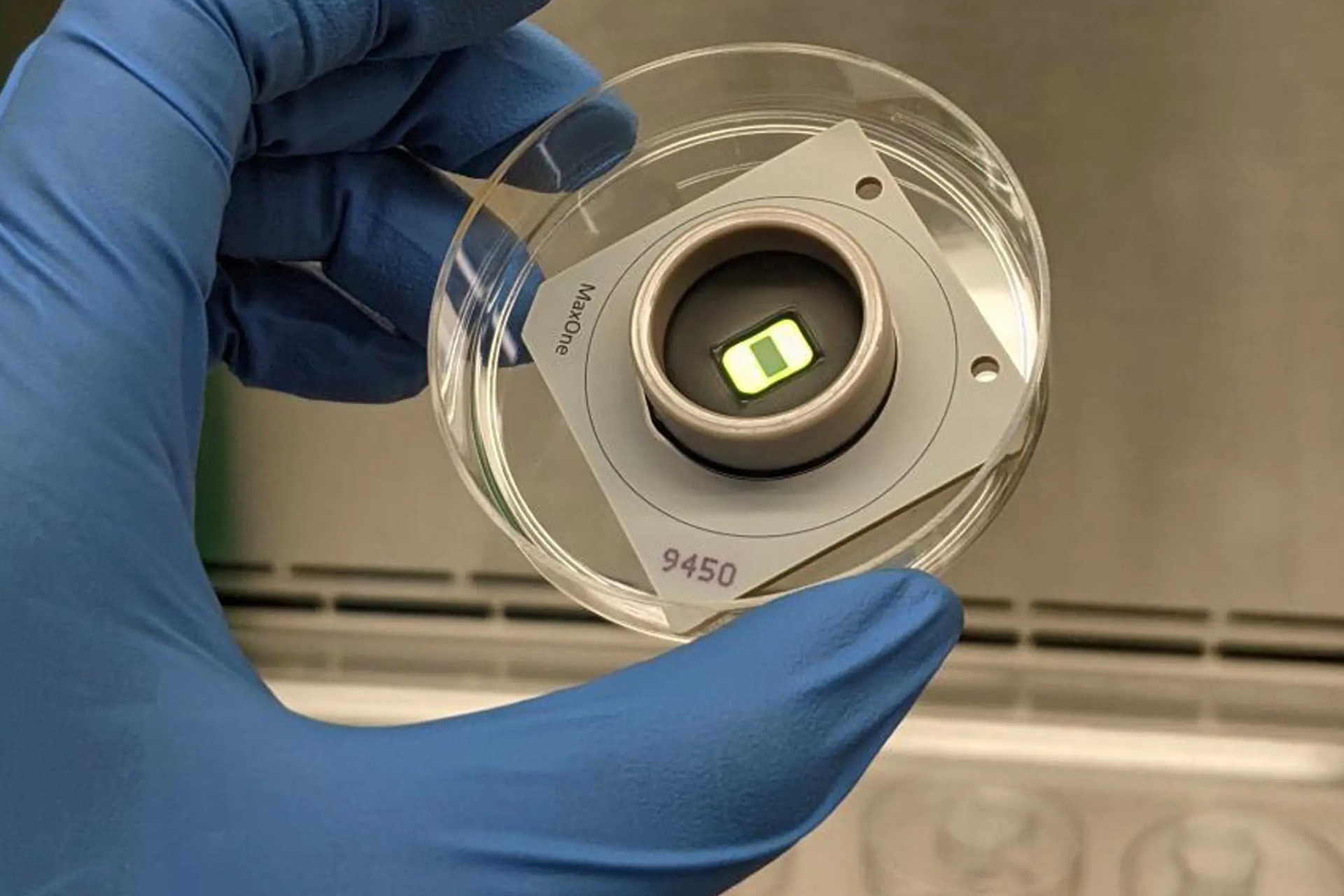
Researchers have proven that brain cells learn faster and perform complex retinal processes higher efficiency of machine learning, by comparing how both the synthetic biologically intelligence known as Dishbrain and advanced reinforcement learning algorithms.
Artificial biological intelligence integrates neurons planted in the laboratory from human stem cells with solid silicone to create a more sophisticated and sustainable form of artificial intelligence, and this study is the first of its kind.
The search was conducted under the leadership of Cortical Labs, a Melbourne -based startup in Australia, which created the first commercial biological computer in the world called “CL1” (CL1). The results of the study were published in the Cyborg and Bionic Systems magazine on August 4, and the Yurrick Alert website was written about it.
“What makes this study really a pioneer is that it is the first to set a criterion for direct comparison between synthetic biological systems and deeply enhanced learning. When learning opportunities are limited, which is a case closer to how animals and humans learn, these biological systems are not only adaptive, but do so with more efficient and effective, it is an exciting and modest result For both artificial intelligence and neuroscience. “
Deep learning technique is the most prominent manifestation of artificial intelligence, and it is based on developing artificial nervous networks that mimic in the way it works by the human brain, that is, it is capable of experimenting, learning and developing itself self without human intervention.
From neuroscience to artificial intelligence
Nerve cells planted in the laboratory are increasingly used as a pillar to explore information processing and basic learning forms, so that more advanced systems have been imagined as future smart devices with unique properties that may exceed industrial computing ability alone.
Exploring the patterns of dynamic interactions between neurons allows a deeper understanding of the mechanisms behind learning, and the temporal patterns and the strength of these interactions represents the network’s ability to encrypt, store and retrieve information.
Brett Kagan, the chief scientific official of the Cortical laboratories and the researcher participating in the study, commented: “Despite the great progress achieved in the field of artificial intelligence in recent years, we believe that real intelligence is not artificial, but biological. In this research we have begun to study whether the initial biological learning systems achieve performance levels comparable to the developed deep learning algorithms, and the results were the results. So far, very encouraging. Understanding how the nervous activity is linked to the treatment of information and intelligence, and in the end of the behavior, it is an essential goal for neuroscience, and this research paper represents an important and exciting step in this journey.
These visions are expected to have extremely important effects in various disciplines, from neuroscience to artificial intelligence, which may contribute to developing advanced learning algorithms and treatments for neurological disorders.
“The research studies conducted by Cortical Laboratory are paved the way for new emerging and exciting horizons in neuroscience, where laboratory nervous models are developed and used to address some aspects of the most complex brain function – learning and memory They are two main components of intelligence. The CL1 technology creates a very necessary platform for neuroscience research to understand brain function, innovation lies in its ability to provide a scale of intelligence through which neurological cell functions are determined in an interactive and dynamic manner, and this technique can be applied in the long term to study how nerve networks differ and their functions in diseases and neurological cognitive disorders.