

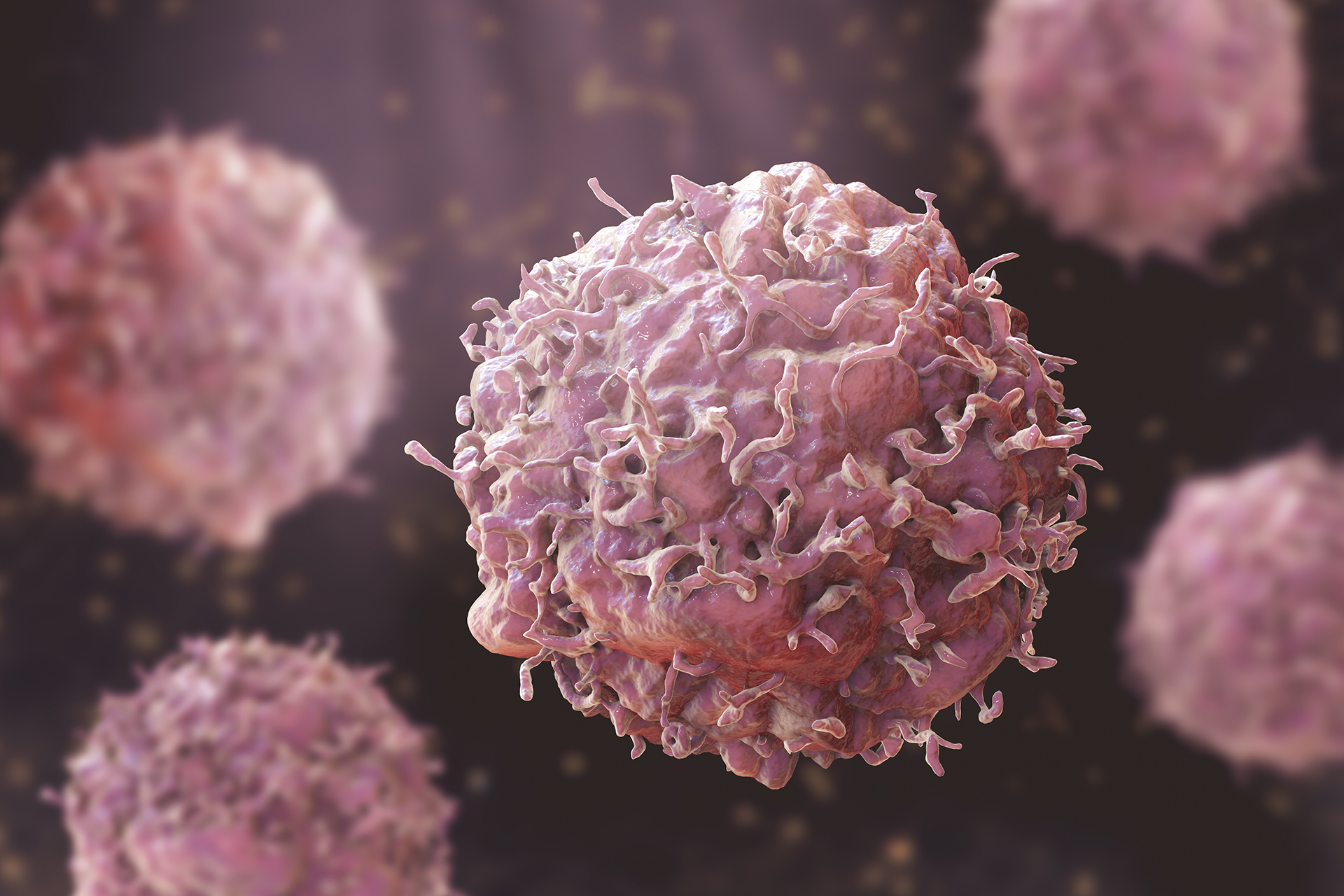
Researchers from the United States have discovered for the first time that cancer cells can escape anti -cancer medications by entering fibrous cells in the bone marrow and staying within them, a phenomenon that they described as a “cell inside a cell”.
Fibious cells are a type of cell that contributes to the formation of connective tissue, and it is a cellular cell that supports and connects tissues or other organs in the body.
The study was conducted by researchers from the Fox Chis Cancer Center in the United States, and its results were published in the Blood Neoplasia Journal on July 25, and the Yurrick Alert website was written about.
The results of this study may make a qualitative shift in the treatment of chronic lymphocytic leukemia and associated diseases.
Chronic lymphatic leukemia is one of the most common types of leukemia in adults, a type of cancer that begins in the early stages of some white blood cells in the bone marrow, and then transmitted to the blood.
The study lasted for 5 years, and Dr. Way was led by. Lin Wang, a doctorate in medicine, and the American College of Oncology, is a professor and scientist in the Department of Pathology and the Cell Signs Research Program and the Microscopic Environment in Fox Chase in the United States.
“Our discovery is that cancer cells are able to penetrate the bone marrow cells, which support cancer cells in their exact environment, a phenomenon that no one has talked about before.”
“This discovery helps to explain the reason for the continued suffering of chronic lymphatic leukemia from the disease, and we hope that our discovery will lead to treatments that eliminate the remaining disease better.”
Safe shelters
BTK, a category of anti -cancer medications, is the current standard treatment for chronic lymphocytes.
More than 90% of patients who treat these drugs show an initial response – they feel better and shrinking their tumors – but only 8% to 11% achieve a complete recovery.
This means that a large number of patients still have cancerous cells that make them vulnerable to relapse. Way and her team wanted to understand how the disease continued despite the good initial response to medicines.
The researchers analyzed the samples of the bone marrow from patients, and they saw live leukemia cells entering fibrous cells in the bone marrow in response to exposure to “BTK” inhibitors.
By registering the continuous independent movement of these cells, they were able to confirm the survival of the living cells alive within the fibroblasts, then the Way team proved that the cancer cells hidden inside the fibroblasts have higher rates of survival compared to the cells that remain outside after exposure to the drug.
“It seems as if the tumor cells are retreating from the street to a house where they are safer than bullies on the street, that is, medications,” said Way
Her team found that the way in which chronic lymphatic leukemia cells do this is by increasing the expression of CXCR4 (CXCR4) in response to exposure to BTK inhibitors.
It expresses the future of “CXCR4” future on the surface of the tumor cells, and the expression of the tumor cells makes a chemical gradient that attracts the tumor cells to fibrous cells that secrete bonds for the future, allowing cancer cells to enter fibrous cells.
Once Way and her team with the mechanism in which the tumor cells entered her “safe shelters”, they were able to clarify how doctors can adjust the treatment to prevent this.
“If we can withhold CXCR4, it will be like closing the door of the house as the tumor cells want to withdraw and hide, this can increase the full response rates through compound therapy using both BTK and CXR4 blockers.”
This discovery may also be applications that go beyond chronic lymphatic leukemia. Researchers have found a similar hiding behavior – a “cell inside a cell” – in gerban lymphoma, and they believe that this mechanism can apply to many types of cancer.