

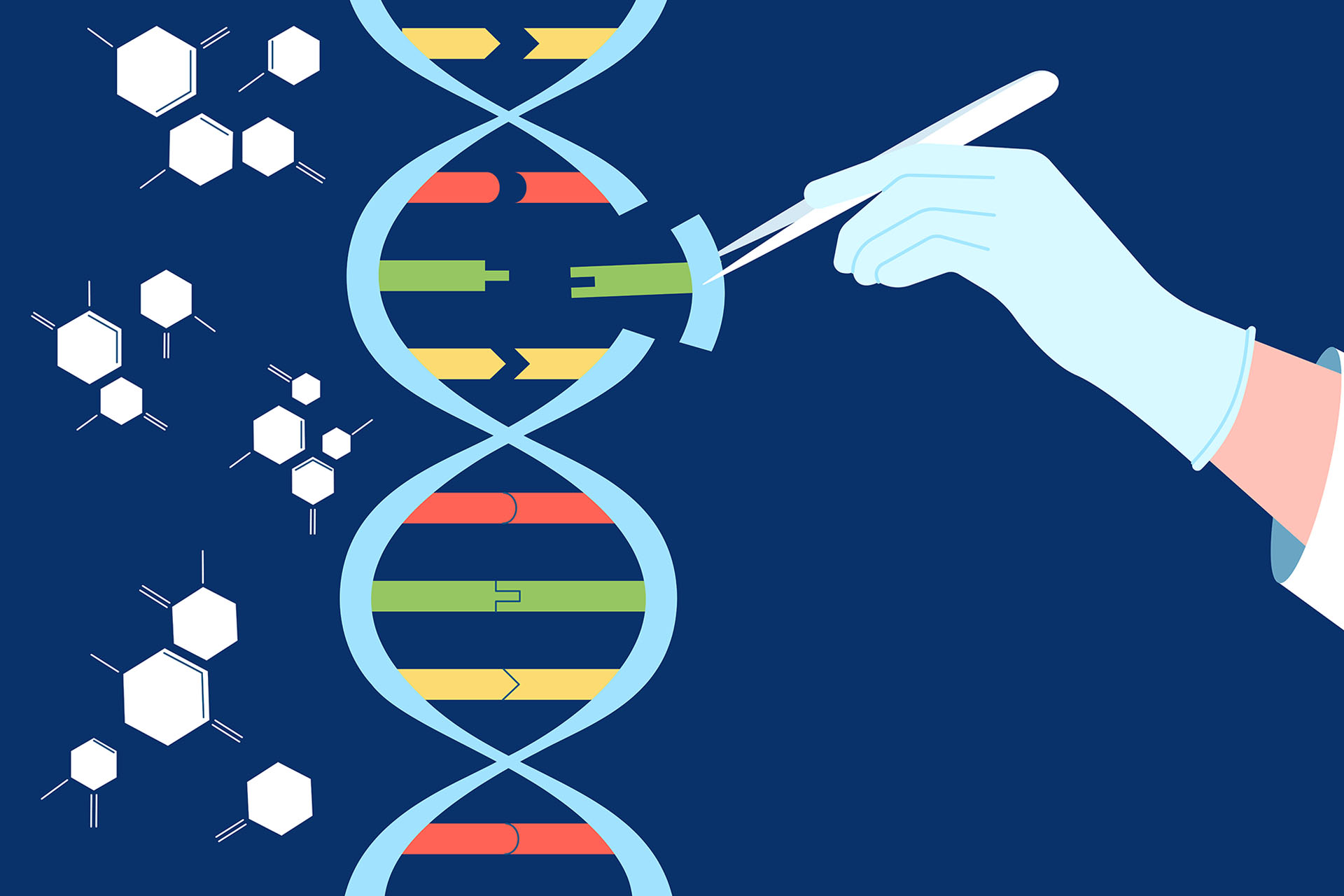
Researchers have developed a new generation of Krisper technology that gives a safer path to treat genetic diseases such as sickle cell anemia.
The new technology has developed researchers from the University of New South Wales, in cooperation with their colleagues in the United States at St. Jude Hospital for Children’s Research, Memphis, and published the results of their studies in the journal Nature Communications on July 27 and wrote on the Yurik Alert website.
Krisper technology is the basis of genetic liberalization technology that enables scientists to find flawed parts of DNA, often by replacing them with sound parts.
This technique harnesses a natural process observed for the first time in bacteria that fight gas viruses by “cutting” the DNA threads of the virus.
The first generation of Krisper laboratory tools by cutting the DNA sequences to disrupt defective genes, while the second generation allowed researchers to enlarge and correct individual letters in the genetic code, but both signs include cutting the genetic code, accompanied by the risk of unwanted changes that may cause other health problems.
As for the third generation – known as the liberation above the genetic – it is seen the surface of the genes in the nucleus of each cell in the body. Instead of cutting or adjusting the DNA to remove the defective genes, this method removes methyl groups associated with silent or inhibitors.
Emotlet anemia
The researchers say that the liberation can be used above the genetic to treat people with sickle cells -related diseases, which are genetic mutations that change the shape and function of red blood cells, which leads to chronic pain, organs of organs and a decrease in average life expectancy.
“The more DNA is cut off, the higher the risk of cancer. If you are being genetically treatment for a chronic disease, this is a great risk. But if we can provide a genetic treatment that does not include cutting DNA, we will avoid these potential risks,” says Professor Merlin Krosli, a study researcher and vice president of New South Wales.
The new method – instead of cutting – uses a modified Krisper system to connect enzymes that remove methyl collections of DNA, which effectively improves the ability of the intoxicated genes to work.
Scientists have discussed for decades whether methyl groups – which are small chemical groups that accumulate on DNA – are just waste that accumulates in the genome where genes are disrupted, or are they the real cause of the repression of genes.
The researchers have shown that removing these signs can restart genes, stressing that the counterpart group is not only related to genes, but is directly responsible for them.
The full picture
Jin -Globeen Jinn plays a decisive role in the delivery of oxidized blood to the developing fetus in the womb, and the researchers say that restarting it after birth can provide an excellent alternative solution to the defective adult Globin gene that causes sickle cell anemia.
Professor Crossley says: “You can liken the fetal gyloin gene to the child bike training wheels, we believe that we can restart it in people who need new wheels,” says Professor Crossley.
All works were conducted to date so far in a laboratory on human cells in a test tube at the New South Wales and Memphis University.
Professor Kate Quinlan, participating in the study, says this discovery is promising not only for people with sickle cell anemia, but also with other genetic diseases, as it avoids the operation of certain genes or stopping them by changing methyl groups cutting DNA.
She explained that they are excited about the future of genetic liberation, as their study shows that it enables them to enhance genetic expression without modifying the DNA sequence. The treatments based on this technique are likely to reduce the risk of negative, unintended effects compared to the first or second generation of Krisper technology.
A few years later – as soon as the tests are completed on animals and experiments on humans – doctors who use the new method of treating sickle cell anemia will start collecting some of the patient’s stem blood cells that produce new red blood cells.
They will use genetic liberation and in the laboratory to remove methayl chemical signs from the Jinn Globin Jinn for reactivation. After that, the liberated cells are returned to the patient, where they settled again in the bone marrow and begin to produce more efficient blood cells.