

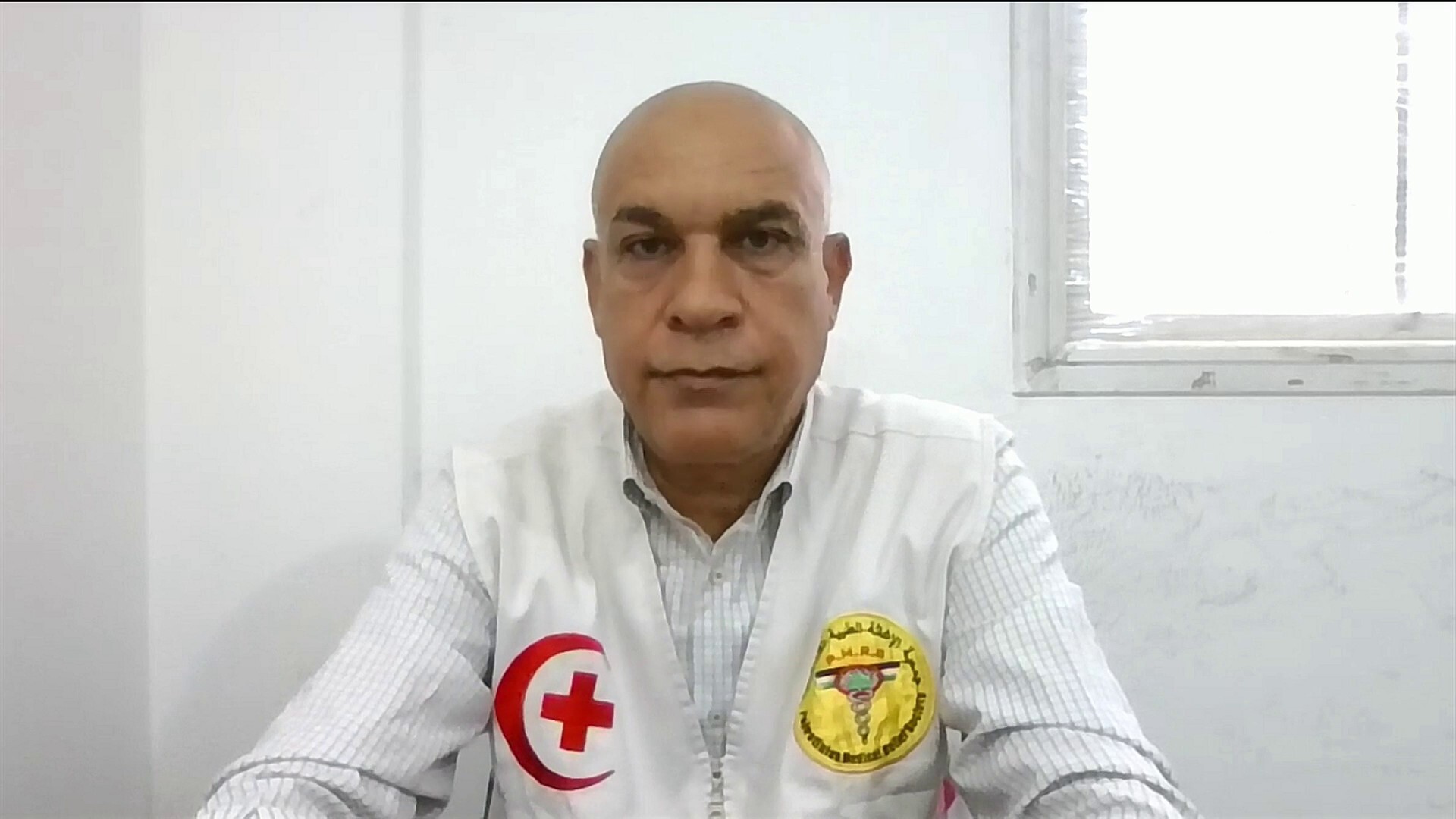
In light of the harsh humanitarian conditions that the Gaza Strip is experiencing after the end of the last war, the health sector is still suffering under the weight of the great destruction that befell its facilities and medical personnel, amid hopes that the upcoming aid will contribute to reviving what remains of this exhausted system.
Director of the Medical Relief Society in Gaza City, Dr. Muhammad Abu Aisha, said that the health system in the Strip is suffering from almost complete paralysis after the war burdened hospitals and health centers and put many of them out of service, indicating that recovery requires the introduction of urgent supplies to restart facilities and provide primary care.
Abu Aisha explained in his interview with Al Jazeera that primary health care – which includes services for pregnant women, children, and patients with chronic diseases – is facing a serious deterioration today, as the number of chronic patients in Gaza exceeds 350,000, while vaccination programs and preventive services are suffering from an almost complete cessation.
He stated that his organization lost more than 9 fixed centers that were completely destroyed, in addition to mobile clinics that constituted the first line of defense in providing health services to citizens, pointing out that returning these facilities to work represents an urgent priority that is no less important than operating hospitals.
Alarming levels of disability
Abu Aisha added that the shortage of medical supplies, laboratory and radiology equipment has reached alarming levels, which hinders the provision of any appropriate care for patients, and puts the health situation in Gaza on the verge of complete collapse unless the crossings are opened regularly to bring in the necessary supplies.
He pointed out that the medical teams were not spared the effects of the war, as the sector lost a large number of doctors, nurses, and health workers, including martyrs, injured, detainees, and missing persons, stressing that the targeting of the staff was systematic and aimed to paralyze the entire health system.
Abu Aisha explained that the acute shortage of medical competencies is directly reflected in the level of services, calling for the introduction of specialized crews and field hospitals to support local cadres who work in extremely difficult conditions and with limited capabilities.
He believed that the establishment of field hospitals and mobile clinics had become a necessity that could not be postponed, especially with the massive destruction that affected hospitals and centers throughout the Gaza Strip. He pointed out that his association operates a number of mobile clinics inside shelter centers and works in coordination with various health institutions to cover urgent needs.
He pointed out that the shortage of medicines that the sector has witnessed and the exacerbation of chronic diseases over the past two years makes cooperation between medical societies and hospitals a necessity to save what remains of the health system, which he described as “completely destroyed and requires collective efforts to revive it.”
Hope to come back
Despite the bleak scene, Abu Aisha expressed great hope for the return of life to Gaza, saying that the Strip possesses distinguished medical expertise capable of rising again if the necessary capabilities are available.
He stressed that Gaza has reached advanced levels in medicine in recent years despite the siege, and has witnessed kidney and corneal transplants and cardiac catheterization operations.
Abu Aisha added that the medical teams inside Gaza are still highly competent and committed, but they need support with modern devices, laboratories and equipment to rebuild a health system capable of facing the current challenges.
He stressed that Gaza’s health future is linked to providing sufficient capabilities to build hospitals and specialized centers, stressing the need to develop clear policies to revitalize society with health and nutrition, especially children who suffer from malnutrition and diseases resulting from lack of food and medicine.
The Director of Medical Relief stressed that saving the new generation from the effects of war and malnutrition is the most urgent task, and that Gaza is in dire need of specialized centers to treat these cases, adding that hope is still present thanks to the determination of workers in the field and their insistence on restoring life to a health system worthy of the people of the Strip.
A ceasefire is currently in effect in the Gaza Strip according to the agreement concluded in Sharm El-Sheikh, Egypt, on October 9, with the mediation of Qatar, Egypt, and Turkey, with the participation of the United States, two years after the Israeli genocide.
Despite the agreement, Israel did not stop launching air strikes and artillery shelling in the Gaza Strip. It also continued to close the Rafah crossing between the Palestinian Strip and Egypt, and aid trucks were still waiting on the Egyptian side of the crossing.