

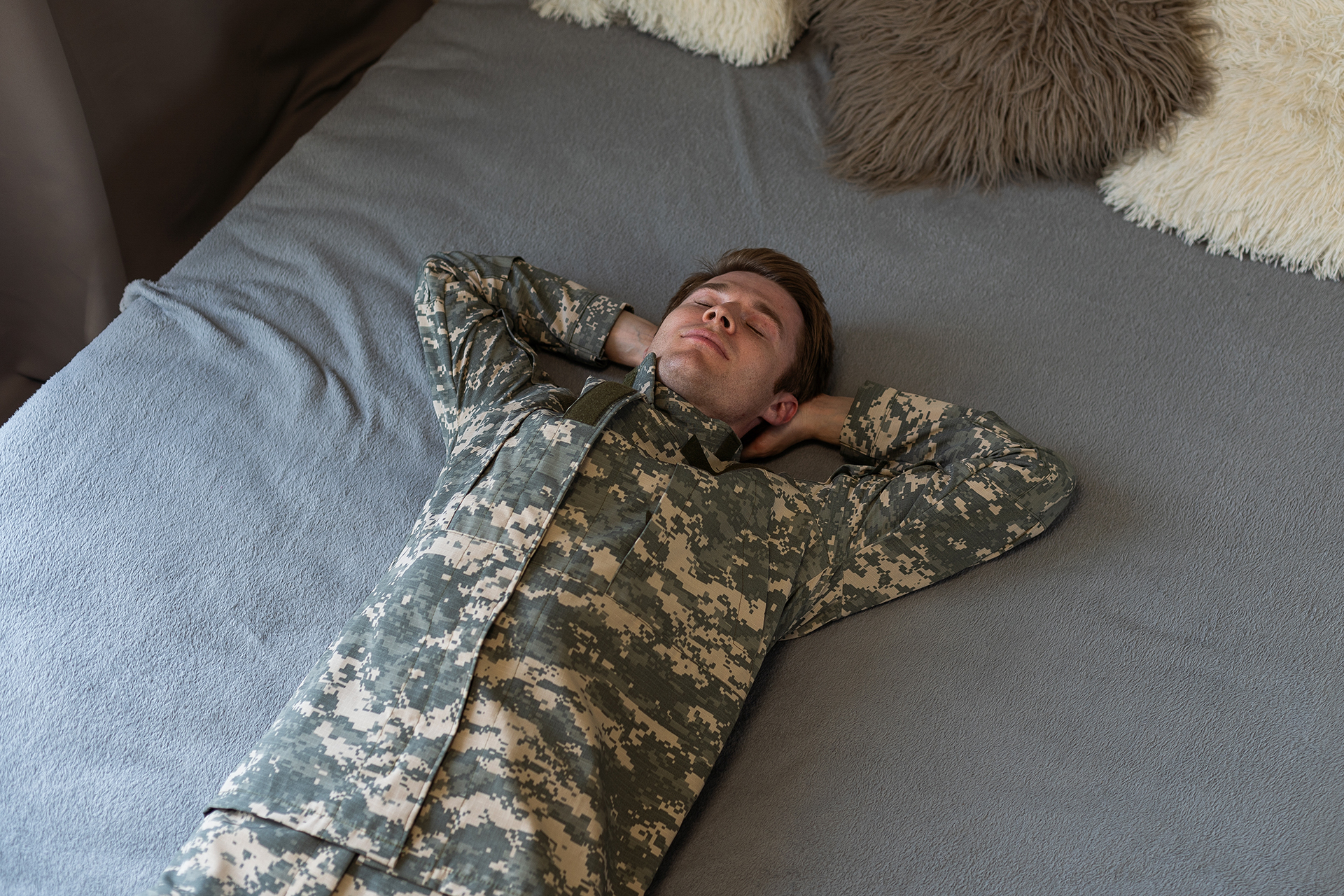
Social media users share different stories about the military sleep method that helps you fall asleep in two minutes. What is the truth of this method? Is it really possible to fall asleep in just two minutes?
Sleep researcher Dr. Dean J. Miller shares with The Independent what he’s learned about the military sleep method, and why it may work for some and fail for others.
The Military Sleep Method, as its name suggests, aims to help military personnel prepare their bodies for sleep, regardless of their surroundings.
The military method of sleeping varies slightly depending on the source that talks about it, but 3 main elements remain constant. The first element focuses on progressive muscle relaxation where you tense and relax the facial muscles, then the shoulder and arm muscles, before moving down the chest and legs.
The second element is controlled breathing, which involves slowing and controlling breathing, focusing on exhaling for a longer period. The last element encourages imagining a calm environment, such as floating on calm water or lying in a quiet field.
The world’s militaries do not publish their sleep techniques in open source journals, so there are no scientific references that accurately describe the method.
Does this sound familiar?
Dr. Miller advocates comparing the military sleep method to the recommended initial treatment for insomnia, known as cognitive behavioral therapy for insomnia, which includes several key components.
This approach addresses unrealistic beliefs and fears about sleep, focuses on controlling stimulant consumption, and emphasizes the link between sleep and bed by avoiding non-sleep-related activities in bed and lying down only when feeling sleepy.
It emphasizes restricting sleep time and maintaining healthy routines and environments, in addition to relaxation techniques such as progressive muscle relaxation, or breathing.
The military sleep method and CBT for insomnia have similarities and differences. Soldiers may be sleep deprived, and sleep restriction is part of CBT for insomnia.
The differences between the two methods lie in the nature of the military environment, where military personnel have no control over their sleeping environment, and the nature of the effort expended.
The private environment of high-functioning individuals makes falling asleep in two minutes possible, but it is not so for civilians who do not make the same effort.
It wouldn’t hurt to try the military sleep method, but the goal of falling asleep within two minutes is illogical and focusing on it may cause anxiety, which may make falling asleep more difficult.