

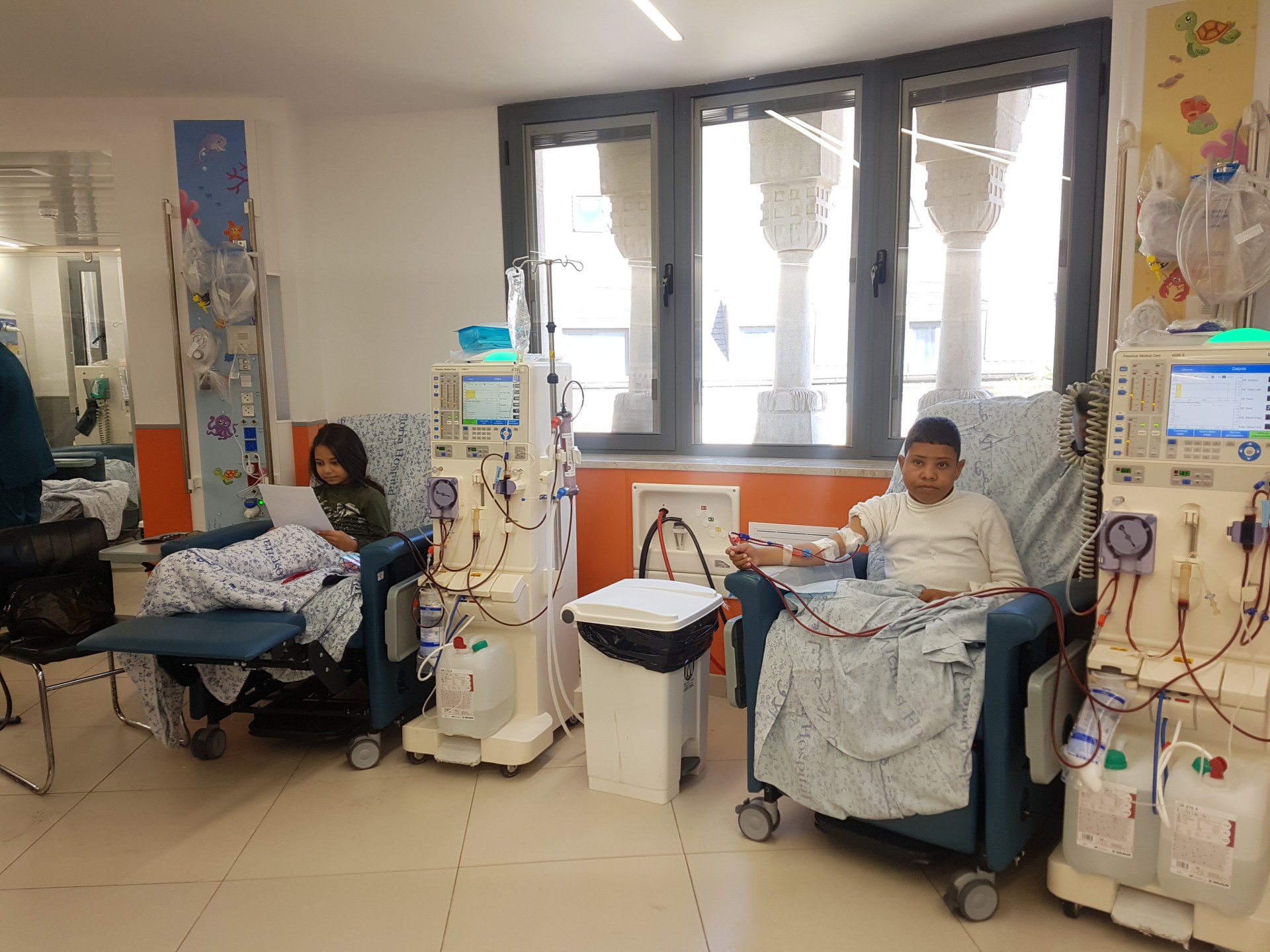
Ramallah- The Palestinian citizen, Khadra Al-Jabareen (64 years old), is forced to leave her home and her husband, Haj Ali (63 years old), in her remote village, “Janba,” at the southernmost point in the West Bank, to settle for a few days with her relatives in the town of Yatta, south of the city of Hebron, whenever she falls ill and needs therapeutic injections.
Like many Palestinian communities in Area C of the West Bank, which are under Israeli control, the village is subjected to attacks and persecution, and its residents are deprived of timely access to health services.
The couple suffers from modern diseases, including diabetes, high blood pressure, and knee pain, and they need regular medications, which they rely heavily on a mobile clinic provided by Doctors Without Borders, which comes to the village every two weeks. If the occupation army or settlers prevent the clinic from arriving, a mechanism is searched for to deliver the medicine to those in the community who need it.
Heavy burden
What increases the burden on Masafer Yatta’s patients is the long distances due to poor roads and infrastructure, which the occupation prevents from rehabilitating, and the persecutions of the army and settlers, which makes it difficult to obtain health services.
Ali Jabareen told Al Jazeera Net that conditions have gotten worse in the last two years, explaining that he and his wife are forced to walk 3 hours back and forth to the town of Yatta, even though it is only 20 kilometers away from his village, whenever he needs to see doctors or the hospital.
The suffering of Masafer Yatta and other areas of the West Bank is of special interest to Doctors Without Borders, which has long warned of the consequences of deteriorating health care and the obstruction of patients receiving treatment in the West Bank.
To better understand what is going on, Al Jazeera Net had the following dialogue with the organization’s head of humanitarian affairs, Frederik van Dongen.
First, what are the latest developments related to access to health care in the West Bank, based on your reports?
What we hear from our patients is that their access to health care is affected by several barriers. There are restrictions on movement represented by permanent and mobile barriers, road closures, and dirt mounds that create unnecessary physical barriers.
The risk of physical violence, harassment, and intimidation by Israeli soldiers and settlers on the road also affects our patients, who report delays in seeking health care unless absolutely necessary.
These factors make people’s journeys to all services, including medical services, uncertain, long, humiliating, and risky at best, and inaccessible at worst.
In the Hebron Governorate, Médecins Sans Frontières receives – weekly – multiple reports from patients from different villages in the South Hebron Hills reporting difficulty and fear in reaching the organization’s mobile clinics, or their inability to reach them at all due to the spread of settlers on the roads.
In June, we asked 95 of our mental health patients about their experiences on the way to an MSF clinic; 31% of them reported that they were stopped at a military checkpoint, 26% were forced to take an alternative route due to physical obstacles, and a shocking 15% reported that they were exposed to violence by soldiers or settlers along the way.
In response to these barriers and risks, we reach communities through mobile clinics to provide primary health care, including reproductive health care and psychological support.
However, our operations are also being affected. In Hebron Governorate, despite the cancellation of 18 of our operations due to access restrictions, security concerns and a shortage of international staff, as a result of visa restrictions imposed by the Government of Israel on their arrival from abroad, the organization implemented an average of 31 mobile clinics per month between January and May, with the lowest number being 25 mobile clinics in April.
In June, due to severe access restrictions, including the closure of Hebron city gates and heightened security concerns, the number of mobile clinics decreased to only 10.
There are a number of measures imposed by the occupation: withholding Palestinian Authority funds, canceling work permits, restrictions on movement… Which of them is the most dangerous and has the greatest impact on patients?
MSF cannot pinpoint any particular measure that impacts our patients the most, but what we can say is that the overall financial strangulation of the West Bank is severely impacting our patients and their ability to access healthcare.
In recent months, our medical teams have reported an increase in the number of patients with chronic diseases in mobile clinics. These patients were previously able to receive health care elsewhere, but due to the reduction in services of the Palestinian Ministry of Health (as a result of the financial crisis), frequent outages in its pharmacies, and the inability of patients to renew health insurance, they began to resort to MSF mobile clinics.
In August 2025, our mobile clinic in Hebron Governorate received 25 new patients suffering from chronic diseases (60% of them women, average age 59 years). It was found that 12 of these patients (48%) stopped taking their medications because they were not available or because the Ministry of Health clinic was closed.
A number of new patients received by the organization suffer from chronic diseases and require laboratory tests or secondary or tertiary care, but they turn to MSF’s free primary care clinics instead, which has led to an increase in the number of external medical referrals.
In 2024, WHO teams in Hebron made an average of 40 referrals per month to external medical specialists or laboratory tests, and in 2025 the number rose to 77, an increase of 92.5%.
In July 2025, during a severe strike at the Ministry of Health, 117 such referrals were made, compared to only 37 in July 2024, an increase of 216%.
The economic collapse not only affects Palestinians’ access to health care, but is increasingly manifested as psychological distress. In Jenin and Tulkarm, nearly 1 in 4 new mental health patients (22%) cited losing their source of income as a primary factor in the deterioration of their psychological condition during the first sessions, and this percentage is likely an underestimate, because it was not a systematic question.
Our medical team also reported an increase in the number of patients requesting basic needs such as food parcels, medical glasses, and hearing aids. These needs do not traditionally fall within health care, but they reflect the depth of economic and social suffering.
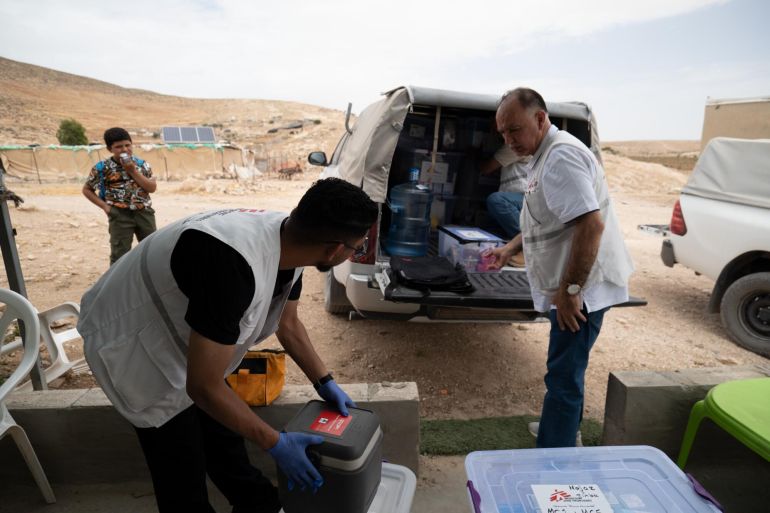
Who are the most vulnerable groups who need health care but are deprived of it, or face obstacles in obtaining it, whether due to occupation measures or lack of medicines?
I previously mentioned the huge impact on people with chronic diseases, but we also see a clear impact on children and pregnant women.
Parents go to Doctors Without Borders to obtain nutritional supplements that they previously obtained from the Ministry of Health. Some mothers reported that their children received the vaccine at the age of 4 months instead of the specified age of 2 months, due to a shortage of vaccines. These delays are mentioned not only by patients, but even by some of the organization’s employees, including parents.
Since June 2025, WHO’s sexual and reproductive health teams have reported an increase in the number of pregnant women relying on mobile clinics rather than going to hospital, or delaying care, due to financial barriers, including not being able to afford transportation and/or mobility restrictions.
Among the cases we encountered: a woman who was in labor and suffering from contractions, another in the third trimester of pregnancy who did not feel fetal movement for 3 days, and a pregnant woman who suffered from low platelets and was at risk of internal bleeding.
Delayed care and “late registration” (i.e. detection of pregnancy in the second trimester) put mothers and fetuses at risk of preventable complications. Several women also reported that they preferred to buy food for their children rather than undergo the necessary medical examinations for themselves.
In Nablus Governorate, the reduction of prenatal care services affiliated with the Ministry of Health has threatened the health of mothers and children, forcing pregnant women to pay for private care or to forego it altogether. This is dangerous, because prenatal care is necessary to detect visible and invisible complications that may lead to preventable deaths.
For example, in the village of Qusra, MSF teams discovered a case of neoplastic pregnancy (gestational tumor), a condition that is usually detected in initial routine examinations, but now often goes undiagnosed, and may lead to serious complications such as severe bleeding, infection or even cancer.
More broadly, since May, WHO teams in Nablus have made an average of four emergency referrals per month for life-threatening cases that would have gone undetected in the absence of our services, highlighting the critical gap left by the reduction in Ministry of Health services.
In Khallet Al-Dabaa, one of the villages of Masafer Yatta in the Governorate #Hebron Palestinian families suffer daily harassment, intimidation and violent attacks from Israeli settlers, often with the protection of Israeli forces. This destruction has deprived the majority of the population of shelter, water and electricity. pic.twitter.com/8ttkSYUJPP
– Doctors Without Borders (@msf_arabic) October 15, 2025
Which areas of the West Bank are most affected by the occupation measures?
All areas are affected in both similar and different ways. No place is safe from the crushing impact of the artificial financial crisis, systematic and severe movement restrictions, and escalating violence by Israeli forces and settlers, all of which contribute to the forced displacement of Palestinians to small and diminishing enclaves within the West Bank.
In conclusion, what urgent and important measures does MSF consider necessary to save the health care sector in the West Bank?
MSF urges third countries, particularly Israel’s close allies, such as the United States and the European Union, to urgently use their political and economic influence to pressure the Government of Israel to end the financial stranglehold, and to stop policies and practices that undermine the Palestinian health system, obstruct humanitarian aid, and contribute to the displacement of Palestinian communities.
Immediate and unrestricted humanitarian access to all areas of the West Bank should be facilitated, including allowing the passage of medical personnel, supplies, and patients, by lifting all movement restrictions and facilitating the entry of international teams.