

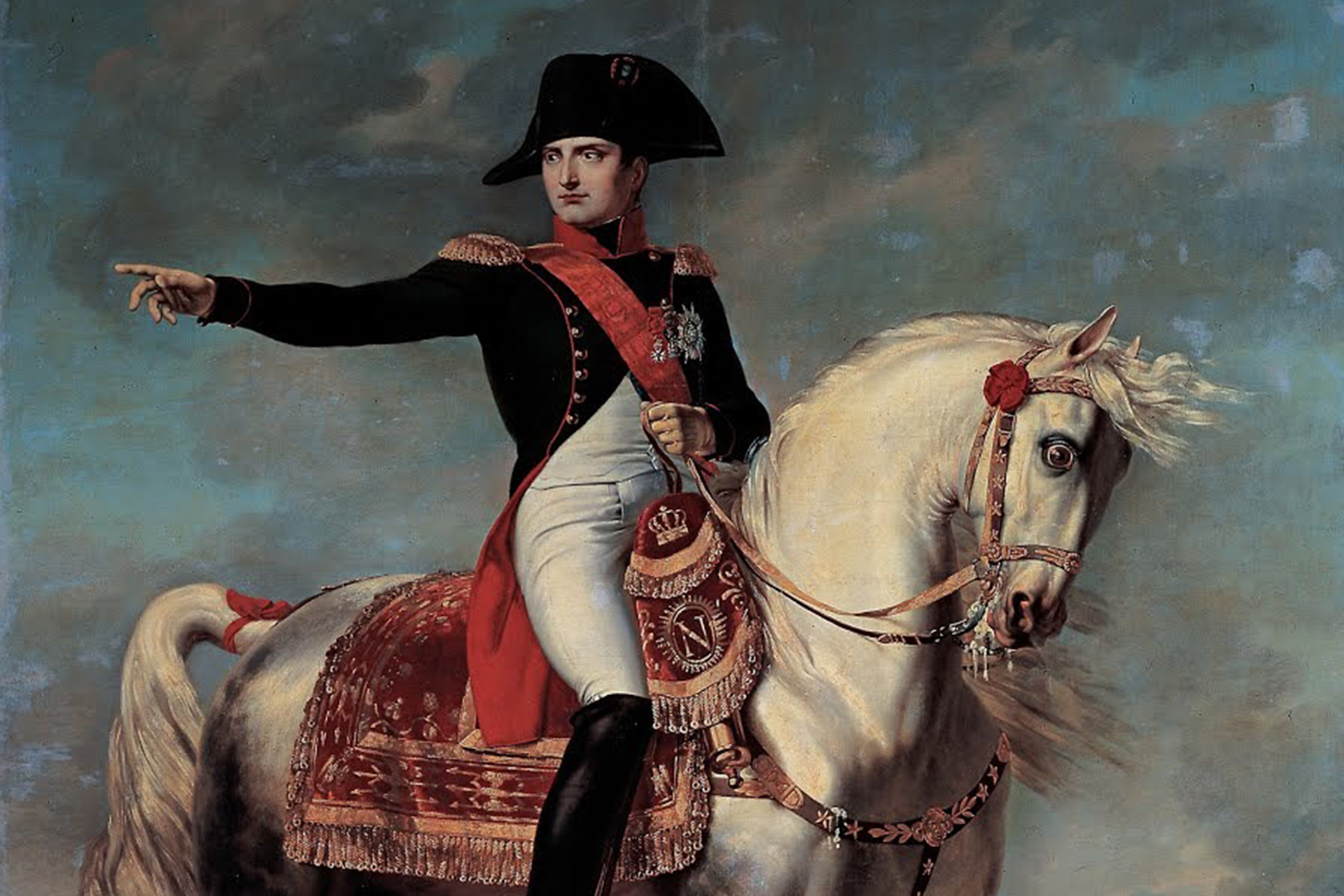
The withdrawal of Napoleon Bonaparte and his Grand Army from Russia in 1812 was a disastrous event that marked the beginning of the end for his empire and his personal dominance in Europe, as about 300,000 soldiers died out of a force that initially numbered about half a million soldiers.
A new study based on the analysis of DNA extracted from the teeth of 13 French soldiers buried in a mass grave in the Lithuanian capital, Vilnius, along the withdrawal route, provides a deeper understanding of the suffering of the Grand Army, and revealed two pathogens that had not been previously documented in this historical event.
The discovery of the bacteria that causes paratyphoid fever (paratyphoid) and recurrent lice-borne fever, along with previous studies, showed that numerous cases of infection spread among soldiers who were already exhausted by cold, hunger, and exhaustion.
The Vilnius site – which was discovered in 2001 – contains the remains of between 2,000 and 3,000 soldiers from Napoleon’s army.
Nicolas Rascovan, a molecular biologist and geneticist, head of the paleomicrobial genomics unit at the Pasteur Institute in Paris, and the lead author of the study published in the journal Current Biology, said: “Vilnius was a pivotal station on the path of withdrawal in 1812, as a large number of soldiers arrived there exhausted, hungry, and infected with diseases. Many of them died and were buried in mass graves.”
“While previous studies focused on the effects of cold, hunger, and typhus, our results reveal that paratyphoid fever and recurrent fever transmitted by lice were also widespread and may have contributed to soldier fatigue and high mortality rates,” Rascovan added.
Paratyphoid fever is usually transmitted through food or water, and its symptoms include fever, headache, abdominal pain, diarrhea or constipation, weakness, and sometimes a rash. Recurrent fever transmitted through lice causes recurring bouts of high temperature accompanied by headache, muscle pain, and weakness.
The study showed that 4 out of 13 soldiers were found to be infected with paratyphoid fever bacteria, in addition to two being infected with recurrent typhoid fever bacteria. The symptoms of these two conditions match what is reported in historical records of withdrawal.
The new results add precise details to the suffering of the French Emperor’s soldiers, indicating that the situation was not limited to one or two diseases, but rather there was a widespread spread of various infectious diseases.
The study highlights how the analysis of ancient DNA, which is witnessing rapid development, can open new horizons for understanding major historical events.