

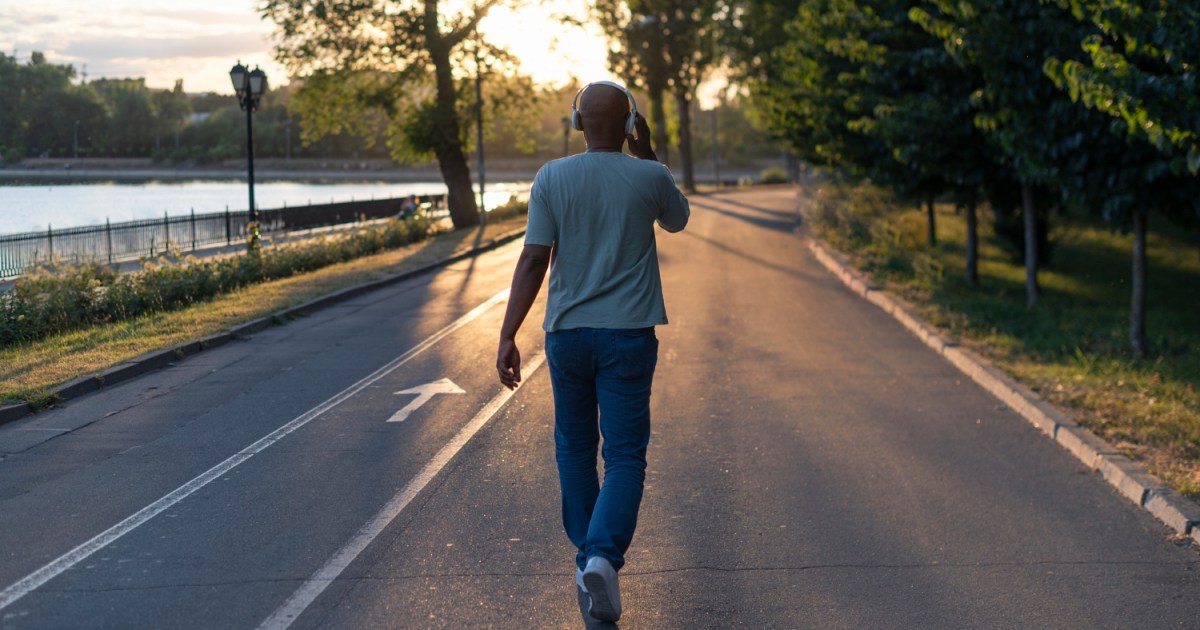
If we imagine a picture of a person who decided to spend some time in the arms of nature, we will find that with every step of the way, his feet step on the leaves of falling trees. The road runs alongside a stream, gently flowing over the gray stones, while the breeze moves the tree branches.
Now let’s compare that beautiful mental image to what it might look like to walk in a city, with traffic, congestion, concrete and glass. So what looks best to humans?
It has been found that walking surrounded by nature enhances physical and mental health, reduces stress and restores focus. But researchers have found that there are many mental health benefits to walking in urban areas as well.
Researchers say one just has to find the right path and pay attention to one’s surroundings.
“Most cities have green spaces,” says Whitney Fleming, an environmental psychology researcher at Bangor University in Wales, UK. “No matter where you are, you can find a beautiful tree.”
She pointed out that walking, which is a moderate activity, is generally beneficial to a person, as it reduces the risk of heart disease, blood pressure, dementia, depression, and many types of cancer. The benefits of walking in nature go beyond physical movement. “Humans have an innate and evolutionary tendency to love nature,” Fleming explained.
Fleming’s research concluded that people who were asked to pay attention to greenery while walking were subsequently significantly less anxious than those who were asked to focus on human-made items. The first group also indicated that they felt positive emotions.
“Having natural elements to look at in cities is important in terms of their impact, because one can still get benefit even when they’re not in nature,” Fleming said. Vibrant buildings and squares can provide “a subtle charm of their own.”
Other researchers have challenged the common belief that cities are inherently stressful, said Cesar San Juan Guillén, a professor of social psychology at the University of the Basque Country in Spain.
He added that until recently, most environmental research was biased against the human-built environment, comparing the natural environment to the urban environment that causes stress, such as streets crowded with traffic.