

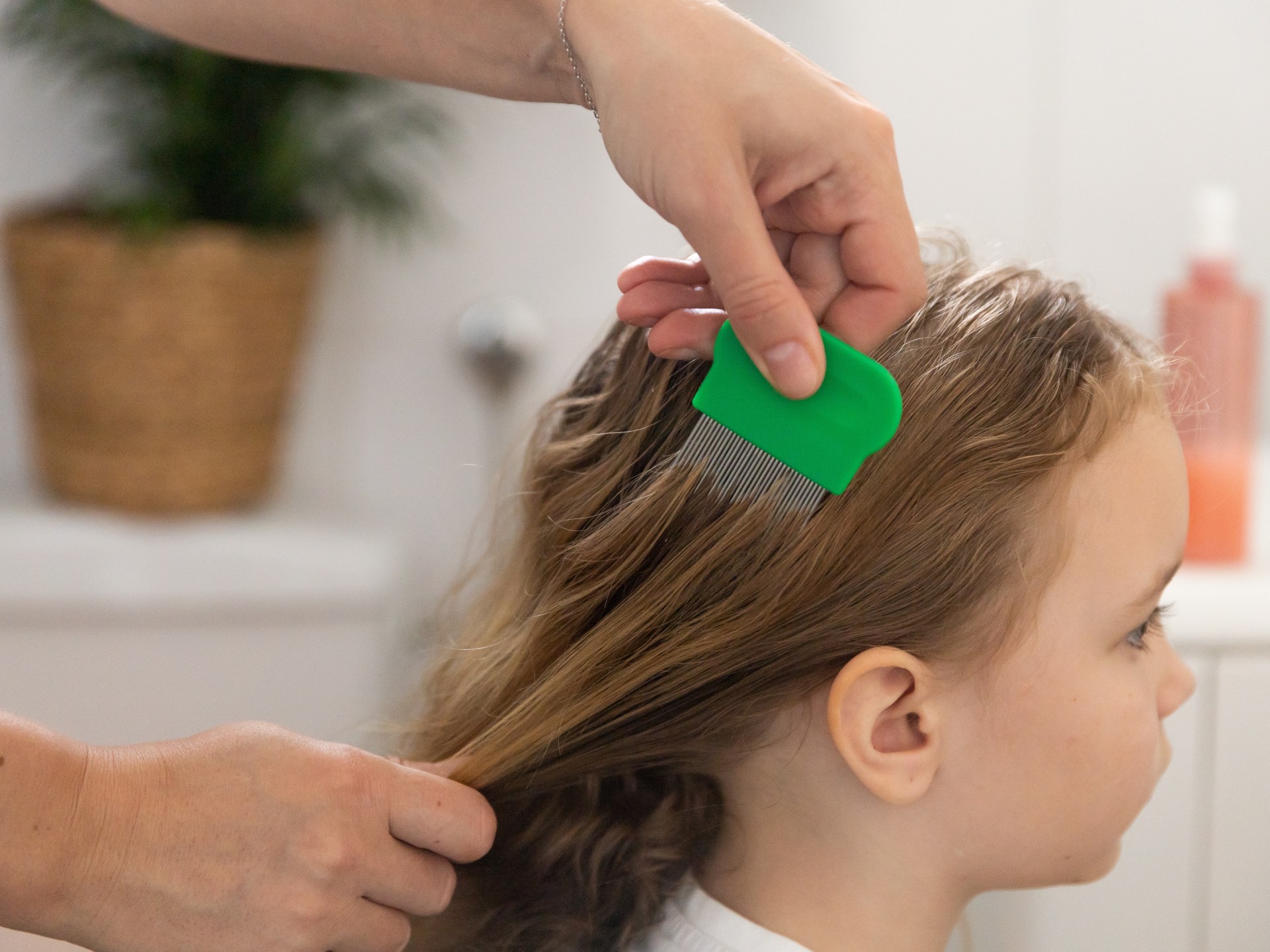
Combating head lice is one of the most difficult tasks that parents face, especially since common chemical products are no longer as effective as they used to be, but it is still possible with perseverance and patience. So how can we do this?
Head lice are small, 6-legged insects found only in the hair of the human head, and are most common in the hair of elementary school children.
Lice love to live on human hair, but they sneak into the scalp 6 times a day to suck blood. Lice have well-designed claws to crawl up and down the hair strands.
The term “nits” describes head lice eggs, and they are often the first sign of infestation, as one louse lays more than 100 eggs during its one-month lifespan, according to the British newspaper The Independent.
There is no evidence that head lice can spread pathogens, but they are annoying and their bites can cause skin reactions, and the stigma of head lice can outweigh any direct health consequences for infected children.
Lice do not jump or fly
From kindergarten through elementary school, a child is likely to get head lice at least once, and girls are more likely to get head lice than boys, due to their long hair.
Head lice do not jump or fly, but are transmitted from one head to another through direct contact.
Keeping the house clean and tidy will not prevent head lice, as lice do not care about the cleanliness of bed sheets and towels, or the number of times carpets are cleaned.
There may be a risk of head lice being transmitted through shared pillows, but even this risk is considered low, as there is no need to change the bedding of the child or any other family member if there is lice in the child’s hair.
Research recommendations from the New South Wales Department of Health in Australia state that “bed linens, hats, clothing and furniture do not harbor or transmit lice or nits, and washing them is of no benefit as a treatment option.”
Don’t expect any magic cure
A wide range of products are available in pharmacies to treat head lice. The problem is that most of these products are insecticides that kill the lice on contact, but may not kill their eggs.
Also, if treatments are not completed as directed on product labels, some head lice will not be killed. Head lice seem to be resistant to the chemicals we use against them, and are more difficult to get rid of infestations in children, so don’t expect any magic cure.
Australian health authorities generally recommend the “condition and comb” or “wet comb” method. This means that lice are virtually removed without having to use chemicals.
There are 3 main steps:
- Remove lice by applying hair conditioner to the child’s wet hair and leaving it for about 20 minutes.
- Comb the hair regularly using a fine-toothed “lice comb.” Conditioner and lice can be wiped off with paper towels or tissues. Here only adult lice will be collected, and the eggs will be dealt with later.
- The process must be repeated twice, about a week apart, to break the life cycle of head lice. Repeating the process after a week allows the remaining eggs to hatch and getting rid of the young lice is easier than getting rid of the eggs.