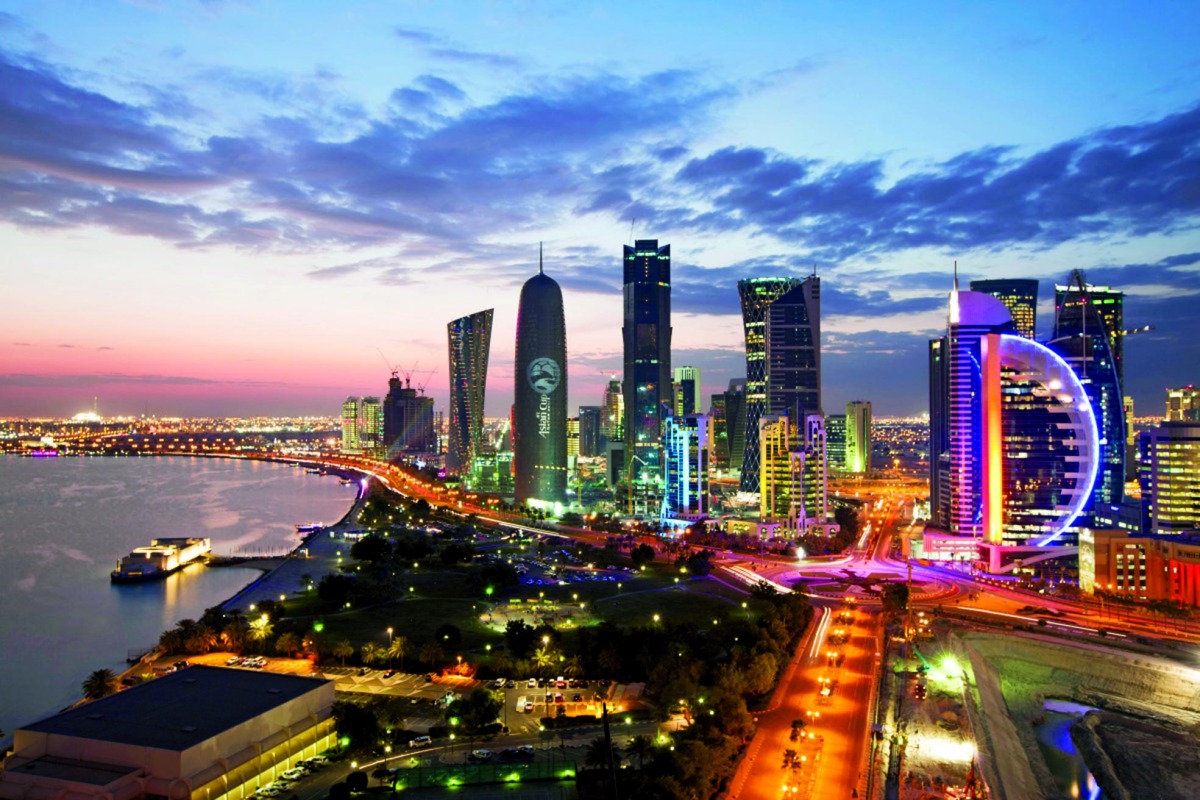
A report published by the Arabiya.Inc economic platform confirmed that the business environment in Qatar has emerged as a model of flexibility and adaptability, supported by a strong institutional structure and a clear economic vision, at a time when the region is witnessing accelerating challenges and exceptional circumstances that impose pressure on various economic sectors. Start-up companies in the country have demonstrated a remarkable ability to continue their work and deal with developments efficiently, despite the difficult current conditions, benefiting from an integrated support system provided by government agencies and relevant bodies.
The report stated that this cohesion reflects the extent of the efforts made by the state to enhance the sustainability of the private sector, especially small and emerging companies, through specific initiatives and incentive programs led by the Ministry of Trade and Industry, the Qatar Investment Authority, the Qatar Development Bank, and the Qatar Financial Center, in addition to free zones and centers of innovation and entrepreneurship.
These efforts have contributed to providing an environment more capable of absorbing shocks, maintaining business continuity, and opening the way for entrepreneurs to develop operating models that are more flexible and responsive to changes.
The report stated that despite the current regional challenges, business activity or development paths have not stopped in the Qatari market, but rather clear indicators have emerged of the ability of emerging companies to rearrange their priorities and adopt more flexible operational and marketing solutions, whether through digital transformation, diversification of sales channels, or restructuring expansion plans according to developments. This confirms that the business environment in Qatar is not only based on stability, but also on readiness and proactiveness in dealing with changes, which enhances the confidence of investors and entrepreneurs in the market’s ability to overcome challenges and continue growth.
The report touched on the crises that Qatar has been exposed to during the past ten years, the most prominent of which is the Corona “Covid-19” pandemic in 2020, and the second is the regional blockade on the country between 2017 and 2021. Each time, Qatar’s leadership has received wide praise for its exceptional vision, flexibility, and ability to manage strategic crises.
The report stressed that despite the current regional challenges, the business environment in Qatar appears more capable of adapting and absorbing shocks, based on a previous record of institutional and commercial flexibility. This was embodied in a study prepared by HEC Paris in 2022 entitled “Resilient Qatar: The Case of a Fast-Growing Entrepreneurship Ecosystem,” which concluded that the country has demonstrated a high ability to confront shocks, driven by five main factors that include: internal market strength, national culture, government support, operating costs, and access to financing. The study considered that Qatar’s previous experience in crisis management, in addition to the growth of its digital system and entrepreneurship, contributed to enhancing its readiness.
The report indicated that this flexibility is still present today, according to key players in the startup ecosystem in Qatar. Michael Lents, founding partner of the Middle East and North Africa region at Golden Gate Ventures, confirms that its investment fund continues to evaluate opportunities and invest according to a long-term perspective, indicating that current developments have not changed the basic conviction of the attractiveness of opportunities in Qatar and the region.
For his part, Muhannad Tasliq from Alchemist Doha believes that smart capital does not withdraw in crises, but rather resets its priorities, stressing the continued support of entrepreneurs who develop real solutions for the market. Indika Amarasinghe of Startup Grind Doha also stresses that Qatar enjoys a rare combination of institutional commitment, stability, and official support, which puts it in a better position than many neighboring markets.
At the local level, entities such as the Ministry of Commerce and Industry, the Qatar Investment Authority, the Qatar Financial Center, and the Qatar Development Bank have strengthened their presence through support channels and direct initiatives to support companies. This reflects a growing conviction that crises may impose pressures, but they do not disrupt a business environment that knows how to reposition and continue to grow.