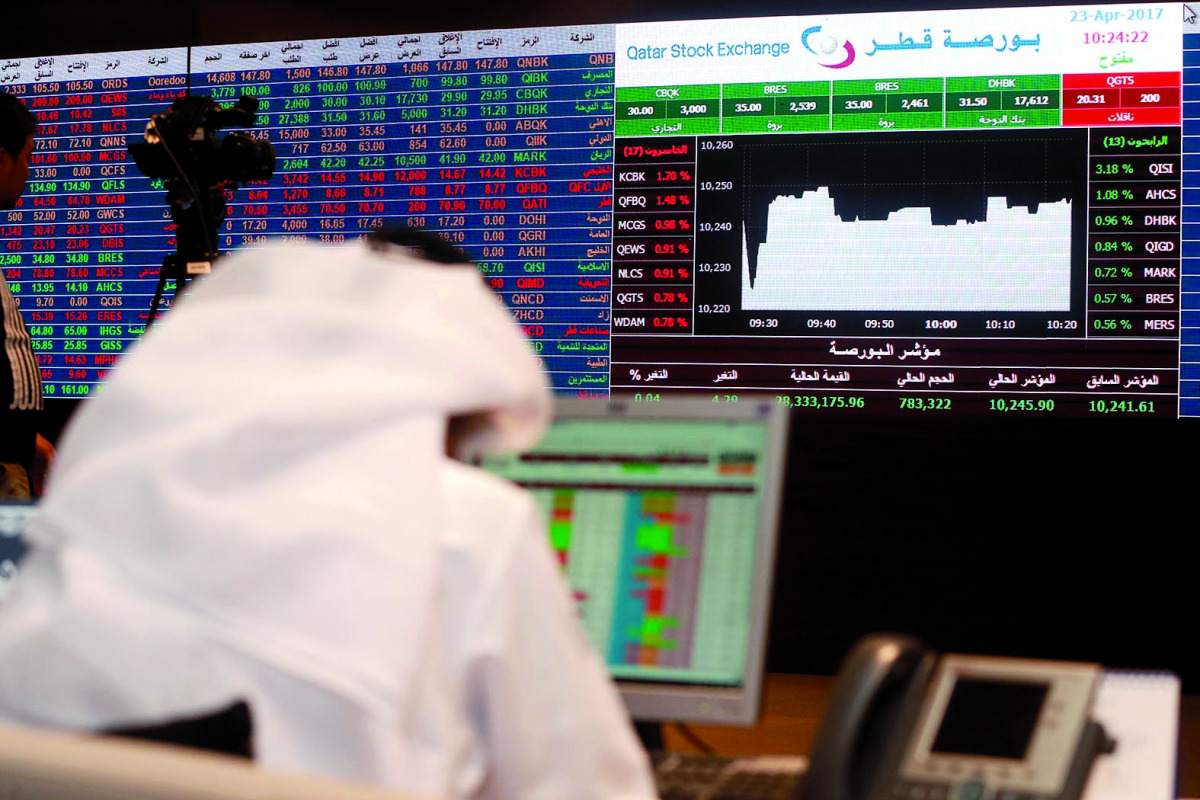
The Qatar Stock Exchange index ended this week’s trading with a decline of 2.03 percent, losing its balance by 186,630 points compared to the end of last week, falling to the level of 9,005 points under pressure from six sectors.
This week, the banking and financial services sector witnessed the largest losses with a negative performance of 2.22 percent, followed by the sector with 2.14 percent, while the real estate sector was the biggest gainer with a positive performance of 0.19 percent.
In this context, Mr. Youssef Bu Haliqa, a financial markets analyst, said in special statements to Qatar News Agency (QNA) that the performance of the general index of the Qatar Stock Exchange during the coming period may remain governed by caution and weakness, in light of the continued selling pressure on a number of listed stocks, in conjunction with investors’ anticipation of the results of financial companies for the third quarter.
Bu Hulaiga pointed out the start of the financial results season for the third quarter, which began with the announcement of Dukhan Bank and Qatar National Bank, which came in better than average expectations, describing their results as encouraging while awaiting the results of the rest of the listed companies, indicating that these results will be among the most prominent factors that will determine investors’ trends during the coming period, especially with the market trying to evaluate the companies’ ability to achieve growth in profits and maintain current performance levels.
He added that the Qatar Stock Exchange index moved during the current week in a narrow range, which reflects the state of anticipation that dominates traders, as liquidity and buying trends are still limited in the absence of strong incentives capable of pushing the index to a clear upward path.
He pointed out that the shares of listed companies were exposed to selling pressure during the current week, which was reflected in the performance of the general index, which continued its negative trend, indicating that the continuation of these pressures may limit the market’s ability to achieve a strong rebound during the coming short period.
Bouhliqa said that geopolitical developments in the region are still one of the factors influencing investors’ decisions, in light of the continued stagnation in the scene in the Middle East, in conjunction with the continued escalation on the Ukrainian front.
He explained that the current state of anticipation makes investors more selective in purchasing decisions, focusing on companies that have strong financial fundamentals and the ability to achieve stable profits, rather than entering into new investment positions in light of the lack of clarity in the market direction.
He pointed out that positive results may provide support for some leading stocks and help improve investor sentiment, while results that come below expectations may lead to continued selling pressure.