

Dengue fever is no longer confined to its traditional geographic ranges. In Florida, the state will witness in 2026 what appears to be the largest local outbreak of the disease in any American state in decades, while Bangladesh is facing a more severe wave that has sent tens of thousands to hospitals.
The two scenes, although very different in scale, reveal how travel, climate, urbanization and the presence of vector mosquitoes can redraw the map of disease.
According to the latest weekly report available from the Florida Department of Health, as of October 3, 296 locally acquired dengue cases had been recorded in 2026, including 259 cases in Hillsborough County, which includes Tampa, compared to 262 cases linked to travel abroad.
Available data, according to the Associated Press, indicate that this represents the largest number of local cases recorded in one year in any US state since at least the 1940s.
On the other hand, the picture in Bangladesh is more severe. According to data from the General Directorate of Health Services on October 13, the total number of hospitalizations recorded due to dengue during the year reached 103,396 cases, and deaths rose to 316, after 1,954 patients were admitted to hospitals and 9 deaths were recorded within 24 hours. September was the deadliest month up to that time, with 148 deaths recorded.
When the traveler arrives and mosquitoes are present
Dengue can start circulating locally in any area where there are populations of vector mosquitoes, once a person infected with the virus arrives, says Dr. Elaine Chang, an associate professor of medicine at George Washington University, who also holds academic positions in microbiology, immunology and tropical medicine. Her research expertise focuses on the clinical and public health management of dengue fever in the United States and abroad.
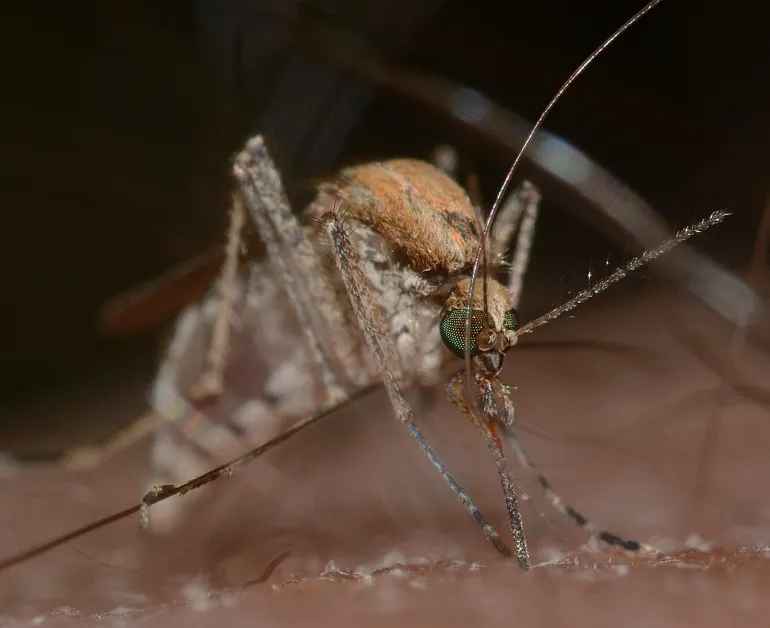
She added – in statements to Al Jazeera Net via email – that the southern United States has species of Aedes mosquitoes that are capable of transmitting the virus, and therefore the arrival of an infected traveler and being bitten by local mosquitoes may allow the mosquitoes to pick up the virus and later transmit it to people who have not traveled outside the region.
This episode explains why describing a case as “local” does not mean that the virus originated in the same place. The virus may arrive with human movement, but its transmission within society requires mosquitoes capable of catching and transmitting it.
The World Health Organization supports this perception, placing the rapid expansion of cities and climate change among the main drivers of dengue transmission, along with the expansion of global travel and trade that helps the virus, mosquitoes, and infected people move across borders.
Does the climate change the dengue map?
Climate change doesn’t act alone, but it may change the conditions that determine where mosquitoes can live and how long their active season lasts. The World Health Organization indicates that rising temperatures and increased rainfall and humidity are linked to a “silent” expansion of vector mosquitoes into new areas, along with factors such as urbanization and population movement.
In Bangladesh, experts have warned that changing rain and humidity patterns are changing the seasonal behavior of Aedes mosquitoes and keeping them active for longer periods, extending breeding seasons. The spread of vector mosquitoes outside major cities has turned dengue into a nationwide challenge, while experts have stressed that spraying pesticides or fog alone is not enough unless breeding sites and stagnant water are removed.
A study published in the journal Communications Earth & Environment indicates that the climatic suitability for dengue transmission expanded during the four decades extending from 1979 to 2022 towards more moderate environments in North America, East Asia, and the Mediterranean basin, and the number of people living in areas with highly suitable climatic conditions for transmission of the virus increased by about 2.5 billion people globally.
A large study published by The Lancet Planetary Health in 2026, which relied on data from 1,237 sites in 21 countries during the period from 2000 to 2019, also found a strong link between the El Niño phenomenon and the risk of dengue.
The study estimated that climate change caused by human activity contributed about 49% of the increase in dengue cases attributed to the El Niño pattern in the eastern Pacific Ocean within the study data.
But temperature alone does not determine the risk. The presence of containers and waste in which water collects, poor rainwater drainage, population density, travel activity, and the effectiveness of mosquito control programs are all factors that determine whether the appropriate conditions will actually turn into a chain of transmission of the disease.
What symptoms should not be ignored?
The main symptoms of dengue include fever, pain behind the eyes, maculopapular rash, and bone and muscle pain, Zhang says. Signs that may warn of the disease developing into a severe form include bleeding, vomiting, and abdominal pain.
These signs are particularly important because the danger phase may begin after the fever decreases and not necessarily during its peak. The US Centers for Disease Control and Prevention (CDC) explains that warning signs usually begin within 24 to 48 hours after the fever subsides, and may include abdominal pain or tenderness when pressed, repeated vomiting, nose or gum bleeding, bloody vomiting or the presence of blood in the stool, along with extreme fatigue or restlessness. Severe dengue is a medical emergency.
There is still no specific anti-dengue medicine. Health authorities recommend rest, drinking sufficient amounts of fluids, and using paracetamol when needed to reduce fever and relieve pain, while avoiding aspirin, ibuprofen, and other non-steroidal anti-inflammatory drugs that may increase the risk of bleeding.
For the traveler, protection does not end upon return
Zhang advises travelers to areas where dengue is widespread to avoid mosquito bites and use insect repellents, and stresses the need to seek medical care when signs of danger appear, noting that seeing a doctor even when symptoms appear without signs of danger may help in making a diagnosis and taking precautions to prevent the transmission of the virus to mosquitoes and from there to other people.
An infected person does not usually transmit dengue to others through daily contact, but a mosquito may bite him while the virus is in his blood and then transmit it to another person.
In this context, the US Centers for Disease Control and Prevention recommends that those returning from areas where there is a risk of dengue take measures to prevent mosquito bites for three weeks after returning, even if they do not feel sick, and monitor dengue symptoms for two weeks after the trip.
Anyone who has symptoms should also inform the doctor of his or her travel history, especially since laboratory testing is the means to confirm the diagnosis, while the doctor can begin dealing with the condition based on the clinical symptoms and signs when needed.
Prevention starts with a small bowl of water
Zhang believes that combating dengue depends largely on controlling mosquitoes, and says that this includes emptying containers containing water around homes, avoiding bites, in addition to vaccination when appropriate and available according to health recommendations.
Prevention includes wearing clothing that covers as much of the body as possible, using insect repellents, installing nets for windows and doors, proper disposal of waste, emptying, cleaning or covering water storage containers and removing everything that can retain water around homes, because these places may turn into mosquito breeding sites.
As for vaccination, it is not a general recommendation for every person or every traveler. The World Health Organization recommends the use of the Qdenga vaccine (Qdenga/TAK-003) for children aged 6 to 16 years in places with a high density of dengue transmission, in two doses, 3 months apart, as part of a preventive strategy that does not replace mosquito control.
In the United States specifically, the latest information from the US Centers for Disease Control and Prevention, updated in September 2026, indicates that there are currently no vaccines against dengue available in the country, and preventing and controlling mosquito bites in and around homes remains the primary means of protection.
Thus, the story of Florida and Bangladesh does not mean that every warm region is necessarily on the verge of a dengue outbreak, but it does reveal that the disease’s ancient geographic boundaries are becoming less stable. When mosquitoes capable of transmitting the virus, an infected person, favorable climate conditions, and breeding sites come together in close proximity to humans, a local chain of transmission can begin in a place where dengue was not a usual part of the health landscape.