


A woman’s journey with breast cancer does not end with the end of surgery or treatment sessions. Even after the tumor disappears, a new phase begins that is no less important than the treatment itself, in which continuous medical follow-up overlaps with psychological, physical and social challenges that may extend for years.
In addition to the fear of the disease returning, some survivors face difficulty accepting the changes that have occurred in their bodies, or restoring their professional and social lives, while others need psychological support to help them overcome the experience and adapt to their new lives.
According to estimates published by the World Health Organization in July 2026, the median survival rate for 5 years after breast cancer diagnosis was 77.8% globally, for women diagnosed between 2017 and 2021, with significant variation between countries according to income levels and diagnostic and treatment capabilities.
However, going beyond the first years after diagnosis does not necessarily mean that the risk of the disease recurrence has disappeared, which makes post-treatment care an essential part of the recovery journey.
Medical follow-up for years
Breast cancer survivors need regular medical follow-up after completing basic treatment, with the aim of monitoring their health condition and detecting any signs that may indicate a recurrence of the disease, in addition to dealing with side effects and late complications of treatment.
According to joint guidelines of the American Cancer Society and the American Society of Clinical Oncology, follow-up usually includes a physical examination and history review every 3 to 6 months during the first 3 years, then every 6 to 12 months during the next 2 years, before moving to annual follow-up.
The follow-up schedule may vary depending on the stage and type of cancer, the treatment the patient received, and individual risk factors.
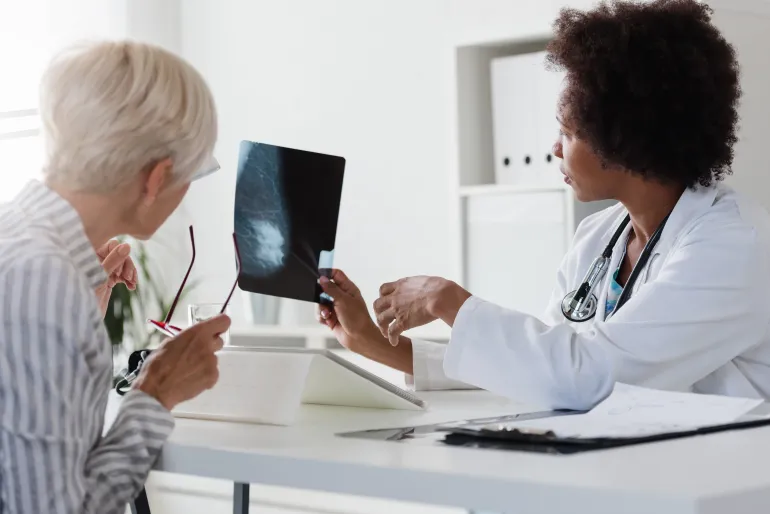
Mammography is one of the most prominent tests used during this stage, especially after partial excision surgeries, or to follow up on the remaining breast after the complete removal of one breast.
As for ultrasound or magnetic resonance imaging, the doctor may recommend them in specific cases, and they are not routinely necessary for all survivors.
The American Cancer Society confirms that blood tests and comprehensive body imaging are not usually performed periodically to look for recurrence of the disease in early breast cancer survivors who do not exhibit symptoms that require it.
Does breast cancer return after treatment?
The probability of breast cancer returning varies from one patient to another, depending on the stage of discovery of the tumor, its size, biological characteristics, the extent of its spread to the lymph nodes, in addition to the type of treatment and the extent of response to it.
The American Breast Cancer Research Foundation indicates that the risk of recurrence of the disease may continue after treatment, but it is not equal among all survivors, as it is closely linked to the subtype of cancer, its stage, and the treatments used.
The tumor may return in the breast itself, the chest wall, or nearby lymph nodes, while in other cases it may appear in distant organs of the body.
Here the importance of medical follow-up is highlighted, not only to detect signs of disease recurrence, but also to monitor the late effects of treatment and provide appropriate care for each case.
In a Dutch systematic review published in 2004, which included 12 studies including 5,045 patients, researchers found that about 40% of isolated local or regional breast cancer recurrences were discovered during regular visits and examinations in patients who did not have symptoms.
However, the researchers explained that the results did not prove that discovering these cases in this way necessarily led to improved chances of recovery or quality of life, stressing the need for more studies to evaluate the best follow-up methods.
Back to work
Post-treatment challenges are not limited to the medical aspect, as some survivors face difficulties in restoring their professional lives, as a result of constant fatigue, sleep disturbances, or anxiety, in addition to the physical effects that surgery and various treatments may have.
However, research indicates that returning to work may be associated with improved quality of life and psychological well-being, as well as regaining economic independence and a sense of ability to lead a normal life.
In a study conducted by researchers in Taiwan, which included 23,220 female employees who were diagnosed with breast cancer between 2004 and 2015, returning to work was associated with a lower risk of death compared to not returning, even after taking into account a number of influential factors.
However, these results do not mean that work in itself protects against death, as women who are more able to return to their jobs may be better off in terms of health in the first place.
In an Italian study published in 2024, researcher Nicola Magnavitta and his colleagues addressed the challenges associated with returning to work after breast cancer, stressing that this return is affected by health, psychological, and occupational factors.
The researchers pointed out that fatigue, anxiety, and sleep disorders may limit the ability to work during the first period after treatment, which requires rehabilitation programs that take into account the health conditions of each survivor.
These programs include gradually returning to work, adjusting work hours or the nature of tasks when needed, and providing professional and psychological support, in a way that helps survivors regain their activity without burdening them beyond their capabilities.
Accept the body after treatment
The breast cancer journey may leave visible changes in a woman’s body, whether as a result of a complete or partial mastectomy, or because of scars, hair loss, and other effects associated with treatment.
For some survivors, the suffering does not end with the end of medical treatment, as difficulty accepting the new appearance of the body may continue, accompanied by feelings of anxiety, sadness, or declining self-confidence.
The intensity of these feelings varies between women, depending on age, the nature of the surgery and treatment, and the level of psychological and social support that the patient receives.
In a Brazilian study that included 106 women who underwent surgery to treat breast cancer, researchers found an association between young age and increased concerns about body image. Chemotherapy was also linked to an impact on some participants’ view of their bodies.
These results highlight the importance of paying attention to body image within comprehensive care, by preparing the patient psychologically before treatment, discussing potential changes with her, and helping her deal with their effects after surgery.
Adapting to physical changes does not occur at the same pace for all survivors, and some of them may need specialized psychological intervention or ongoing social support to regain their self-confidence.
Social relationships after cancer
The impact of breast cancer may extend to a woman’s relationship with her family, husband, and friends, especially when the physical and psychological effects of treatment continue for long periods.
Some survivors face difficulty in restoring their previous social relationships, whether due to fatigue, anxiety, a change in body image, or the feeling that others do not realize the extent of what they have been through.
On the other hand, family and social support represents an important factor in helping women adapt to the new stage, overcome feelings of isolation, and restore their daily activities.
Observational studies have indicated an association between the strength of social ties and improved survival outcomes for women with breast cancer, while social isolation has been associated with an increased risk of some negative health outcomes.
However, this relationship does not prove that social support alone prevents the recurrence of cancer, but rather reinforces the importance of dealing with psychological and social needs as part of comprehensive health care.
Fear of the disease returning
One of the most psychological challenges facing breast cancer survivors is the continued fear that the disease will return, even years after the end of treatment and the appearance of reassuring test results.
For some women, this fear may turn into a constant state of anxiety, affecting sleep, mood, and the ability to enjoy life or plan for the future.
In a South Korean study that included 333 breast cancer survivors, researchers found that 46% of participants suffered from fear of the disease returning, even though about 10 years or more had passed since many of them were diagnosed.
High levels of fear were also associated with increased symptoms of depression and decreased emotional functioning and quality of life.
The researchers explained that the persistence of these feelings after many years requires including assessment of the fear of cancer recurrence in follow-up programs, and providing appropriate psychological interventions when needed.
This does not mean ignoring the possibility of the disease returning, but rather helping the survivor deal with it in a balanced manner, by adhering to medical reviews and informing the doctor of any new and persistent symptoms, without allowing anxiety to control her daily life.
Psychological support is part of the treatment
Concern about the mental health of breast cancer survivors is no longer a secondary issue, as studies confirm the importance of incorporating specialized psychological support into treatment and rehabilitation plans.
In a scientific review conducted by researchers from Romania, which included 50 studies published between 2010 and 2025, the results showed the benefits of a number of psychological interventions in alleviating anxiety, depression, and fear of cancer returning, in addition to improving quality of life and ability to adapt.
The most prominent of these methods are cognitive behavioral therapy, which helps deal with patterns of thinking that cause anxiety, mindfulness techniques that focus on paying attention to the present moment, and narrative therapy that allows the patient to express her experience and rebuild her view of herself, in addition to guided imagery.
A review published in 2025 noted the importance of including psychological support specialists for oncology patients within multidisciplinary care teams.
In another study from Kazakhstan published in April 2026, which included 60 women suffering from breast diseases, including malignant and benign tumors, researchers observed an improvement in some indicators of social support and adaptation during the psychological rehabilitation stage.
The program included individual and group psychological counseling sessions, in addition to art therapy and psychotherapy methods based on body awareness.
However, the researchers pointed out that the small sample size and the absence of a control group limit the possibility of asserting that the improvement resulted from psychological interventions alone, which calls for broader and more accurate studies.
Recovery between hope and caution
The end of breast cancer treatment does not mean that the survivor’s life will necessarily return to what it was before diagnosis. Some health and psychological effects may persist, and the woman’s priorities and outlook on her body, relationships, and future may change.
Therefore, post-treatment care should not be limited to searching for the recurrence of the tumor, but rather should include monitoring physical complications, mental health, vocational rehabilitation, social relationships, and educating the survivor on how to deal with new symptoms.
The medical guidelines stress the importance of preparing an individual follow-up plan for each survivor, appropriate to the nature of her illness, the treatment she received, and her health and psychological needs.
Surviving breast cancer is not just the end of treatment, but rather the beginning of a new stage in which women need care and support in order to regain their ability to live their lives with confidence and reassurance.