

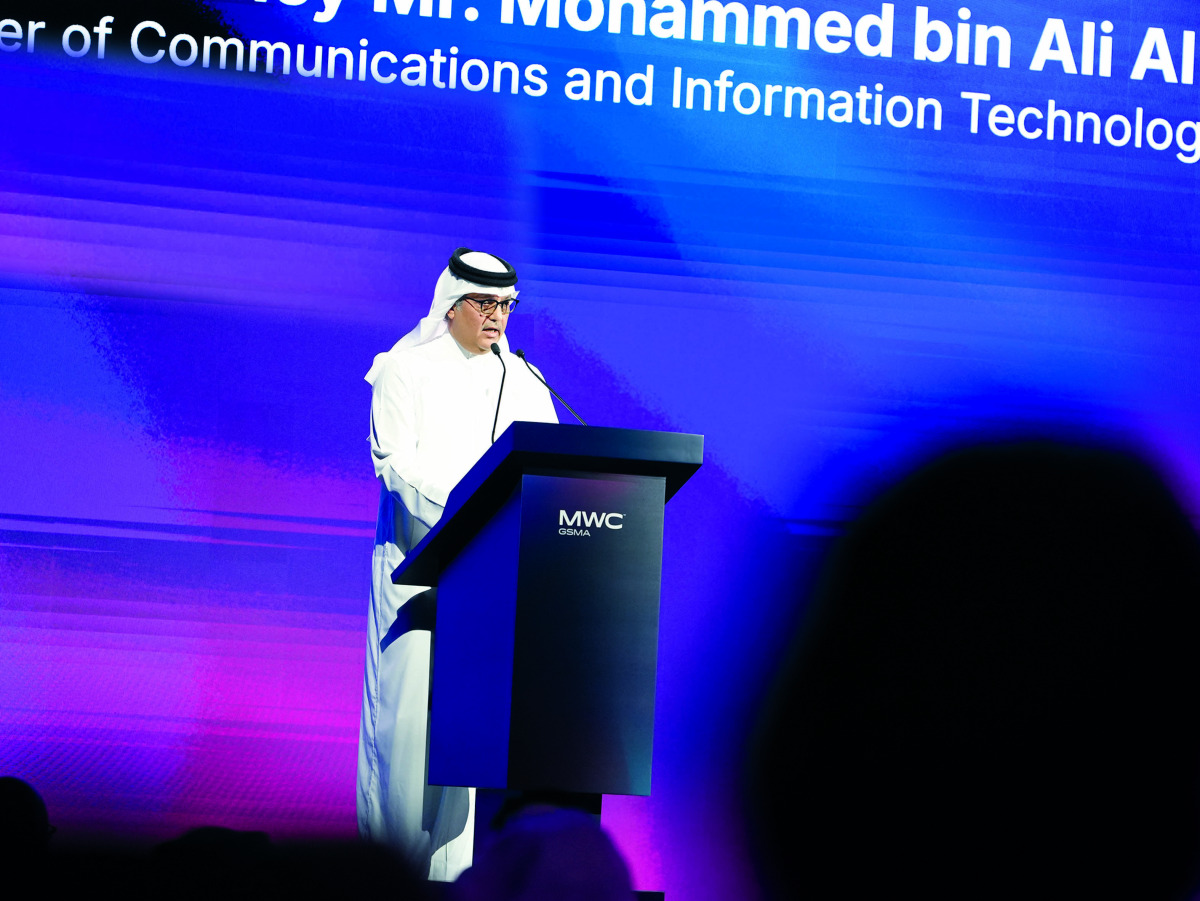
The second edition of the MWC26 Doha conference, organized by the GSMA in partnership with the Ministry of Communications and Information Technology, kicked off yesterday, under the slogan “The Age of Intelligence,” at the Doha Exhibition and Convention Center, in the presence of His Excellency Sheikh Saud bin Abdul Rahman Al Thani, Deputy Prime Minister and Minister of State for Defense Affairs, and a number of Their Excellencies, ministers, officials, and leaders of the communications and technology sector from around the world.
During his speech, His Excellency Mr. Mohammed bin Ali Al Mannai, Minister of Communications and Information Technology, stressed the importance of strengthening cooperation to keep pace with the transformations taking place in the communications and technology sector.
His Excellency said, “The second edition of the MWC Doha conference is being held at a time when communications infrastructure requirements are changing fundamentally. As artificial intelligence develops and moves towards executing tasks through smart agents, the need for more flexible networks and advanced computing capabilities increases, while global challenges impose greater importance on diversifying communication paths and ensuring continuity of services. These transformations place new priorities for the communications sector, including developing sixth generation networks, enhancing integration between terrestrial, maritime, and space networks, and expanding access to computing capabilities. These issues represent a major focus of MWC Doha discussions, and an opportunity to enhance cooperation between telecommunications operators, technology companies and investors, and accelerate the development of practical solutions that support the growth of the digital economy. In the State of Qatar, we continue to invest in these areas within the 2030 Digital Agenda, which enhances our national capabilities and opens new horizons for innovation and investment.” Following the opening ceremony, His Excellency Sheikh Saud bin Abdul Rahman Al Thani, Deputy Prime Minister and Minister of State for Defense Affairs, accompanied by His Excellency Mr. Mohammed bin Ali Al Mannai, toured the exhibition accompanying the conference, which included the Qatar Pavilion, where they were briefed on national projects and initiatives that showcase the use of advanced technologies and artificial intelligence in developing services and promoting digital transformation in various sectors.
The opening day witnessed a dialogue session that brought together Mr. Vivek Badrinath, Director General of the GSMA, and Ms. Doreen Bogdan-Martin, Secretary-General of the International Telecommunication Union, which discussed the future of communication in the Middle East and North Africa region, and the importance of global standards in ensuring operational compatibility between networks and services, in addition to the efforts required to expand the use of the Internet and reduce the digital divide.
Mr. Vivek Badrinath, Director General of the GSMA, said: “Progress is only achieved when everyone is included, and this requires adopting global standards that ensure networks, services and devices work together across borders, and concerted efforts to connect people who are still not connected to the Internet. Over the next three days, MWC Doha will coincide with the ITU PP-26 Conference, bringing together policy makers, innovators and sector leaders who contribute to setting standards and developing networks, helping to turn visions into reality. As the work of the Plenipotentiary Conference continues, we are confident that the enhanced dialogue provided by holding the two conferences in one place will contribute to enriching the important discussions taking place during the conference.”
In conjunction with the launch of the conference, the GSMA issued two new reports on the mobile communications economy and the development of 5G networks in the Middle East and North Africa region, which reviewed the economic opportunities provided by the sector, and the challenges associated with expanding connectivity and achieving sustainable returns from investments in infrastructure.
Khalifa bin Jassim: The conference opens new horizons for cooperation and investment
His Excellency Sheikh Khalifa bin Jassim bin Mohammed Al Thani, Chairman of the Board of Directors of the Qatar Chamber, confirmed that the State of Qatar’s hosting of the MWC Doha Conference for the second year reflects the advanced position that the country now occupies on the map of global technology and communications, and also confirms its success in attracting the most prominent international events that bring together decision makers, business leaders and investors.
This came while His Excellency attended the opening of the conference, where he toured the pavilions of the accompanying exhibition, during which he learned about the most prominent technological products of a number of regional and international exhibiting companies.
His Excellency pointed out that the conference represents an important platform for exchanging experiences and learning about the latest innovations and technologies that contribute to shaping the features of the digital economy, noting that it opens wide horizons for private sector companies to learn about the latest developments in the technology, communications and digital services sectors, and constitutes an opportunity to exchange experiences and knowledge with participating international companies.
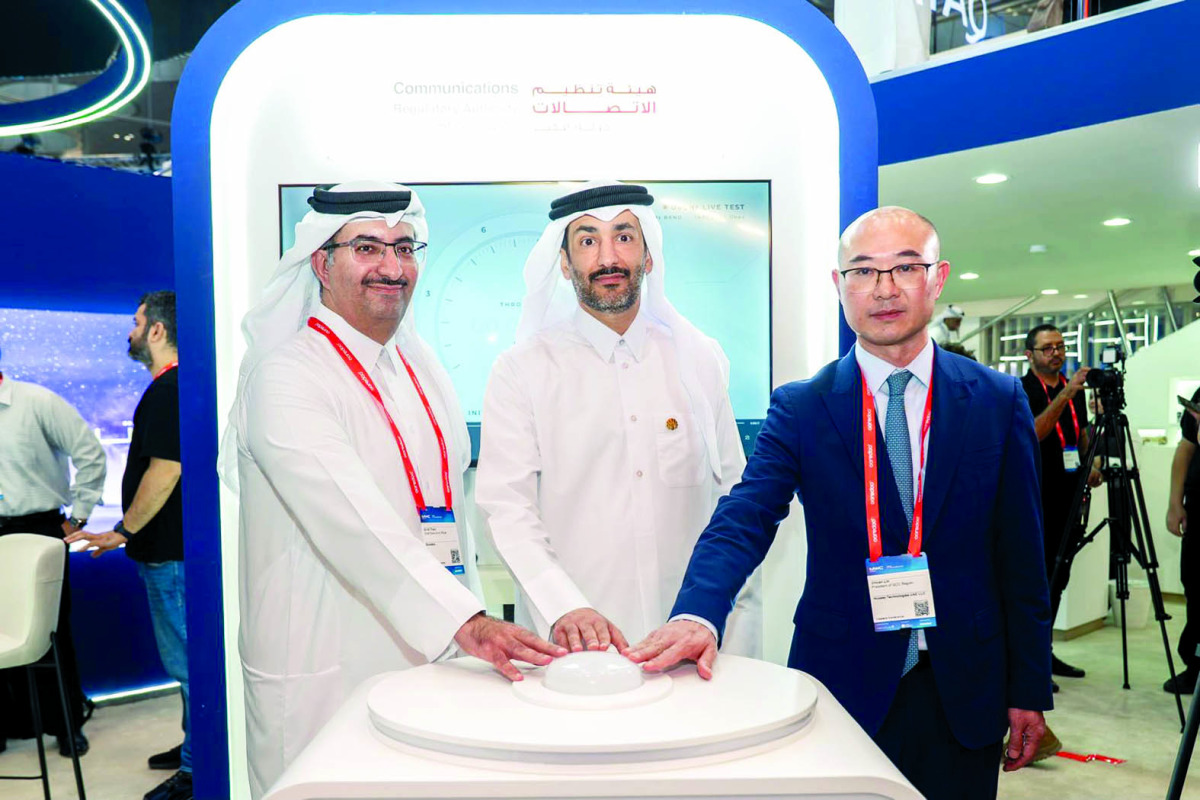
The Telecommunications Regulatory Authority is testing ultra-fast 6G technologies
The Communications Regulatory Authority, within the State of Qatar’s pavilion at the MWC26 Doha conference, is reviewing the results of tests of advanced technologies that highlight the potential of advanced mobile communications technologies in providing higher data transfer speeds, increasing network capacity, and enhancing network performance, which represents an important step in the technological development process of the State of Qatar towards the era of International Mobile Communications (IMT-2030) and the sixth generation (6G). The Authority is leading this initiative in cooperation with Ooredoo Qatar and Vodafone Qatar, with the participation of Huawei as a technical partner. The review of the test results was attended by Eng. Ahmed bin Abdullah Al-Musalmani, Chairman of the Communications Regulatory Authority, Sheikh Ali bin Jabr bin Mohammed Al Thani, CEO of Ooredoo Qatar, and Mr. Lin Jinkan, Regional President of Huawei for the Gulf region, where they were briefed on the test results and the capabilities of advanced technologies, within the framework of joint cooperation to support the development of the telecommunications sector in the State of Qatar.
These tests come as a continuation of the National Platform for Sixth Generation Experiments initiative launched by the authority during the MWC25 Doha conference in 2025, which aims to provide a national environment for testing emerging technologies and evaluating their performance. The current tests contribute to strengthening this initiative by providing insights into the capabilities of advanced mobile communications networks and transferring data at high speeds, which supports the achievement of the Qatar National Vision 2030 and the Digital Agenda 2030, and contributes to building a fully digitally interconnected society, accelerating digital transformation, and consolidating the position of the State of Qatar as a leading global model in the field of communications.
The tests resulted in a maximum download speed of 12.23 Gbps, using six-carrier integration technology (6CC), with a total bandwidth of 600 MHz, in addition to advanced multi-input and multiple-output antenna systems (Massive MIMO256T256R). The trial combined 400 MHz of frequency spectrum temporarily authorized for use in the upper 6 GHz band, with 200 MHz of commercially used fifth generation radio (5G NR) spectrum in the 3.5 GHz band.
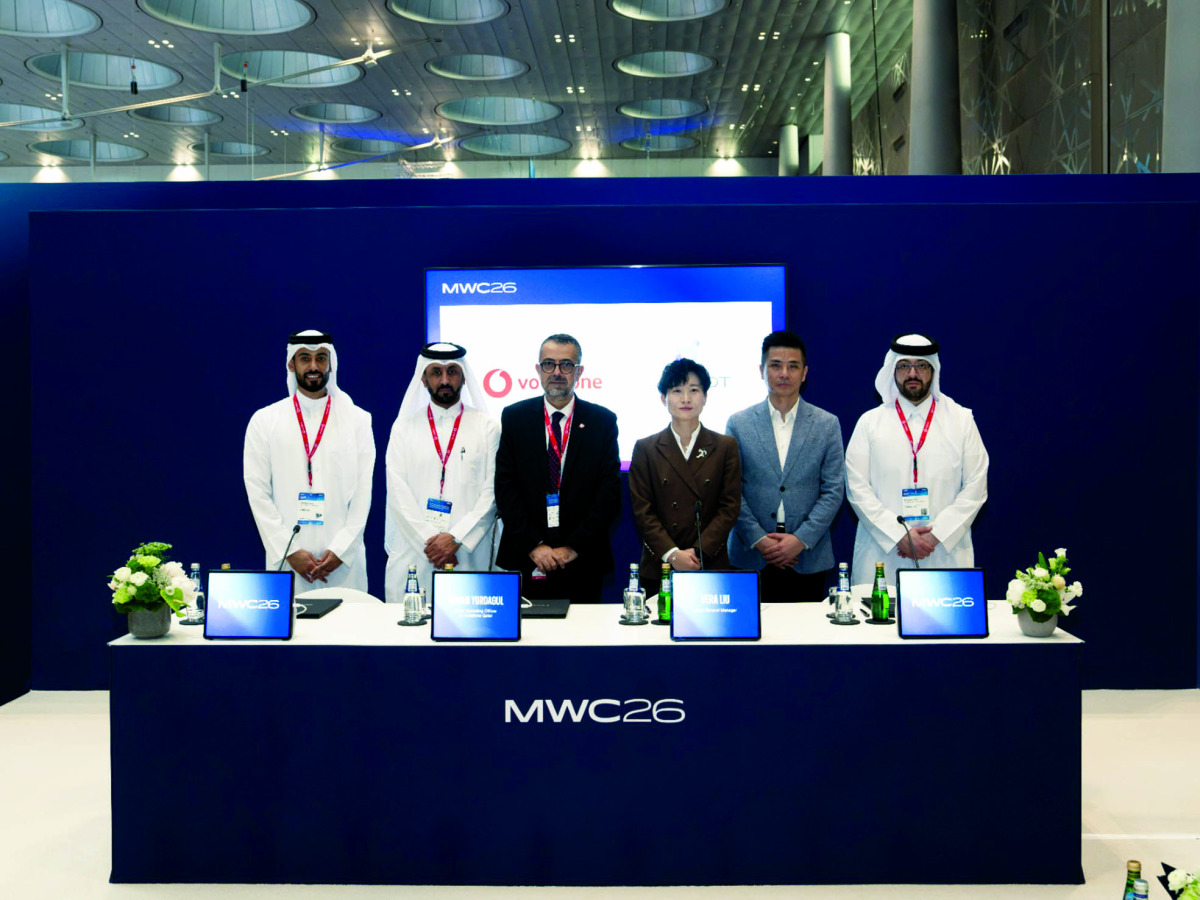
Vodafone is examining the prospects for developing smart robotics solutions
Vodafone Qatar signed a memorandum of understanding with AGIBOT, a global leader in developing human-like robots and artificial intelligence technologies, to explore cooperation opportunities in the field of developing and employing robotics solutions supported by Embodied AI, and to explore its applications in various government sectors, business sectors, and educational institutions in the State of Qatar.
The memorandum of understanding was signed by Mr. Baran Yurdagul, Chief Operating Officer of Vodafone Qatar, and Ms. Vera Liu, General Manager of Ajeboot in Qatar.
Under this memorandum, the two companies will work to study ways to employ Vodafone Qatar’s advanced capabilities in the field of communication and digital infrastructure, to create the technical environment that supports the deployment and operation of Ajibot’s solutions for robots supported by embodied artificial intelligence in the State of Qatar, and to explore the capabilities offered by these solutions to meet the needs of various sectors and develop practical applications for them.
Ajibot is based on an integrated system of technical capabilities that include foundational models, data infrastructure, simulation techniques, design and manufacture of robotic devices, leading to the deployment and application of solutions. Its product portfolio includes a diverse range of robotic systems, including humanoid robots, four-legged robots, and advanced robotic systems capable of carrying out precise and complex tasks, as well as customized cleaning solutions.
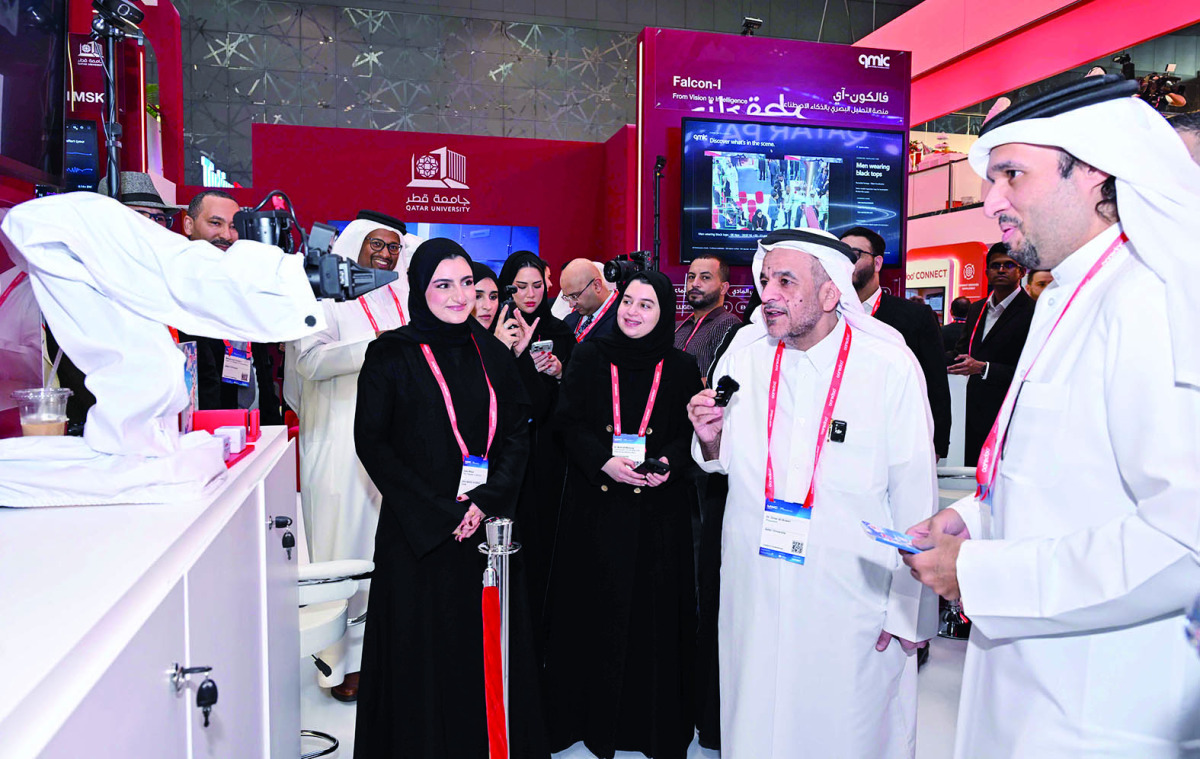
Qatar University reveals its innovation system and 4 technical licenses
Qatar University, the official educational partner of the MWC Doha 2026 conference, announced its system for innovation, entrepreneurship and knowledge transfer, to be a framework that determines the path of transforming ideas and research into practical solutions.
The university also announced 4 licensing agreements with two Qatari companies, including technologies it developed in the fields of coral reef restoration, rapid detection of norovirus, and antimicrobial medical formulations, to provide a practical model on this path.
Professor Dr. Ayman Arbid, Vice President of the University for Research and Innovation, announced the system of innovation, entrepreneurship and knowledge transfer, which brings together four entities at the university, whose roles are complementary in supporting the process of transforming the idea, from its early stages until it benefits from it in the market and society, and begins with innovation management.