

The government is keen to create a flexible and rapid business environment
The percentage of exporting factories increased to 25% and the growth of private sector exports by 12.5%
Supporting national companies’ access to global markets
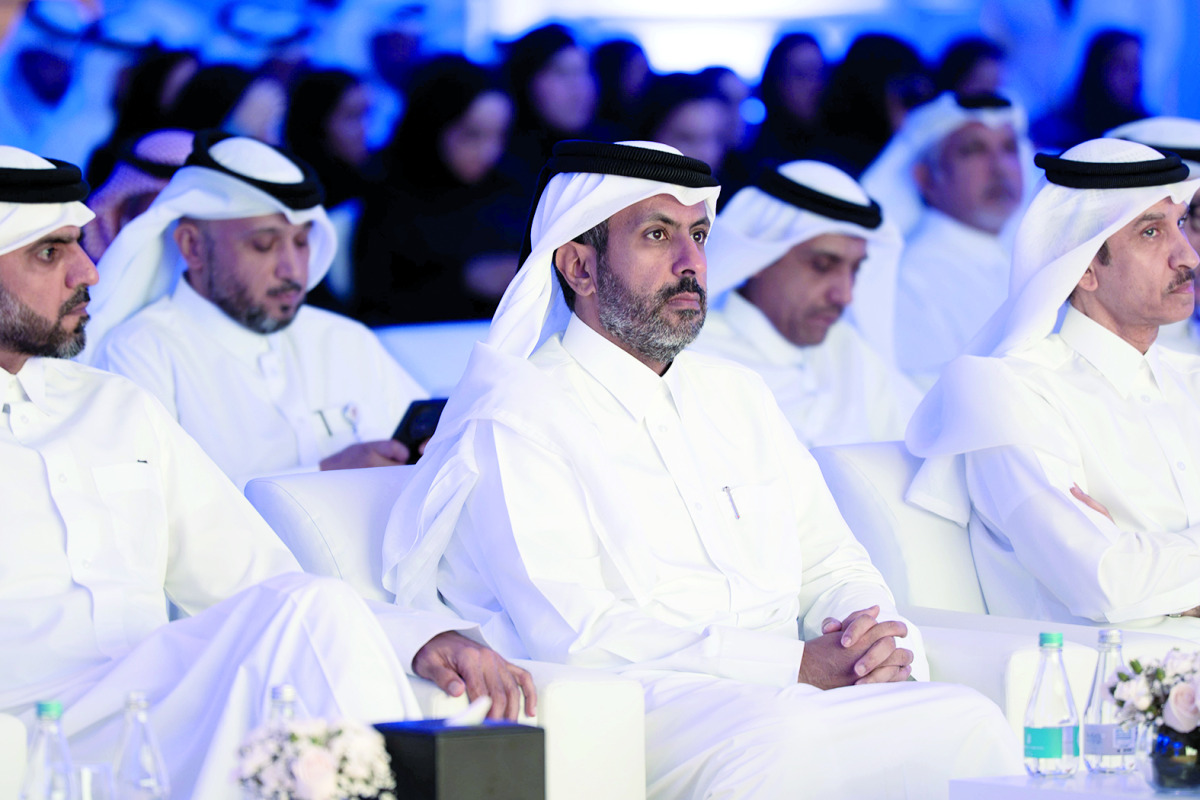
Yesterday, Wednesday, His Excellency Sheikh Faisal bin Thani bin Faisal Al Thani, Minister of Trade and Industry, opened the second edition of the Public-Private Sector Dialogue Forum, which was organized by the Ministry, in the presence of a number of senior officials and representatives of the private sector, with the aim of discussing the most prominent challenges facing the business environment, and discussing practical solutions and joint initiatives, in a way that contributes to developing the business environment and strengthening the partnership between the two sectors.
His Excellency Sheikh Faisal bin Thani bin Faisal Al Thani, Minister of Trade and Industry, confirmed that holding the second edition of the forum comes as an extension of the dialogue that was launched a year ago, and to consolidate the conviction that building the desired economy is not achieved through the efforts of the government alone or the private sector alone, but rather through partnership between the two parties, frank dialogue, and assuming joint responsibility.
His Excellency pointed out that this partnership was tested in light of the circumstances that the region has witnessed since the end of last February, and the accompanying disturbances in the movement of trade and supply chains, as it played an important role in maintaining market stability and enhancing community confidence, and goods remained available, factories were operating, and supplies were continuing, thanks to cooperation and coordination between state institutions and the private sector.
His Excellency also expressed his thanks to the Ministry’s partners in the private sector for their cooperation and efforts in ensuring business continuity and meeting the needs of the local market during this period.
Creating quality opportunities for future generations
His Excellency explained that the State of Qatar seeks to enhance the role of the private sector in leading economic growth, increasing exports, encouraging innovation, and creating qualitative opportunities for future generations, stressing the government’s keenness to create a business environment characterized by clarity, flexibility, and speed of achievement, and opens the way for capital, experience, and innovation to participate in building a more diversified and sustainable economy. He also stressed the importance of the dialogue between the two sectors being an institutional work approach based on listening, follow-up, accountability and continuous improvement, making the relationship between the government and the private sector faster in response, clearer in responsibilities, and closer to the needs of investors and the market.
His Excellency pointed out that economic data show progress in a number of areas, as cumulative industrial investment reached about 248.3 billion Qatari riyals, and the percentage of exporting factories rose to 25% during the current year, while private sector exports grew by 12.5%, in addition to continued growth in the establishment of new businesses.
He explained that these indicators reflect the integration of efforts between government agencies and the private sector, stressing the importance of building on this momentum and continuing to overcome obstacles that limit growth opportunities.
His Excellency pointed out that since the end of last February, the region has faced an exceptional circumstance whose effects extended to the movement of trade and supply chains, explaining that the priority was to ensure that the basic needs of the consumer in the State of Qatar are met, and to maintain the continuity of production in factories. He added that the nature of the stage required intensifying supervision of the markets, activating an operations center around the clock, with the participation of more than 300 inspectors in the field, and responding to all complaints within less than 24 hours.
He also explained that supporting the private sector was necessary to face the challenges associated with supply chains, through support and financing programs for raw materials and logistics services, in addition to continuous monitoring of the availability of 57 strategic food commodities, the value of whose imports from 39 countries amounted to about 8.38 billion Qatari riyals.
His Excellency stressed that the next stage requires developing the partnership between the two sectors, directing investment towards value-added sectors, supporting the access of national companies to global markets, and employing innovation to achieve sustainable economic growth, expressing his confidence in the ability of the Qatari private sector, with the experience and flexibility it has gained, to lead new growth opportunities. His Excellency stressed the importance of the forum coming up with specific priorities, clear responsibilities, and tangible results that are felt by investors and consumers alike, instead of being satisfied with a new list of recommendations.
The efforts of the business environment development committees and their achievements
Within the framework of the forum’s work, Mr. Saleh Majid Al-Khulaifi, Assistant Undersecretary for Industry Affairs and Business Development at the Ministry of Commerce and Industry, gave a presentation during which he reviewed the outcome of a year of joint work since the first edition of the forum, discussing the efforts and achievements of the business environment development committees, and the initiatives of the National Committee for Small and Medium Enterprises Development, in addition to the most prominent initiatives and projects implemented during the year 2026 to simplify procedures, facilitate doing business, and enhance channels of communication and interaction with the private sector, which contributes to addressing the challenges that arise. Facing it and improving the business environment in the country.
Mr. Talal Abdullah Al Shaibi, Assistant President of the General Authority of Customs for Customs Affairs, also gave a presentation in which he reviewed the Authority’s efforts in developing customs services and facilitating trade movement, through the “Al Nadeeb” single window system, employing digital solutions and artificial intelligence technologies, and accelerating customs clearance and release procedures, in addition to initiatives aimed at meeting the needs of the private sector and enhancing the flow of supply chains.
The forum witnessed the organization of a dialogue session entitled “The Role of Legislation and Government Integration in Developing Government Services,” in which Mr. Saleh Majid Al-Khulaifi, Assistant Undersecretary for Industry and Business Development Affairs at the Ministry of Commerce and Industry, Mr. Khamis Mohammed Al-Nuaimi, Assistant Undersecretary for National Manpower Affairs in the Private Sector at the Ministry of Labor, and Mr. Ghanem Khalifa Al-Attiyah, Assistant to the Chairman of the General Tax Authority for Tax Affairs, participated. The session discussed developments in legislation and policies that have an impact on the business environment, and the role of integration between government agencies in developing and providing services faster and more clearly, and in line with the needs of investors and the market.
The forum concluded with discussion sessions for the business environment development committees, with the participation of representatives of the concerned authorities and the private sector, which addressed a number of topics and challenges related to the sectors of industry, trade, logistics, health and technology, in addition to discussing issues and courts. These sessions formed a platform for exchanging opinions and discussing solutions and practical proposals, in a way that supports the development of the business environment, and enhances communication and coordination between government agencies and representatives of the private sector.