

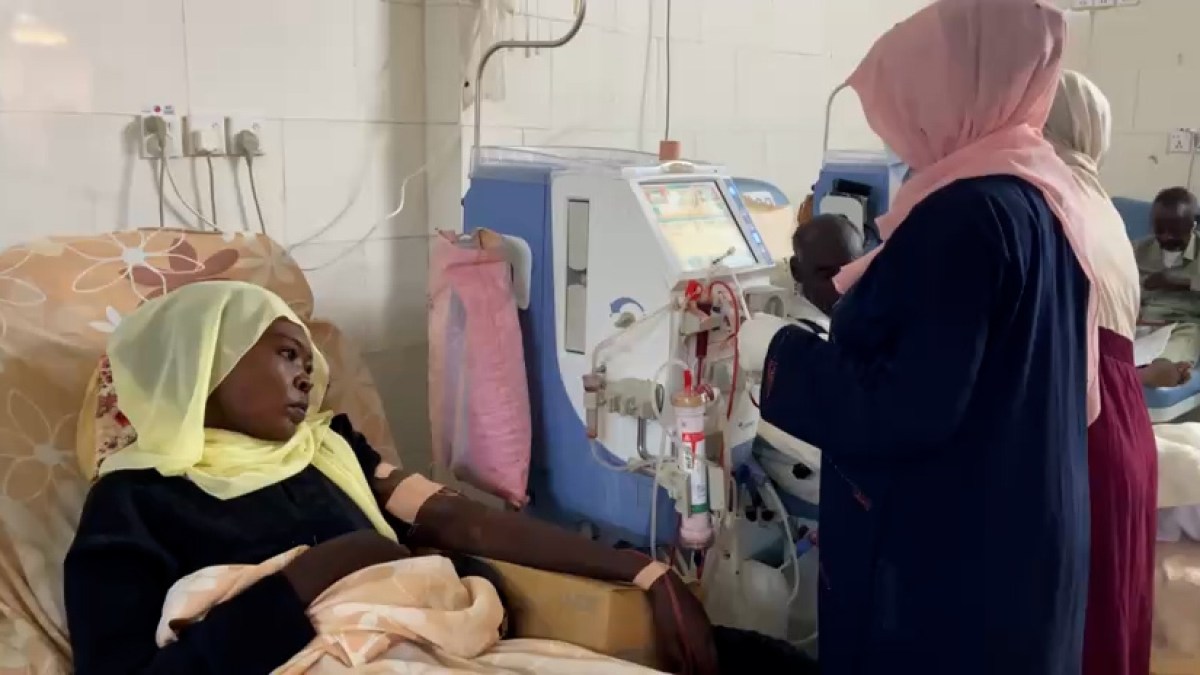
Sudanese Minister of Health Haitham Mohamed Ibrahim confirmed that the ongoing confrontations between the army and the Rapid Support Forces for nearly 20 months have caused the collapse of the country’s health system.
Fighting continues between the army and the Rapid Support Forces in many states in Sudan, exposing the population to multiple difficulties.
The clashes led to major damage to infrastructure, the economy, education, and health, and resulted in one of the largest displacement crises in the world.
According to United Nations data, the clashes resulted in the deaths of more than 20,000 people, more than 3 million others fled the country, about 9 million people were internally displaced, and more than 25 million people relied on humanitarian aid to sustain their lives.
An unprecedented humanitarian and health crisis
In statements to Anadolu, the Sudanese Minister of Health confirmed that the humanitarian and health crisis that Sudan is going through is unprecedented.
He pointed out that the Rapid Support militias violated international standards, laws and ethics by targeting citizens, homes, service facilities, water, energy and electricity networks, crops, hospitals and medical supplies.
Ibrahim explained that the spark of clashes began in the capital, Khartoum, which led to a major displacement crisis, as some people were forced to flee more than once.
He pointed out that the health system was directly and indirectly affected by the ongoing confrontations, and that hospitals were subjected to attacks and used as military barracks.
He continued, saying: “On the fourth day of the war, I was in Khartoum Hospital when the Rapid Support Forces occupied it, and several hospitals were out of service. These hospitals are not ordinary, but include centers specialized in heart surgery, organ transplantation, and oncology treatment.”
He added that stores containing medicines and medical supplies worth $600 million were looted and destroyed, leading to a severe shortage of medicines.
$11 billion health sector losses
Ibrahim explained that more than 200 ambulances and medical vehicles were looted, adding: “According to initial estimates, health sector losses amounted to $11 billion. We also lost more than 60 health personnel.”
He added: “But we have not stopped working despite these circumstances, because our motto is that we must continue despite what is happening, and we have developed clear strategies that include 5 priorities: saving lives, providing medicines and medical supplies, operating hospitals, combating epidemics, and supporting the health of women and children.”
Avoid complete collapse
Ibrahim pointed out that the clashes led to the collapse of the health system, but medical personnel succeeded in avoiding a complete collapse, and that the situation relatively stabilized after about two years.
He continued: “We have restarted most of the hospitals, and repaired many hospitals in different states. We now have hospitals that provide open-heart surgery and oncology services, with the exception of organ transplantation services, which we were unable to restore.”
He pointed out that medicines and medical supplies worth $200 million were imported.
He explained that they faced dangerous epidemics such as dengue fever and cholera, and that in cooperation with international organizations, they were able to control them.
He confirmed that more than 12 million doses of the cholera vaccine had been provided.
Ibrahim added that the main challenges are the difficulty of reaching all areas of Sudan due to the security conditions.
He stressed that another challenge is the lack of funding, as the support provided does not exceed 20% of the needs, which require at least $4.7 billion.