

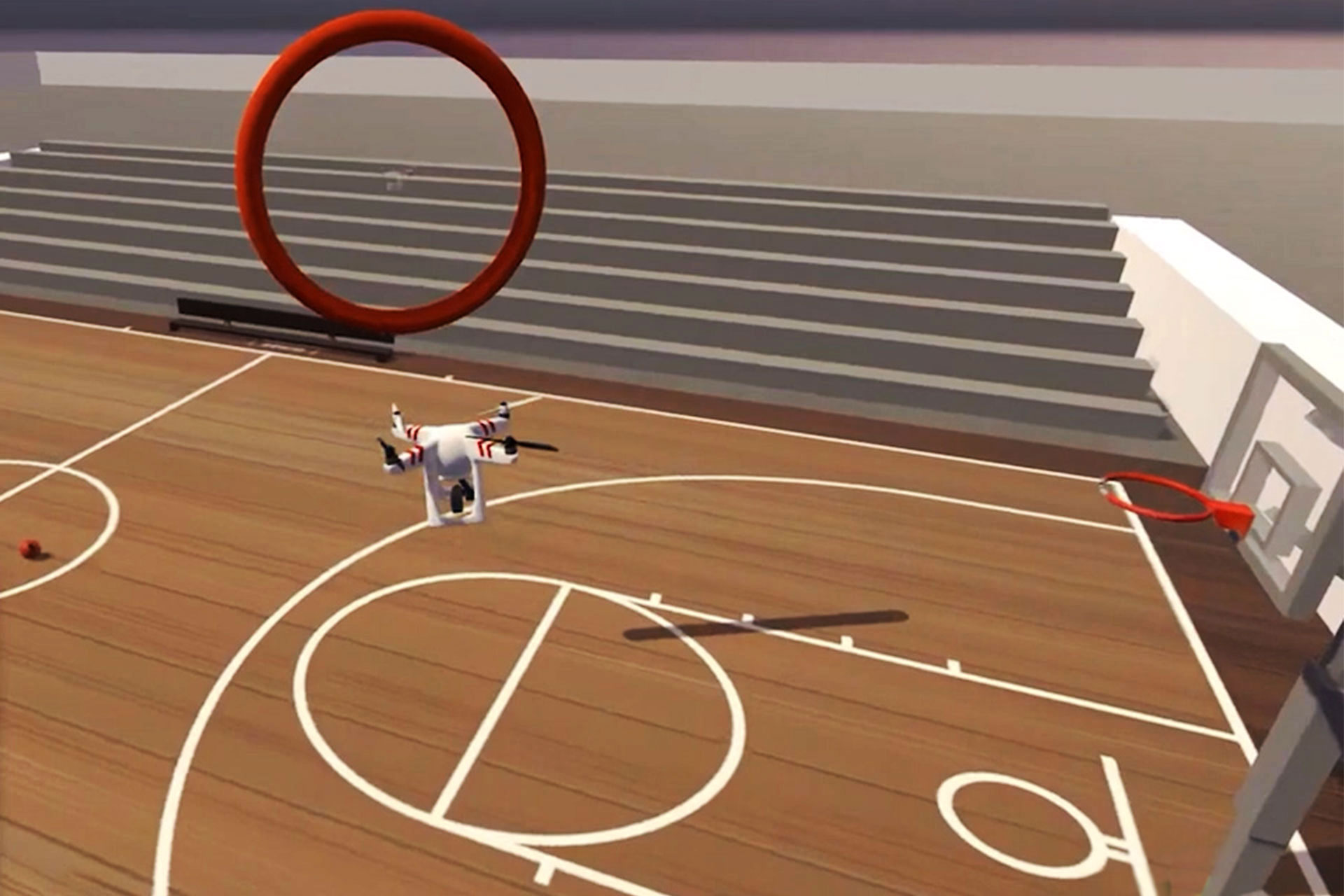
In a revolutionary step, a person with paralysis was able to control a virtual drone using his mind only, as nerve technology redefines the limits of human capabilities by opening new doors to communicate between the mind and the machine.
This progress in nerve technology, which was detailed in a recent study, shows the possibilities available for those who suffer from motor disabilities and want to enjoy entertainment activities, such as electronic games.
By integrating the so -called BCI – or a neurological interface, with the virtual aircraft systems – this experiment shows great potential to improve the quality of the life of people with motor disabilities, in addition to progressing towards a future in which the mind becomes the basic tool for interaction With technology.
This article reveals the details of this technological jump that combines advanced nervous research and engineering innovation, and how researchers succeeded in overcoming technical challenges, and what this development might mean for the medical and technological future.
Brain and computer interface
There are non -surgical methods that allow controlling video games, such as using e -optic layout to capture signals from the brain, but the brain electrical planning signals combine data from large areas of the brain.
Researchers believe that electrodes should be placed closer to nerve cells in order to restore high -performance mobility.
As a result, scientists have developed a neuron intended to address this problem, which allowed great progress to show how those with physical disabilities can enjoy games and communicate with friends in unprecedented ways.
The neural facade was tested on a research participant with quadruple paralysis due to a spinal cord injury.
The neural façade divided the hand into 3 independent groups of fingers, which are the thumb and a promoter of the fingers (the soil, the middle, the ring and the pinky). Each group can move vertically and horizontally, providing accurate control of the drone.
When the participant considers moving the three groups of fingers, the virtual march plane responds and moves through the path of virtual obstacles.
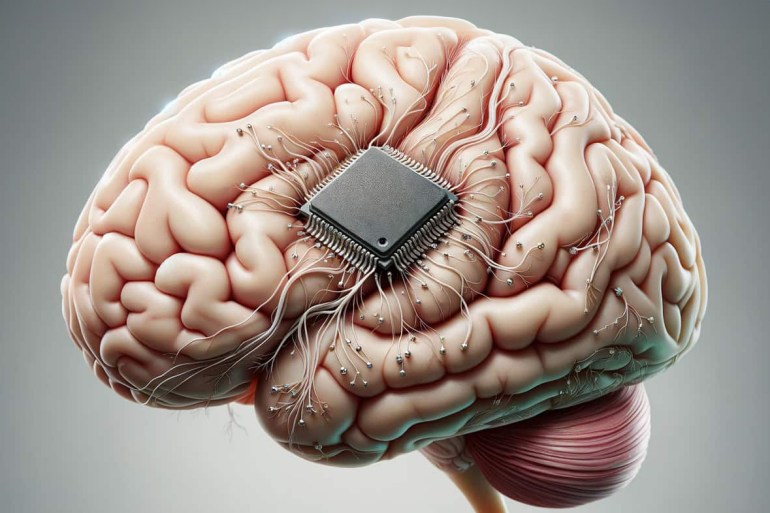
In order to connect this technology to the brain, electric electric poles are placed in the kinetic cortex of the brain, with electric electrodes connected to a base installed in the skull and coming out of the skin, allowing to connect to a computer.
The signals are sent to the computer to control the movement of the four -flyer -marching plane through the path of virtual obstacles.
The study participant had to complete the path by directing the plane through several episodes as soon as possible and the most accurate way.
“The electrodes pick up the signals that arise in the kinetic crust when the participant tries to move his fingers, and then the neuron is used to explain the intentions of the virtual fingers in the simulation.” .
The research was conducted as part of the Brain Gate 2 clinical trials (Braingate2), which aims to determine how people with quadruple paralysis can use the neural facade to control devices.
The research focused on how to link these neurological signals to automated learning to provide new options to control external devices for people with injuries or neurological diseases.
Experiments are an important opportunity for those who suffer from injuries or neurological diseases that affect their ability to use hands, and this includes infection of the cervical spinal cord, stroke in the brain stem, muscle atrophy, atrophic lateral sclerosis, among other cases.
The participant with paralysis has worked with researchers since 2016, and expressed his interest in driving the virtual drone.
One of the main topics – which appeared from the results of the study – was the feeling of empowerment that the neurological façade granted to the participant.
The participant expressed his enthusiasm to complete the virtual march sessions, as he made him feel like he could get a metaphorically out of his bed or his chair.
The study indicates that the performance of the march flying 6 times the improved of the participant by reading the signals directly from the motor nerve cells in exchange for electrical planning of the brain.
New hope for disability patients
Most of the previous kinetic neural facades have focused on controlling individual effects, such as dealing with robotic indicators and arms capable of holding things.
While the newly developed neural facade targets the fingers control more complicated, which may allow a paralysis to perform activities, such as playing a musical instrument or using the digital video control arm.
Thanks to the ability to move multiple virtual fingers with cerebral control, you can get multiple -factor control systems for all types of things, from operating design programs with the help of computers to compose music.
With the development of nervous technology, the possibilities of using neuron facades in granting people with disabilities increase the ability to reach a broader set of activities.
One of the results worth noting this development is that these people may feel more connected to others, which enhances the level of healthy social communication and helps them to overcome barriers related to disability that sometimes passes without anyone noticing.
“People usually focus on restoring jobs that are essential necessities, such as eating, dressing and navigating, but often important aspects are not equal to sufficient attention, Like entertainment or communication with peers, where people want to play games and interact with friends. “