

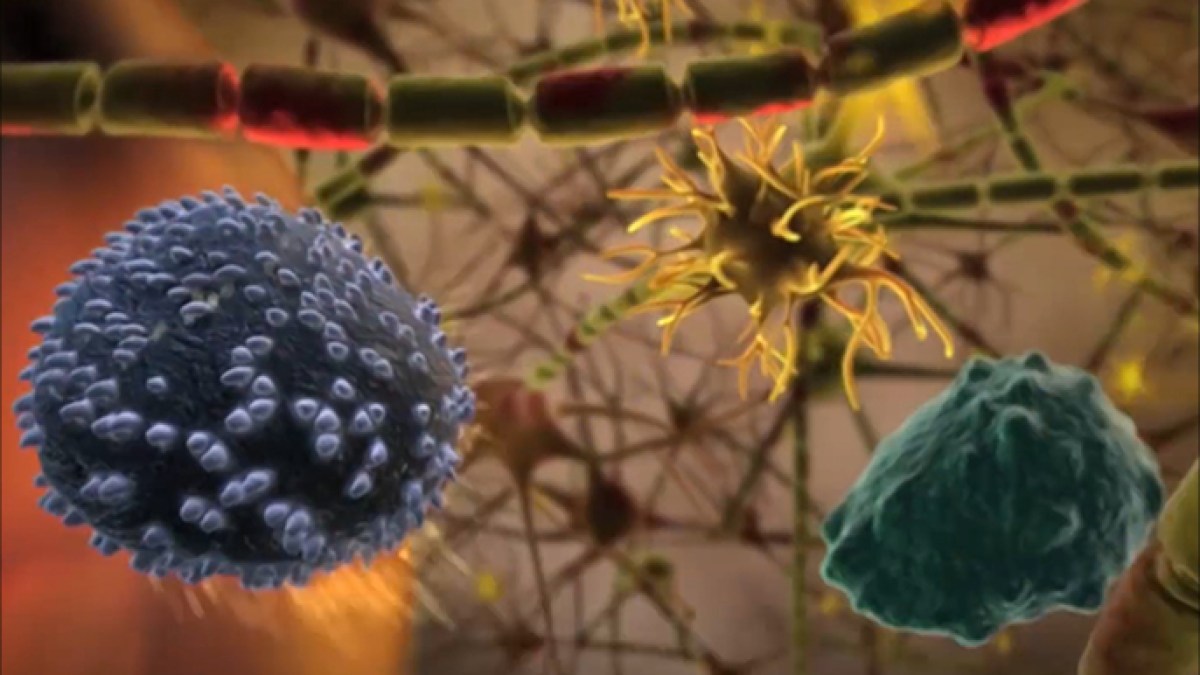
A recent study revealed that the genetic preparation meeting-with the presence of the antibodies to the Epstein-Barr Virus (EBV) in the body-can lead to a significant increase in the risk of Multiple Sclerosis (MS) that occurs when the immune system attacks the brain and spinal cord.
The study was conducted by researchers from the “Carolinska Institute” in Sweden, from the College of Medicine at Stanford University in the United States, and the results were published in the Journal of the National Academy of Sciences (Proceions of the National Academy of Sciences) on March 10. It was written about the Yurrick Alert website.
Multiple sclerosis is defined as a self -immune disease that affects the brain and spinal cord, and leads to disability in young people.
It is estimated that 90-95% of adults carry the “Epstein Bar” virus and they have been a counter-bodies. Many infection in childhood infection without symptoms or minor symptoms appear, but the virus can cause young adults.
Attacking a protein in the brain
All those who suffer from multiple sclerosis are considered a carrier of the “Epstein Bar” virus. However, the mechanisms behind this link are clearly not explained.
Researchers at the Carolinska Institute in Sweden and Stanford Medical University in the United States have confirmed that the antibodies to the “Epstein Bar” virus, called “EBNA1”, can also attack a similar protein in the brain and spinal cord called Glialcam, which may contribute to sclerosis. The new study also shows how different groups of antibodies and genetic factors for sclerosis increase the risk of infection.
“The best understanding of these mechanisms can eventually lead to diagnostic tools and better treatments for multiple sclerosis,” says Thomas Olson, a professor in the Department of Clinical Neuroscience at the Carolinska Institute in Sweden, who led the research.
In this study, the researchers analyzed blood samples taken from 650 patients with multiple sclerosis and from 661 healthy people. They compared the results in terms of the levels of antibodies to the “Epstein Barr” virus and the levels of antibodies to the Gallal Cam protein found in the brain, in addition to other protein in the brain, also similar to the “Epstein Bar” virus protein.
High levels of antibodies
After comparing the results, high levels of all antibodies in multiple sclerosis patients were monitored. The high levels of antibodies, when there is a genetic worker, was associated with an additional increase in the risk of developing the disease.
“The new results are approaching a step to understand the mechanism of the interaction of genetic and immune factors in multiple sclerosis,” says Lawrence Steinman, a professor of neuroscience at Stanford University College of Medicine in the United States.
Currently, researchers from the Carolinska Institute are planning to analyze samples collected from people, before their multiple sclerosis appears, to find out when these antibodies appear (before or after the disease appears).
“If these antibodies are present before the disease appears, they may be considered vital signs of early diagnosis of multiple sclerosis,” says Dr. Olson.