


Doha- In a move that reflects its deep commitment to society, the Qatar Foundation launched a comprehensive strategy today to support people with unification spectrum disorder, making new criteria to serve those with this disorder and their families.
The new strategy, which was prepared with the participation of experts and representatives of the local community, is focusing on building an integrated system that allows people with autism opportunities to live independently and achieve a satisfactory life, taking into account the individual differences in capabilities and needs, as the strategy has identified 4 main axes to achieve the targeted vision, and these axes include:
- Improving access to integrated health services.
- Expanding educational, training and work opportunities.
- Building a more comprehensive and supportive society.
- Take advantage of innovations and scientific research.
Diagnosis accelerate
According to the strategy, which was announced today at a press conference at the Qatar Foundation for Education, Science and Community Development, the most prominent pioneering initiatives presented by the Foundation are the establishment of a community center to support families with knowledge and resources, and to develop an integrated medical care model in Sidra Medical Hospital to accelerate diagnosis and treatment, in addition to expanding the scope of specialized education and opportunities for vocational and university training for people with authenticity, including establishing a talented center Among them.
In a statement, the Qatar Foundation stressed that the strategy attaches great importance to advanced research in genome and biotechnology, and developing smart technological solutions to enhance early detection and treatment support, as it seeks through this plan to benefit from its unique location as an engine for research, education and health, to enhance coordination between various sectors and build a strong national system to care for people with autism and that Qatar be a global center for innovation in this field.
The Foundation explained that its vision is based on the coordination of research, educational and health efforts, in a manner that creates a supportive and prosperous environment for people with autism and their families, and contributes to achieving the goals of the national development strategy of the State of Qatar, and the strategy is based on an evidence based on evidence to address the current gaps, and to work in cooperation with various sectors to achieve positive results in the lives of people with authenticity.
Employment of autistic people
In a statement to Al -Jazeera Net, the head of the Research Department and the director of the Sidra Medicine Program in Sidra Medicine, Khaled Fakhro, said that this strategy has been developed through a group of institutions, universities, hospitals and schools, explaining that implementation will be through schools, specialized centers, hospitals, higher education centers and other various specializations.
He explained that among the goals of the strategy is to reduce the average age of early diagnosis at a rate of 25%, the application of the integrated care model with the participation of 10 medical specialties, the training of 500 family doctors on early detection tools, the provision of psychological support services to families through 5 specialized centers, increased learning opportunities, higher education and employment for young autistic youth by 50%.
He stressed that the most important goals of the strategy is to expand the base of early detection, because it helps in relieving symptoms on the child and the entire family, revealing that the percentage of autism in Qatar is approximately 1 out of every 80 to 90 children and is considered a similar percentage of global proportions.
He continued that there are advanced research in Sidra Medicine under the name “Study of the Blessing”, which is the largest study of autism from the genomic level in the Arab world, and aims to search for genetic causes and environmental causes that affect the increase in the percentage 25%.
The inclusiveness of services
Professor of Neuroscience at Weil Cornell Medicine-Qatar Hilal Al-Ashwal said that the new strategy is inclusive, including all aspects of sponsorship for autistic people at the level of all stages of life, starting from the diagnosis stage, through the education stage to empowerment to be effective elements. It is also based on personal care, which is compatible with a person and corresponds to his needs in his various growth periods.
He added in a statement to Al -Jazeera Net that Qatar has several strategies concerned with autistic people, but the programs are separate, but the new strategic work is based on its collection in a continuous integrated system, to provide a clear path for the person and his family.
He pointed out that the aim of the strategy is to have programs to pay attention to education, and to build the capabilities of autistic people so that they can join work in various fields, explaining that the percentage of people able to join work is less than 10%, and that the strategy is in line with Qatar Development Strategy to deliver this percentage to 30%, through training and education.
The participating professor in the Department of Information Technology and Computing at the Faculty of Science and Engineering, Hamad Bin Khalifa University, Dina Al Thani, confirmed that the strategy is a project that started nearly two years ago, after a round table with the Chairman of the Qatar Foundation’s Board of Directors, Sheikha Moza Bint Nasser, which included experts from all sides at Qatar Foundation, as well as from the state institutions, discussed the difficulties facing autistic people, whether children or adults.
She added in a statement to Al -Jazeera Net that, accordingly, a committee was formed at the level of the Qatar Foundation, which includes experts from all sides at Qatar Foundation, whether pre -university education, Sidra Medicine or Hamad Bin Khalifa University, which worked on studies on the available services and difficulties facing autistic people, and ways to increase and expand services.
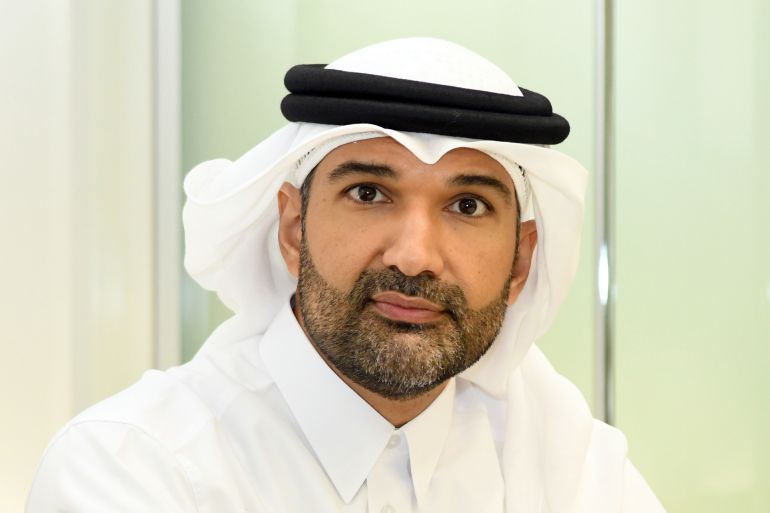
She explained that the strategy, which includes 4 axes, which are education, health, society, research and innovation, ensures integration in services, and that the axis of society in the strategy is very important, and work will be provided to provide a platform for the people to provide services and awareness, pointing to consulting with the Ministry of Public Health in Qatar, which has the national autism plan, in designing the strategy.
She pointed out that one of the most prominent strategy initiatives is to provide services for adults, in terms of training for their involvement in the labor market, and that it is a very important point, and then looking after years in improving the livelihoods of autistic people, whether children or adults, and that the strategy considered the possibility of being attached to university education, in addition to vocational training, and that it is one of the points mentioned in the strategy for adults.