

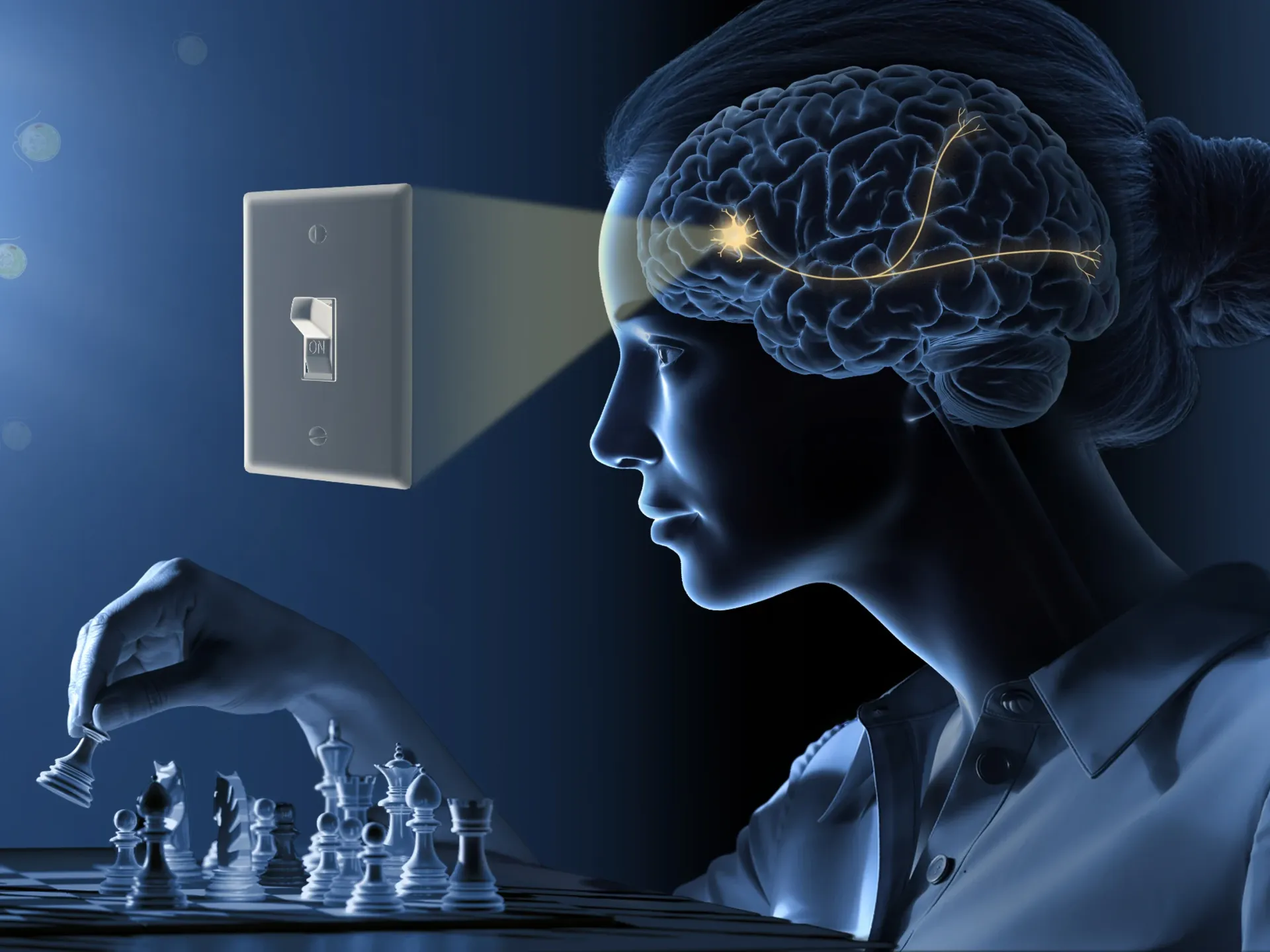
A recent clinical trial showed encouraging results for an experimental treatment based on light and genetic modification. Some people with hereditary blindness were able to regain a limited amount of vision, allowing them to detect objects in their surroundings, determine their locations, and extend their hand toward them.
The treatment is based on the “Optogenetics” technology, for which three scientists received the 2026 Nobel Prize in Medicine in recognition of their contributions to developing its scientific foundations.
The experiment included 10 people suffering from advanced stages of retinitis pigmentosa, a hereditary disease that gradually deteriorates eyesight and may lead to blindness.
The results showed an improvement in eye sensitivity to light in 7 participants, the improvement in 6 of them was clinically significant, while some patients recorded an improvement in performing simple visual tasks.
The study was published on October 7, 2026 in the New England Journal of Medicine, and showed encouraging indicators regarding the safety of the treatment and the possibility of restoring some visual functions, although the technique is still experimental and cannot restore normal vision.
From Nobel Prize to a cure for blindness
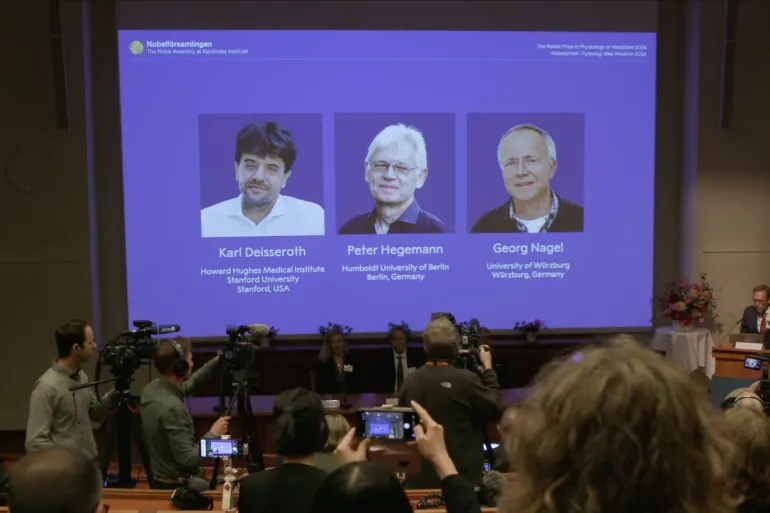
The scientific foundations of this technology go back to the research that culminated in the 2026 Nobel Prize in Physiology or Medicine, which was won by Karl Deisseroth, Peter Hegemann and George Nagel, for their contributions to developing a technology that allows controlling the activity of neurons using light.
The idea is based on introducing light-sensitive proteins into specific nerve cells, so that they can be activated when exposed to specific wavelengths of light.
In the case of blind patients, researchers seek to take advantage of this technology to compensate for part of the function of light-sensitive cells that have lost their ability to work within the retina.
Retinitis pigmentosa represents a group of genetic diseases that affect more than 1.5 million people around the world, and cause the deterioration of the cells responsible for receiving light and converting it into nerve signals.
As the disease progresses, the affected person may gradually lose the ability to see, but some other nerve cells in the retina remain able to perform their functions, including ganglion cells that transmit visual signals to the brain.
Here came the idea of a new treatment, which targets these remaining cells instead of trying to repair the cells that have been damaged.
How does the new treatment work?
Researchers combined gene therapy with special glasses that process images and convert them into light pulses.
In the first phase, each participant received a single injection into the eye with weaker vision, containing a modified viral vector carrying genetic instructions to produce a light-sensitive protein known as “ChrimsonR.”
This protein allows the remaining ganglion cells in the retina to respond to light, although they are not the cells normally responsible for receiving images in the eye.
After treatment, participants used glasses equipped with an imaging system that captures surrounding scenes and converts them into patterns of light pulses at appropriate wavelengths to activate the genetically modified cells.
These cells receive light signals and transmit information to the brain, which allows the patient to perceive some objects and their locations.
One of the advantages of this method is that it does not depend on the presence of a specific genetic mutation, but rather targets cells that can remain relatively healthy despite the different genetic causes of the disease, which may expand the scope of its use in the future.
What could patients see?
The trial showed an increase in light sensitivity in 7 of the 10 participants, and this improvement reached a clinically significant level in 6 of them.
As for the visual performance tests, which 8 participants underwent, they showed improvement for 4 of them in some tasks using special glasses.
These tasks included detecting the presence of an object in front of the patient, determining its location and extending the hand towards it, in addition to finding a door or tracing a line drawn on the ground while walking.
Some participants were able to locate and touch a notebook. These tasks may seem simple to sighted people, but they represent an important advance for those who have lost the ability to see objects due to retinal deterioration.
The researchers noted that participants who spent more time training to use glasses performed better on some tests, suggesting that learning to deal with new visual cues may be a helpful factor in benefiting from treatment.
The researchers also monitored signals in brain activity that correspond to the processing of visual information resulting from the stimulation of genetically modified cells.
What about the safety of treatment?
The trial focused primarily on evaluating the safety of the treatment, not definitively proving its effectiveness.
The researchers recorded 34 incidents of eye-related side effects among 9 of the participants, including 23 mild incidents and 10 moderate incidents.
One severe incident was also recorded, which was a temporary blockage of the central retinal artery following the injection, but it resolved within minutes after medical intervention.
No side effects were observed in other parts of the body that were proven to be related to the treatment or the injection procedure.
Although the researchers considered the safety results encouraging, the limited number of participants means that larger studies are necessary to evaluate the risks and ensure the effectiveness of the treatment and the continuity of its results.
Why can’t patients recognize faces?
Despite the improvement recorded by some participants, the treatment did not give them normal vision or the ability to distinguish fine details and recognize faces.
One reason for this limitation is related to the location of the ganglion cells targeted by the treatment, as the treated cells are distributed in a ring-like arrangement around the central fovea in the retina, a small area responsible for sharp central vision and detail recognition.
Researcher Butund Rushka, one of the study supervisors, explained that patients are now able to detect some objects, but they cannot yet recognize faces.
This means that the signals provided by the treatment allow limited visual perception, but it does not reach the level of detail provided by the natural eye.
However, the success of the technology in enabling some patients to pick up visual information after losing the function of light-sensitive cells represents an important step towards developing new treatments for hereditary blindness.
The challenge for researchers remains to improve the accuracy of the visual signals that reach the brain, develop methods of motivation and training, and then test the treatment on larger numbers of patients before it can be used on a large scale.