


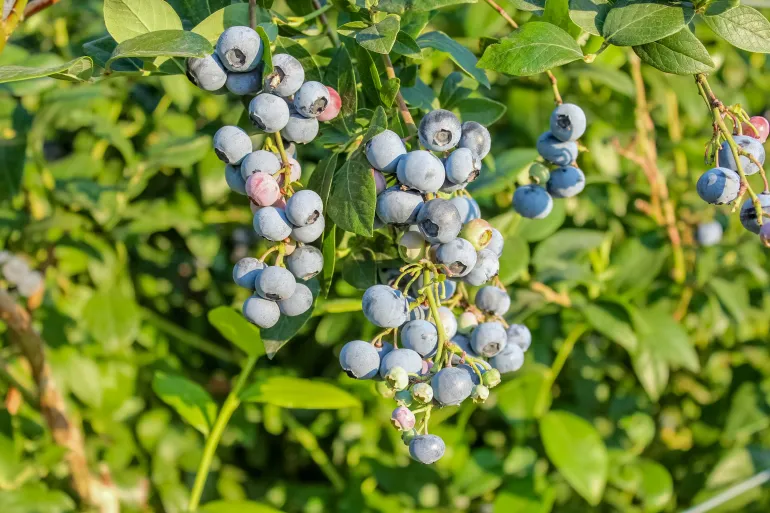
Wild blueberries (blueberries) are one of the best and finest types of fruits that nutritionists and dieters recommend eating regularly. They contain low calories (only 80 calories in one small cup of them), so they are characterized by a low glycemic index and do not cause an increase in blood sugar levels after eating them, so they are good for diabetics.
Wild blueberries contain key components that enhance their nutritional status. They are low in fat and rich in fiber and phenols, which improve the level of immune functions in the body, and raise the efficiency of the digestive system, which is linked to enhancing metabolic processes and subsequent health effects that reflect positively on the body.
What’s so special about wild blueberries?
The treasure that a wild blueberry represents is due to the high amount of dietary fiber and multiple phenols, specifically anthocyanins, which give it its blue color.
Multiphenols are characterized by their large molecular size, which is difficult to break down in the stomach and intestines, so they rush to the colon and are transformed there into another group of products that the body can benefit from to support cardiovascular health and metabolic processes.
The harsh upbringing is the secret of his superiority
The high nutritional value that blueberries acquire is due to the harsh conditions in which they grow. They have grown for thousands of years in eastern Canada and the American state of Maine. Blueberries in these regions experience harsh winters that force them to adapt by producing anthocyanin compounds (one of the phenols) that protect them against these conditions. They also contain 30 different types of anthocyanins. Therefore, we gain these protective benefits when we eat blueberries that resisted and were able to grow and survive under the conditions they were exposed to.

Benefits of blueberries for the heart
A scientific review indicates that eating wild blueberries regularly may contribute to supporting heart health and improving metabolic processes in the body. This is due to its positive effect on a number of important vital indicators, such as blood pressure, blood sugar levels, blood vessel function, and blood fat levels.
These results came within a scientific analysis that included 12 studies conducted over a period of 24 years in several countries, and supervised by a team of international researchers. The study was published in 2026 in the journal Critical Reviews in Food Science and Nutrition, where it reviewed a large number of clinical studies on the benefits of wild blueberries, with the aim of providing a scientific basis to support recommendations regarding their consumption.
The study confirmed its conclusions that wild blueberries improve the ability of the arteries to perform their functions as a result of their effect on the endothelial cells of the arteries and blood vessels in general.
What is noteworthy is that obtaining such amazing results may only take a few hours after eating a handful (one serving) of wild blueberries. In contrast, it may require eating them continuously for weeks and perhaps months for a person to reap the benefits of wild blueberries on the health of his arteries and veins, according to other studies included in the published review.
Fats and cholesterol
The results also showed a reduction in high levels of triglycerides, cholesterol, blood glucose, and low-density lipoprotein (LDL) after eating blueberries for weeks, supporting previous findings that directed people toward eating wild blueberries for such conditions.
However, it is pointed out that it is necessary to take into account the nature of each person’s diet, the medications he takes and his general health condition, based on which the expected effect and results vary.
Food for gut bacteria
The colon absorbs the bulk of the fiber and multiple phenols contained in blueberries, while the small intestine only accounts for 5% to 10%. The beneficial bacteria in the colon absorb them when they reach it and transform them into metabolites (products of metabolic processes) that enter the bloodstream and begin their journey to provide additional benefits to the body.
The same scientific review included results stating that consuming 25 grams of freeze-dried blueberries stimulated the proliferation of one of the beneficial bacteria that live in the colon, namely Bifidobacterium, which is known for its enhancing effect on many functions in the body. It is also listed as one of the safe probiotic agents that are now added to some functional foods to enhance intestinal health.
Blueberries enhance memory and concentration
Some of the studies examined in the review also highlighted the role of blueberries, which extended to include brain health and what is related to it, such as mental performance and memory. Researchers attributed this effect to the ability of blueberries to improve blood circulation by increasing the efficiency of the arteries and veins, so blood reaches the brain more efficiently.
These results came after observing a mental improvement in brain performance in a group of elderly people after eating one serving of blueberries, but others reaped the benefits after eating them for a longer period and continuously.
Recommended quantity
Blueberries can be eaten fresh, dried, or frozen, either alone or added to other foods such as salads, juices, oatmeal, yogurt, or morning breakfast cereal. It is recommended to eat them regularly for weeks or months to obtain the desired health benefit from them, equivalent to one cup daily.
It is noteworthy that frozen blueberries retain their nutritional value and do not lose it, as is commonly known. Rather, their nutritional value may not be less than fresh blueberries offered in the markets. According to the US Food and Drug Administration (FDA), this is helped by the fact that it contains less water than other types of cranberries, as it is stored frozen within 24 hours of picking, so its taste and nutritional value will reach its peak.