

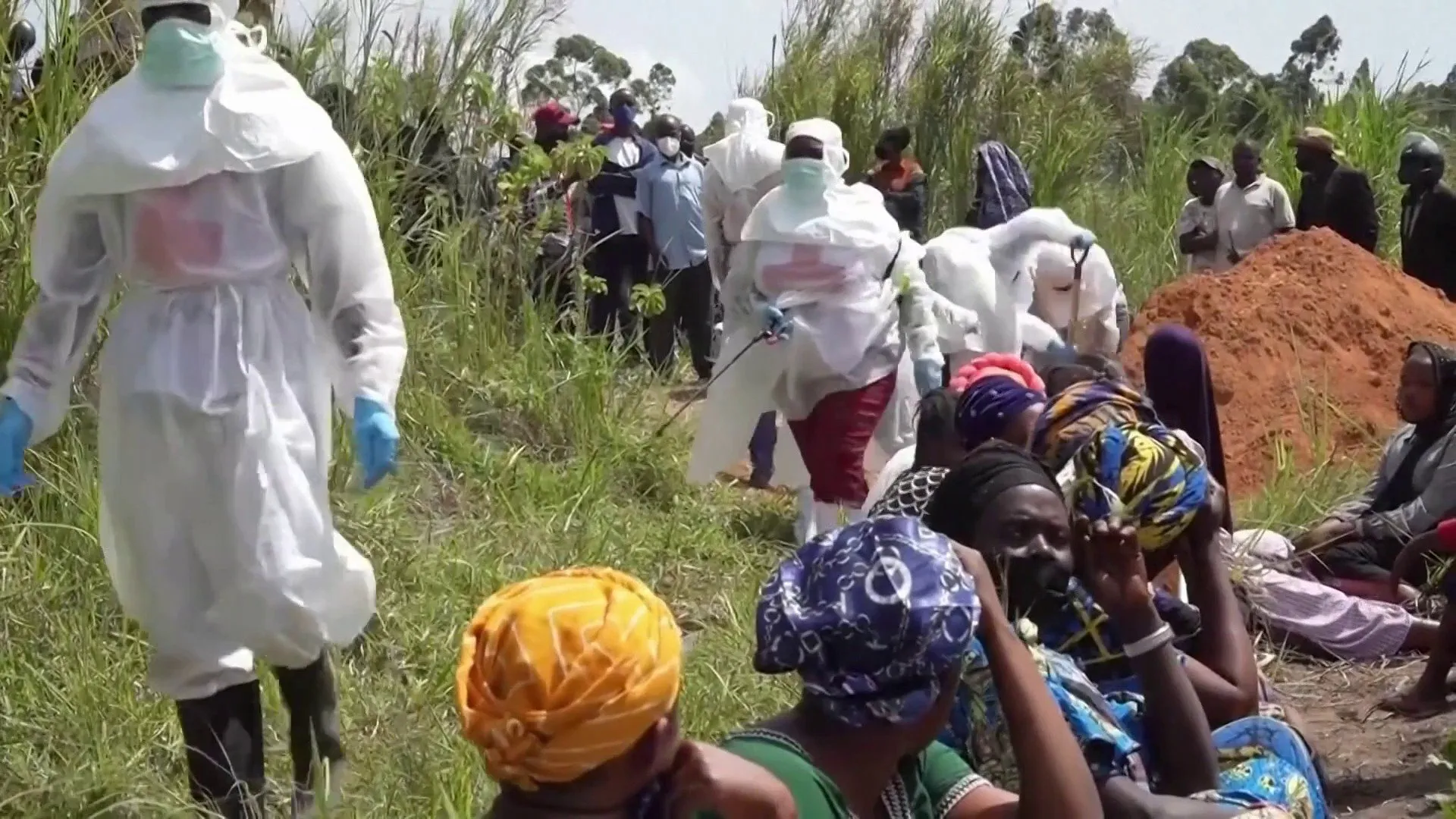
The spread of the Ebola virus in the Democratic Republic of the Congo is accelerating amid international warnings that transporting the bodies of victims between regions to bury them in their owners’ hometowns may contribute to expanding the spread of infection, at a time when the number of infections has increased by about 70% in two weeks, with more than 40 new infections recorded daily on average.
The International Organization for Migration confirmed that these practices represent one of the challenges facing efforts to contain the outbreak, given the continued transmission of the virus through contact with the bodies of the deceased, which requires adherence to safe burial procedures.
The Director of Alert and Emergency Response Operations at the World Health Organization, Dr. Abdul Rahman Mahmoud, said that the current outbreak has become, in just two months, the third largest outbreak of the Ebola virus in history, and one of the fastest spreading, noting that more than 2,100 confirmed infections and more than 800 deaths have been recorded.
He added that the crisis goes beyond being an epidemic outbreak, as it coincides with complex humanitarian and security situations in conflict areas in eastern Democratic Congo, where armed violence and widespread displacement are hampering health response efforts and containing the disease.
The most dangerous stage
Dr. Abdel Rahman Mahmoud indicated that the virus causing the outbreak belongs to the “Bundibugyo” strain, for which there is not yet a vaccine or specific treatment available, stressing that the World Health Organization continues to support the Congolese Ministry of Health to limit the spread of the disease and protect affected communities.
In his explanation of the warnings related to transporting bodies, the official explained that the Ebola virus differs from many infectious diseases, as it remains in the body of the deceased in a high concentration after death, which makes handling the body and burial operations one of the most dangerous stages of transmission of infection.
He said that this requires strict preventive measures to be followed to protect the families of the victims, medical teams, and participants in the burial ceremonies.
Although the Democratic Republic of the Congo has long experience in confronting the disease, considering that the current outbreak is the seventeenth in its history, Mahmoud stressed that the greatest challenge is the occurrence of outbreak hotspots within areas witnessing armed conflicts and great humanitarian needs, in addition to the presence of more than a million displaced people living in camps, calling for strengthening international support to enable health authorities to contain the epidemic and prevent its expansion.
Earlier, the World Health Organization announced At least 1,963 infections were recorded, of which at least 719 people died, but the organization doubted whetherThe real number of Ebola virus infections in the Democratic Republic of the Congo is likely to be at least double the officially announced toll, at a time when doctors and health workers in the epicenter of the outbreak have threatened to go on strike in protest against the non-payment of their salaries.