

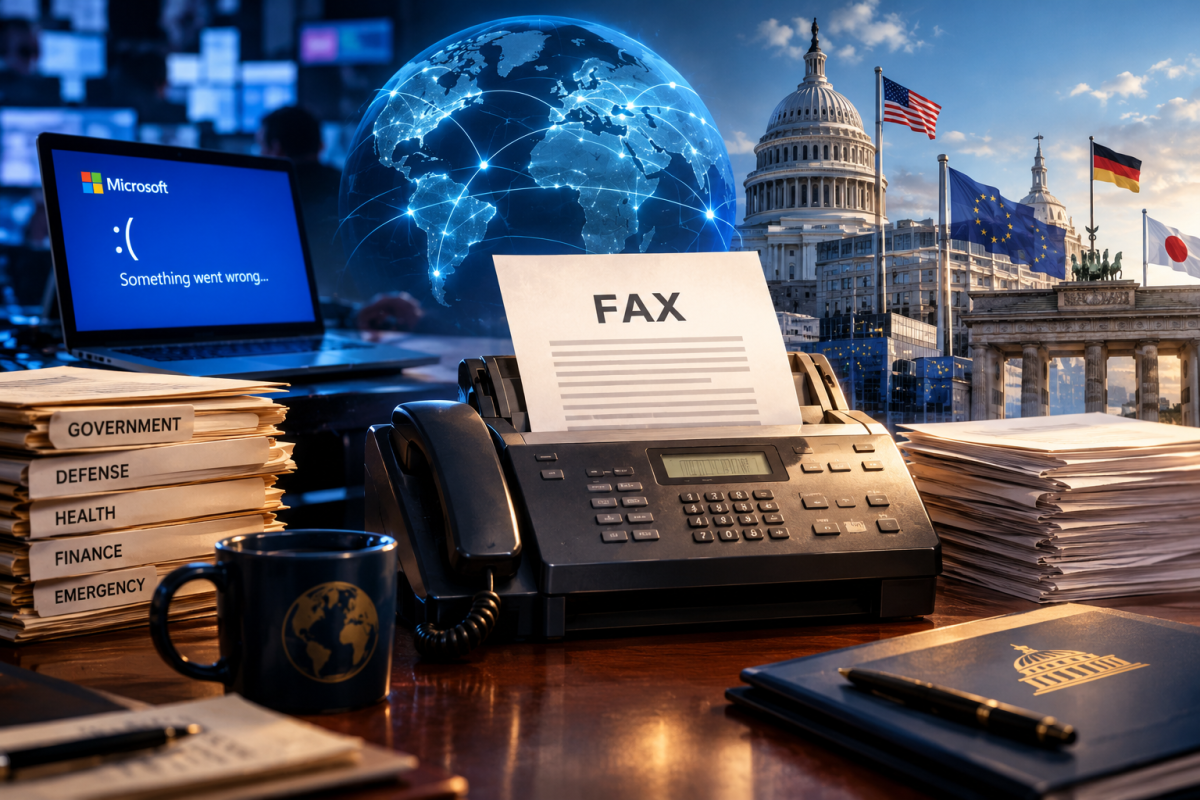
In a scene that seemed to come from the 1990s, companies and governments around the world found themselves forced to return to the fax machine after a sudden malfunction struck Microsoft’s Outlook and Teams services, keeping them out of service for more than 12 hours yesterday, Friday.
The malfunction, which also affected the smart assistant “Copilot,” deprived hundreds of millions of users of their most basic work tools, such as email, calendars, and virtual meetings.
Microsoft said that the reason was problems with the servers, stressing that it had no evidence of malicious activity, and that software fixes had begun to gradually restore stability, and almost no major organization was spared from the crisis.
The disruption affected official bodies from Australia to Japan and the United States, while in Britain the Health Services Authority and the London Police were affected.
Financial markets such as Euronext also had difficulty communicating with listing teams, the announcement of corporate results was postponed, and the process of buying back bonds in Europe was suspended.
Maersk Oil and Indian Airlines warned their customers of delayed messages and support, and in Taiwan, a financial company resorted to fax to confirm its deals.
Analysts estimated the insured losses at between $300 and $500 million, which is much less than the losses of the “Crowdstrike” failure in 2024. Microsoft shares fell only 0.4%.
But more dangerous than the numbers is the frequently asked question: How did the world become suspended by a single thread in the hands of a handful of technology companies? This is the second major disruption for Microsoft this year. Analysts believe that companies will not abandon the system soon due to the high replacement cost, but confidence has begun to shake, and every technology department is starting to think twice before putting all its eggs in one basket.