

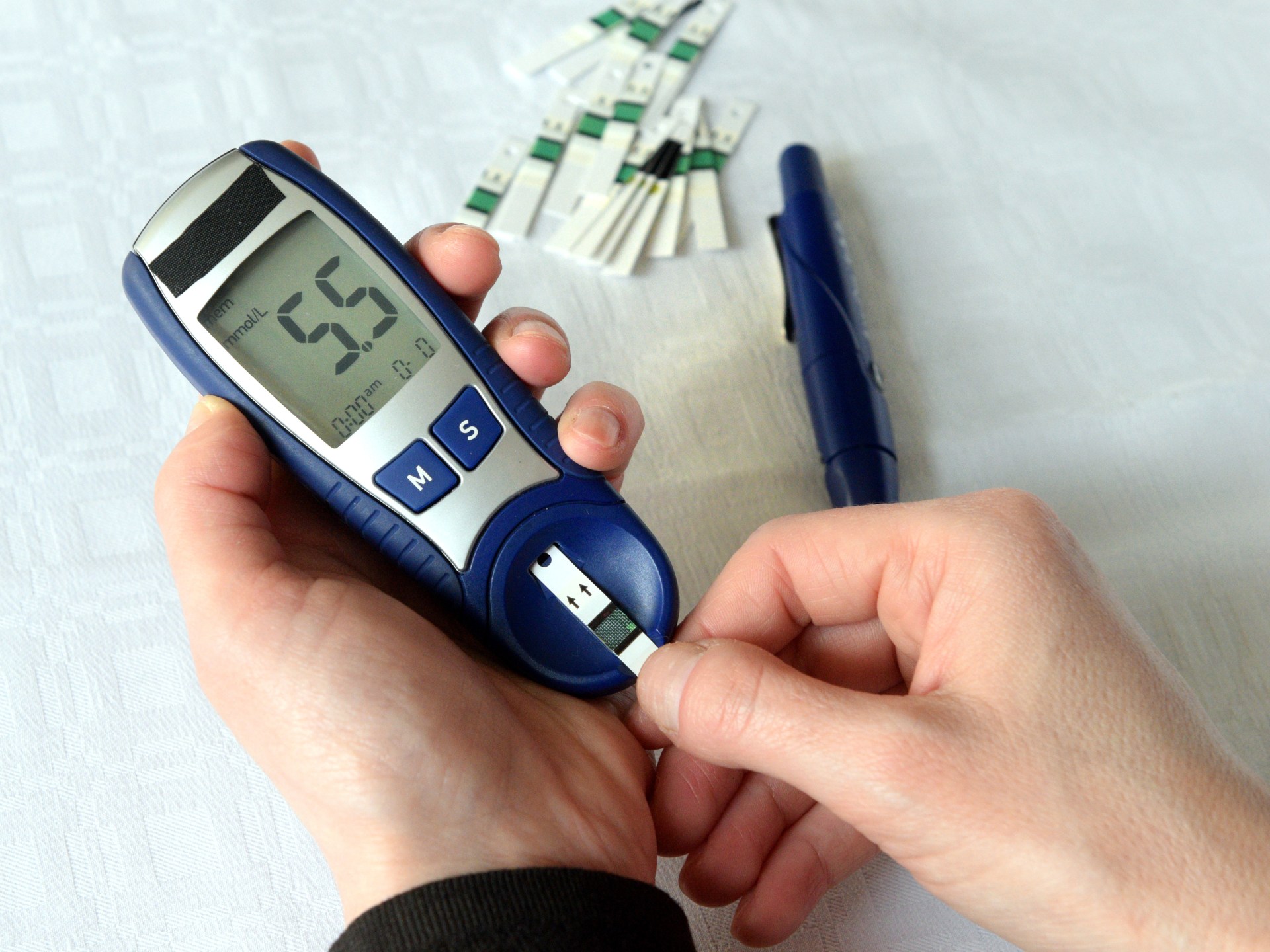
Diabetics can travel without any disturbances that disturb the holiday by following some useful advice and advice, and taking some important measures to maintain the level of sugar in the blood.
The German Society for Diabetes Assistance said that suffering from symptoms such as nausea, dizziness and thighs during travel may not only be due to the travel roundabout or stomach disorder, but also may also be caused by a decrease or high blood sugar.
Diabetes or other reasons?
The association added that in the event of nausea while traveling, diabetics must examine their glucose level quickly, as this helps to distinguish between hypoglycemia and its height and other reasons leading to this.
It can be inferred from the lack of blood sugar through tremors, sweating, and a strong desire to eat, heart palpitations, irritation, nausea and fatigue.
Some behaviors during the holiday may increase the risk of infection, such as unusually high levels of physical activity.
The high blood sugar is often accompanied by nausea, along with other symptoms such as the difficulty of focusing, fatigue, lack of vision, extreme thirst, and the intense desire to urinate.
The movement roundabout occurs while riding cars, buses, aircraft or ships, as the brain explains the information from the eyes and the vestibular system as contradictory.
The symptoms of the common movement roundabout include dizziness, pallor, cold sweating and nausea, knowing that the symptoms go away after the travel method.
As for digestive infections, they often occur suddenly, and common symptoms include nausea, vomiting, water diarrhea and abdominal cramps.
It is important to know that the infections of the digestive system increases the risk of hypoglycemia, and the reason for this is that blood sugar reduction medications continue to effect even with the lack of absorption or lack of food.
Repeated examination
In general, diabetics should be examined frequently during holidays than daily life, and this is especially applied in hot and cold weather and at unfamiliar heights or during physical activity.
As in daily life, diabetics must carry glucose tablets, beverages containing it and glucagon supplements when traveling in emergency situations.
In the case of traveling by plane, these elements should be placed in the handbag, and insulin must also be included, because low temperatures in the charging ward by plane can affect the effectiveness of the drug.
Diabetics should also take a quantity of medications that exceed what they need for the holiday two or 3 times.
In the event of a feeling of nausea, it is better to inject insulin with short effects shortly after eating, but in the case of injection before eating and vomiting after it, then the risk of hypoglycemia.