

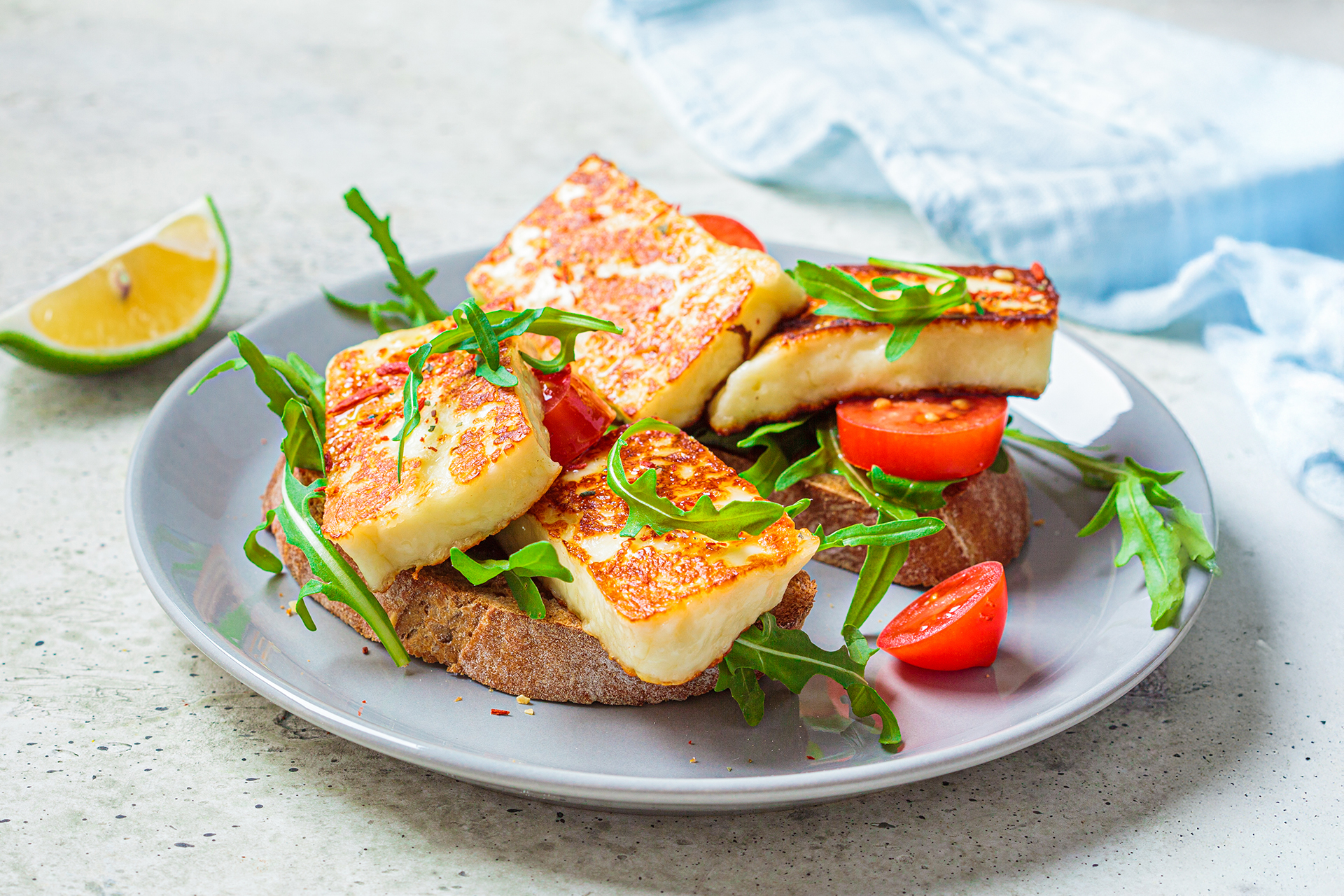
Halloumi cheese is famous for its versatility, as it is used in sandwiches and salads. While it is considered a protein-rich cheese, it is loaded with salt and higher in calories than some other types of cheese. Is it healthy cheese? How many calories does it contain? What is the ideal way to eat it?
Nutrition expert Nicola Ludlam-Rayne explains in an interview conducted with Emily Craig and published in the Telegraph newspaper, “Its high protein content makes halloumi cheese filling and attracts those looking for an alternative to meat, and its solid texture makes it good when grilling or frying.”
Halloumi cheese, which is semi-hard, originated in Cyprus. “The milk curds are pressed, then cooked and stored in a brine solution, which gives halloumi its distinctive salty flavour,” says Ludlam-Rayne. “It has a higher salt content than many other cheeses, which helps maintain its firm, grillable texture and ‘makes this cheese Traditionally made from a mixture of goat and sheep milk.
What are the potential health benefits?
Halloumi cheese carries many health benefits that will please its lovers. Here are some of them:
1- Halloumi cheese is a source of calcium
Nutritionist Priya Teo says, “A slice (30 grams) of halloumi cheese contains about a quarter of your daily calcium requirement, which amounts to 700 milligrams, making it a rich source of the mineral.” Calcium supports healthy teeth and bones, regulates muscle contraction and ensures normal blood clotting.
2- A good source of protein
Women need about 45 grams of protein daily while men need about 56 grams. Halloumi cheese will help you achieve your goal, as a serving (30 grams) of it contains 6 grams of protein.
3- Halloumi provides vitamins and minerals
Halloumi cheese contains a number of essential vitamins and minerals. It contains zinc, which is important for the immune system, and vitamin A for eye and skin health as well.
Cheese is also a source of iodine, which is necessary for thyroid function, and phosphorus, which helps build strong bones and teeth, in addition to B vitamins.
Does it have any bad effects on your health?
Unfortunately, an excessive intake of any cheese cannot be completely good for your health. The negative effects of eating a large amount of halloumi cheese include some problems, including:
1- Halloumi cheese contains a high percentage of saturated fat
A 30-gram slice of halloumi cheese contains about 6 grams of saturated fat, which may contribute to high cholesterol (which increases the risk of heart disease) if eaten in excess.
“The NHS recommends that men should not consume more than 30 grams of saturated fat per day, and women should not consume more than 20 grams of saturated fat per day,” while children should eat smaller amounts, says Ryan.
2- Cheese is full of salt
“Halloumi cheese is one of the saltiest types of cheese, as each slice contains about 0.8 grams of salt, which may be a problem for blood pressure if eaten frequently,” says Rayne. High blood pressure increases the possibility of heart attacks and strokes.
3- Calories
Halloumi cheese is calorie-dense, containing 94 calories per slice (30 grams).
“Portion control is important if you’re concerned about the calories you consume,” Ryan says.
What is the healthiest way to eat halloumi?
“You can prepare halloumi in many ways. Eat it fresh in a salad, or cooked in a dry frying pan or on a skewer,” says Teo.
Frying in oil should be avoided as this adds unnecessary fat.
Rayne suggests adding grilled halloumi cheese to a mixed leafy vegetable salad with cucumbers, tomatoes, and toasted bread, and drizzling it with olive oil for a balanced meal rich in protein and fiber.
She concludes by saying, “You can also toast cheese with vegetables and then add it to whole-grain bread with hummus for lunch. You can also toast it and throw it in a pan with colorful vegetables such as sweet peppers, zucchini, and mushrooms.”