

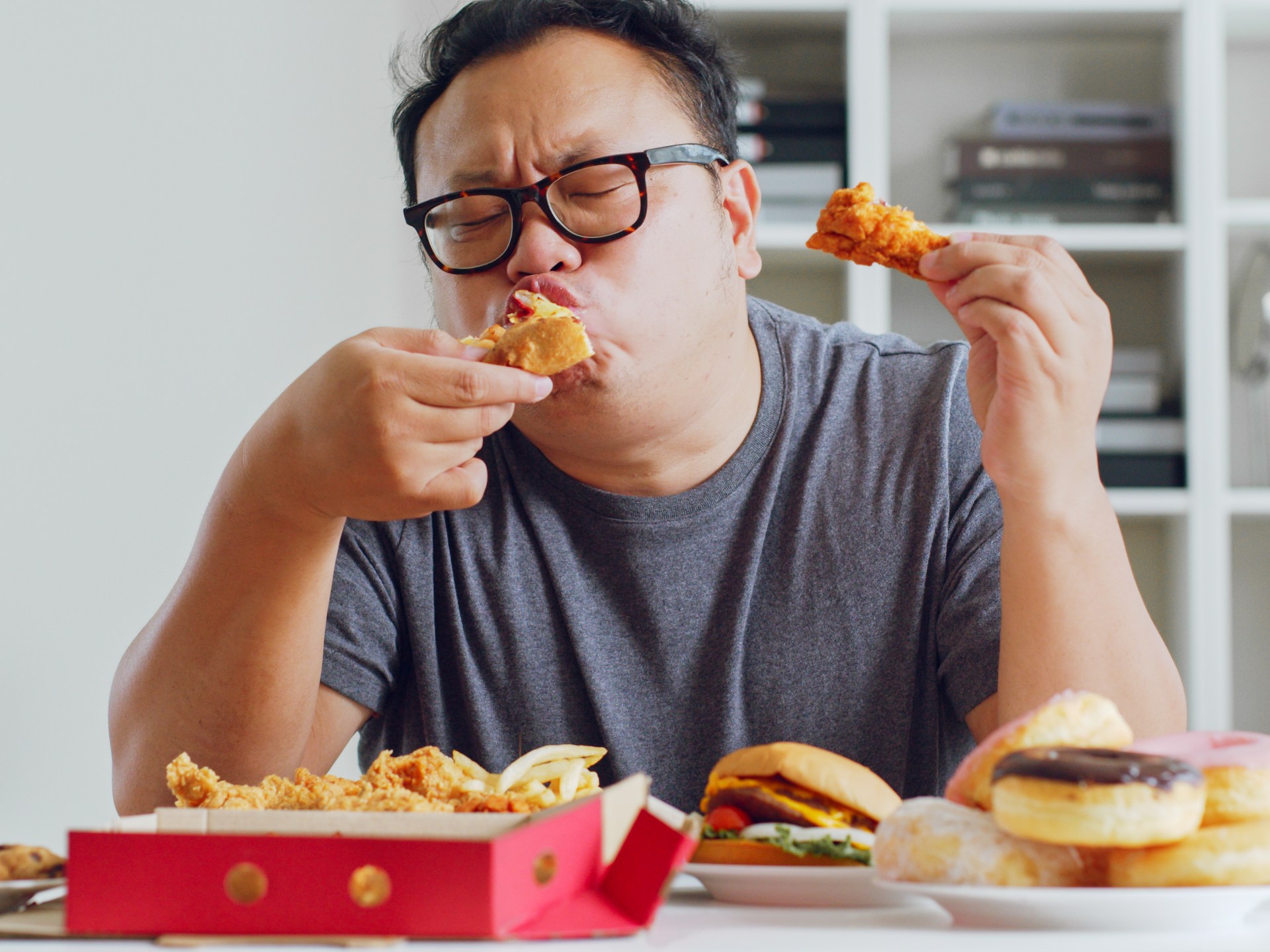
You may discover after eating a delicious meal that your pants have become tight. But why does this happen? How much can the stomach expand after eating a large meal to accommodate all that food?
An empty adult stomach starts out as a folded bag about the size of a pint, and during a meal it can double to a volume of 2 liters, Dr. Arthur Bader, associate professor of medicine and physiology at Mayo Clinic, told Live Science.
This means that the stomach can hold between 0.25 and 0.5 gallons (1 and 2 liters) of food and liquids for most adults, depending on their age and body size. In extreme cases, the stomach can expand to accommodate 1 gallon (4 liters).
A 2018 study published in the Journal of Gastroenterology reported the case of a competitive eater who came to the emergency room after eating so much food that his stomach had distended, compressing his pancreas and pushing his intestines aside. After 5 days in the hospital, the man was able to expel the gases that were trapped in his body and his intestines moved.
“Often, overeating occurs during social occasions, or when someone is stressed or distracted while watching TV,” says Dr. Benjamin Levy, a gastroenterologist at the University of Chicago Medicine in the US. “They are busy, and before they realize it… “So, suddenly he feels so full because of it.”
Your stomach is trying to tell you that you are full
Human hunger is stimulated by the hormone ghrelin, which is produced primarily by the stomach, but also in the brain, small intestine and pancreas, according to the Cleveland Clinic. This hormone is released when the stomach is empty so it can alert the brain that it is time to eat.
Once someone starts eating, the food moves down the esophagus and then into the stomach. The stomach has folds that allow it to expand and accommodate incoming food and fluids. When food enters, the stomach secretes hydrochloric acid and digestive enzymes. The organ also begins to move, in order to break food into smaller pieces so that nutrients can later be absorbed in the small intestine.
The stomach is composed of smooth muscles, which can tighten and maintain contractions for a long period of time, even after stretching. This allows it to make room for more food.
“It’s like a rubber band, you pull it and it will bounce. This is called muscle tension, which controls the amount of tension in the stomach,” Bidder said. Stomach tension is communicated to the brain via the vagus nerve, which runs from the large intestine to the brain. This is just one pathway through which the brain is informed that the stomach is full.
There are also hormonal changes that tell your brain when it is time to stop eating. The hunger hormone ghrelin decreases, while other hormones send satiety signals to the brain and reduce your appetite. “When someone overeats, it means they may have ignored those cues or eaten so quickly that their hormones didn’t have enough time to tell their brain they were full,” Levy said.
“The trick is to slow down. Sit there and talk for 15 minutes before coming back for more,” Levy said.
What do I do with my stomach when I’m very full?
But if you find yourself feeling too full at the dinner table, there are some things you can do to ease the discomfort of overeating. Try not to lie down. This may lead to acid reflux. Instead, Levy recommends going for a walk. This can stimulate the movement of food through the digestive tract.