

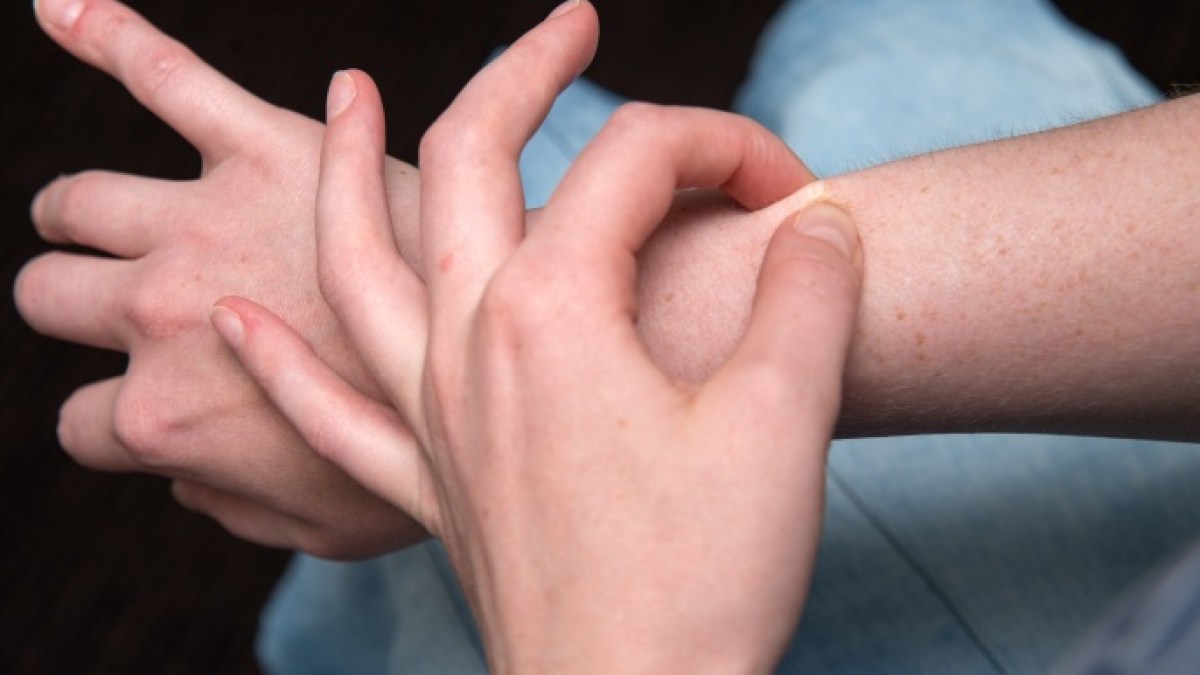
Scars often arise after undergoing surgical operations, distorting the aesthetic appearance of the skin, and through proper care, scars can fade over time.
Regarding how to properly care for scars, German Dr. Steffen Emmert explained that it is very important after surgery or injuries to keep the level of tension on the surface of the skin as low as possible.
Compression bandage
The director of the Dermatology and Venereology Clinic at the University Medical Center in Rostock added that this can be achieved, for example, by using a compression bandage or adhesive bandages, noting that after surgery, adhesive strips are often placed at a 90-degree angle on the scar, and these strips, called wound closure strips, remain on the skin for 14 days.
If the wound is completely closed and there is no crust on the skin, then the scar can be treated with special gel or gel pads, as they relieve itching and the feeling of tightness, and aim to improve the appearance of the scar.
Cooling
Emmert added that cryotherapy plays an important role in scar care, as the scar is sprayed twice with liquid nitrogen for ten seconds each time, and the tissue is frozen briefly, then thawed again. These effects soften the scar, as well as reduce the feeling of pain.
Massage
For his part, German physiotherapist Nils Bringland emphasized the importance of scar massage, by gently pressing the scar and moving it carefully without pulling, as this supports the growth of new tissue, in addition to its positive effect on the sensation of pain.
Bringlund noted that massage rollers designed to treat scars can also be used.
Emmert emphasized that itching, burning, and pain in old scars are signs of a problem, stressing the need to consult a doctor if they recur or continue over a long period, which also applies to scars that appear particularly prominent.