

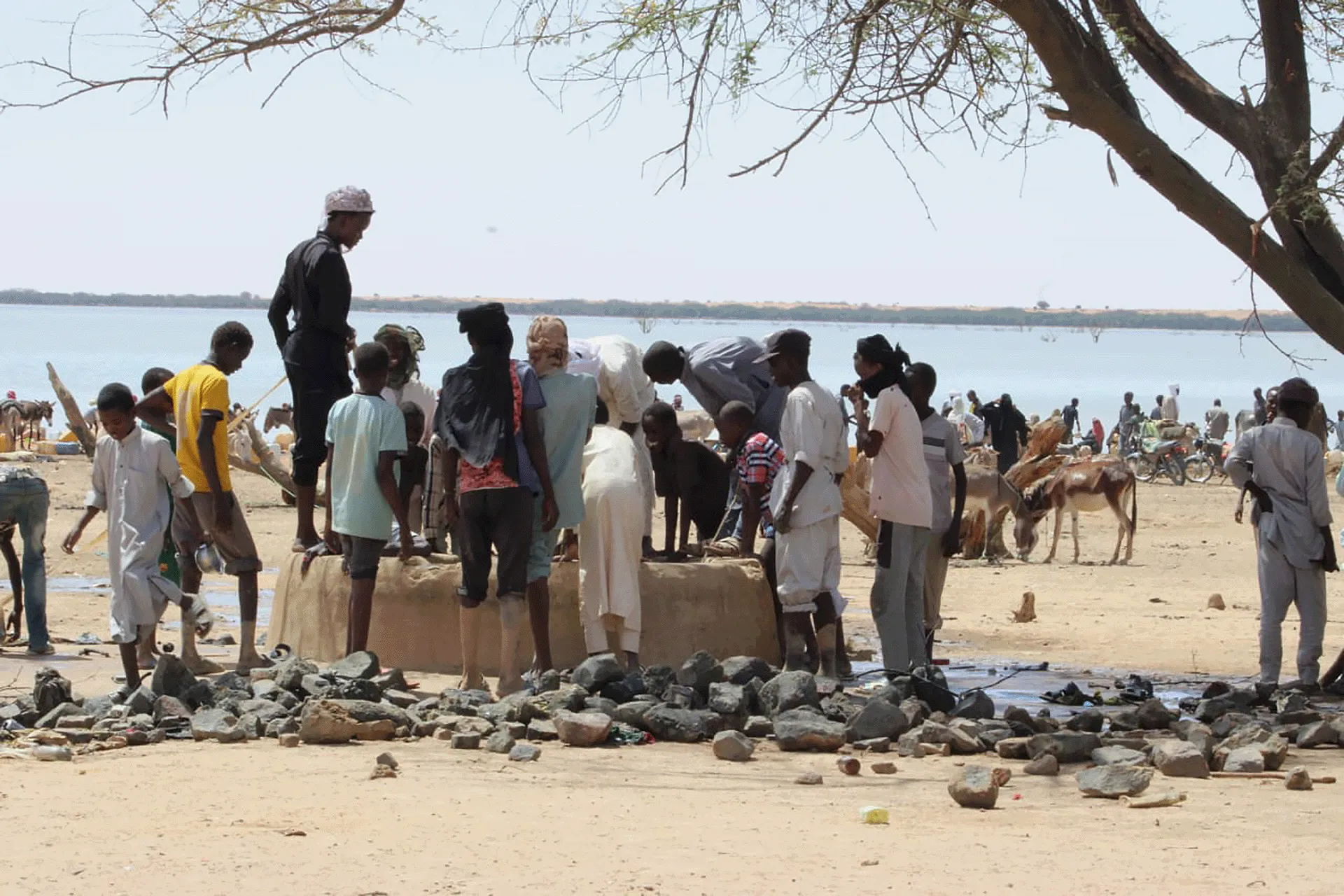
When Sudanese families fleeing the war began to flock to Karyari camp in eastern Chad, no one expected that this remote spot would soon become a refuge for thousands of people coming from the fighting zones in Darfur.
Families arrived one by one, exhausted from the journey, carrying their children and whatever belongings they were able to salvage, while leaving behind burned homes and villages destroyed by the war. With every day, a new wave arrived at the camp, at a time when humanitarian aid was not keeping pace with the growing numbers.
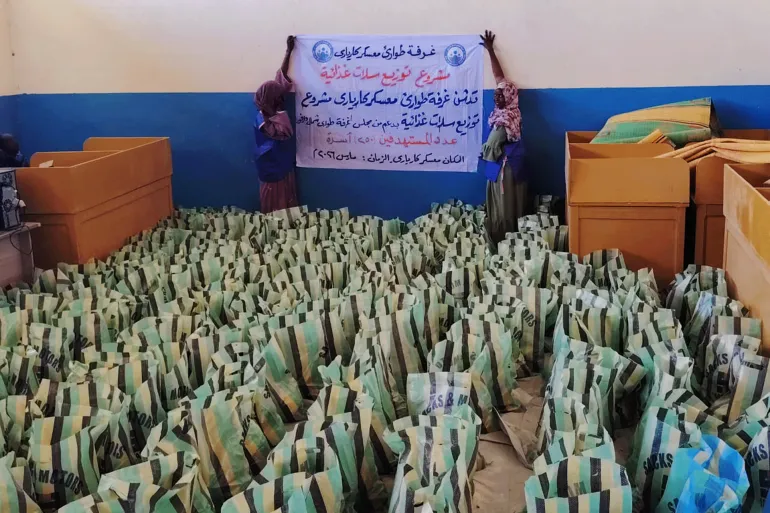
In the midst of this emptiness, a number of young people and local volunteers moved in, with only a limited amount of food and a lot of willpower. They started by preparing 20 dishes of lentils and rice, before their initiative turned into an emergency room that is today trying to provide food, water, and health assistance to about 7,000 families.
But the room, which employs only 25 volunteers, is now facing a crisis beyond its capabilities, in light of the continuing displacement and shortages of food, water, medicines and shelter materials.
The camp has exceeded its capacity
Karyari camp is located in the Ennedi region, eastern Chad, and has become a destination for thousands of Sudanese fleeing the war in the Darfur region.
The International Federation of Red Cross and Red Crescent Societies warned, in a report issued on March 17, 2026, that a number of refugee reception sites in eastern Chad have become full and are no longer able to accommodate more arrivals, amid the absence of sufficient plans to expand or establish alternative sites.
New families arrive in Kiriari every day from North and West Darfur, in light of the continuing battles and attacks carried out by the Rapid Support Forces in a number of areas.
As displacement has continued since the outbreak of the Sudanese war in April 2023, humanitarian needs have doubled, while the international response has remained far below the scale of the crisis.
According to the latest data from the United Nations High Commissioner for Refugees, issued on July 13, 2026, the number of Sudanese refugees in Chad exceeded 936,000 people.
Data from the International Organization for Migration indicate that the total number of arrivals to Chad exceeded 1.32 million people, including more than 400,000 Chadian returnees.
7 thousand new families
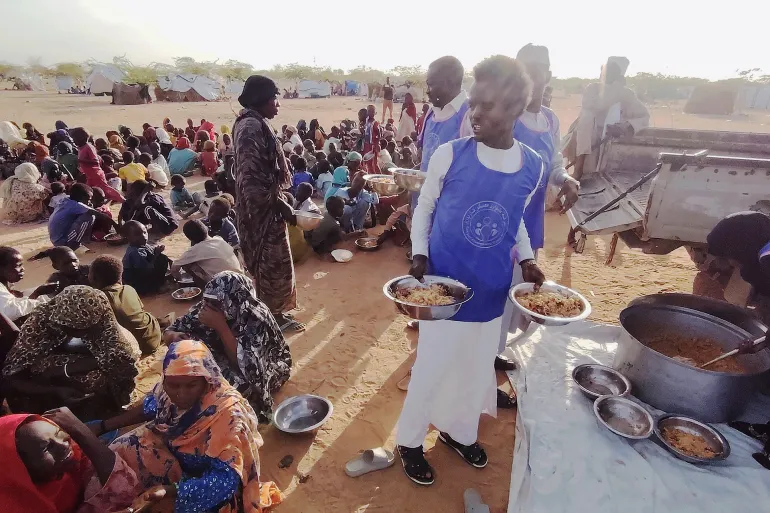
The Kiriari Emergency Room says that the camp has received about 7,000 families over the past weeks, most of whom are women and children.
These families came from the areas of Ambro, Al-Tineh, Karnoy, Jargera, Abu Liha, Kalbus, Bir Salba and Sirba in West Darfur.
Data from the United Nations High Commissioner for Refugees indicate that about 68% of refugees have been transferred to organized shelter sites, while thousands of others are still stuck in crowded border areas that lack clean water, food, shelter materials, and health services.
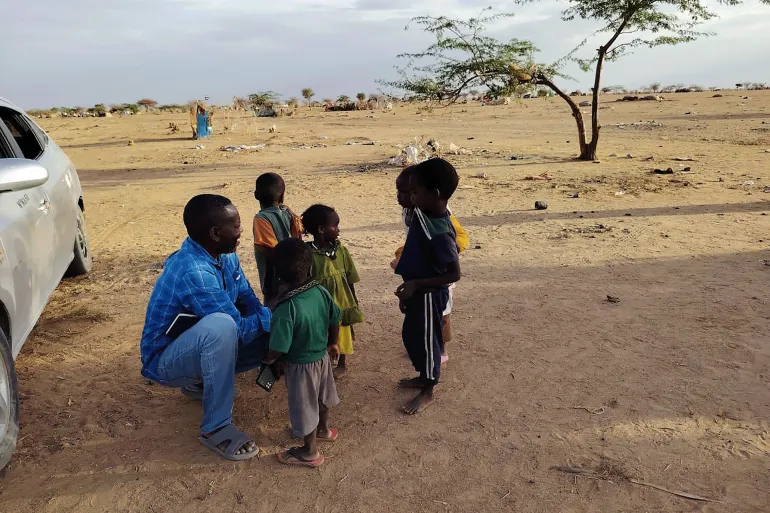
In Karyari, many families sleep in the open or under trees, without tents to protect them from the sun’s rays during the day or the fluctuations of the weather at night.
3 days without food
Fatima Adam, who arrived at the camp accompanied by her four children, told Al Jazeera Net the details of her journey from the Qorbara area near Ambro, saying: “They burned our house, so we walked for 3 days without food or water. My children are crying from hunger, and I do not know how I will feed them tomorrow.”
Fatima’s story is not much different from the stories of hundreds of women who arrived at the camp after long journeys on foot. Some of them lost family members, and others arrived with sick children or suffering from dehydration and malnutrition.
The monitoring and follow-up official in the Kiriari emergency room, Saddam Abkar Al-Safi, told Al Jazeera Net: “The room has become the only refuge for the arrivals. They arrive daily exhausted and homeless, and children and women sleep in the open under the hot sun, while the suffering doubles with the spread of diseases and the difficulty of obtaining water.”
Not enough kitchens
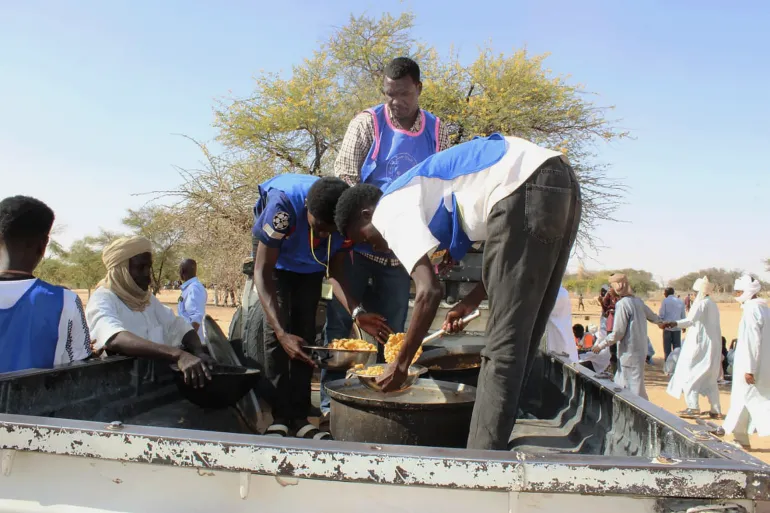
Chamber volunteers run group kitchens to prepare and distribute food to families, but the available quantities cover only a limited portion of the needs.
Emergency room member Ibrahim Youssef Bahr told Al Jazeera Net, “We run volunteer kitchens, but they are not enough. Water is scarce and diseases are spreading, and we fear a catastrophe if the situation continues like this.”
He added that the room operates with a staff of no more than 25 volunteers, who prepare food, distribute water, monitor health conditions, and follow up on the needs of new families.
As the influx of refugees continues, the team suffers from extreme fatigue, while the kitchens are unable to provide food for all families, and many children receive limited amounts of food daily.
An arduous journey for water
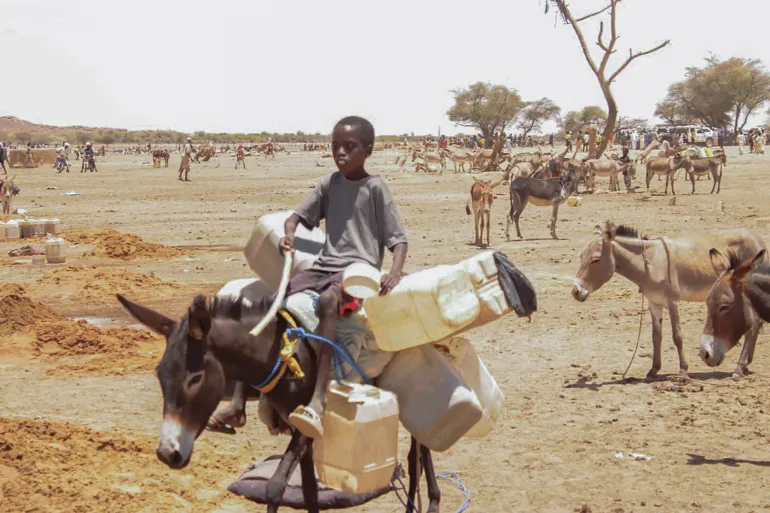
The water crisis is no less dangerous than the food shortage, as families depend on a small number of wells that were not designed to serve such large numbers.
According to Saddam Abkar Al-Safi, the number of beneficiaries from the wells has increased to about 6 times the number they served before the arrival of the refugee waves.
Women and children are forced to travel long distances under the sun to fetch their families’ water needs, some on foot, some on the backs of donkeys.
This daily journey drains their remaining strength, and exposes children and women to increased health and security risks.
Children pay the price
Amani Muhammad Abkar, a refugee from the Ambro region, told Al Jazeera Net that the emergency room is making great efforts, but its capabilities do not allow it to meet the increasing needs.
She added, “Children are the ones who suffer the most. We see cases of dehydration and malnutrition every day, and we do not even have basic medicines to treat them.”
The emergency room estimates that acute malnutrition threatens hundreds of children in the border camps, as many of them do not receive adequate meals.
The absence of health facilities and basic medicines increases the severity of the situation, especially with the camp’s overcrowding and poor water and sanitation services.
Measles and meningitis
These conditions come at a time when regions of eastern Chad face the risks of an outbreak of epidemic diseases.
On April 24, 2026, Médecins Sans Frontières warned of a simultaneous outbreak of measles and meningitis in the Chadian city of Adré, after recording an increase in infections and the death rate among children with meningitis reaching about 12%.
The Chadian Ministry of Health, with support from the organization, organized urgent vaccination campaigns targeting more than 95,500 children against measles, and more than 337,800 people against meningitis in the most affected areas.
However, the continued arrival of refugees to overcrowded sites that lack clean water and health care increases fears of transmission of infection and the emergence of new disease hotspots.
Lack of funding is life-threatening
The United Nations High Commissioner for Refugees estimates that Chad hosts about 2.26 million displaced people and refugees, with the number of refugees in the country expected to rise to 1.48 million people by the end of 2026.
On April 9, 2026, the United Nations warned that Sudanese refugees in Chad were facing life-threatening cuts, as a result of a funding gap of $428 million, which led to a reduction in a number of basic services.
The UNHCR says that available resources allow providing assistance to only 4 out of every 10 refugees, while about 80,000 families live without adequate shelter.
This shortage is directly reflected in the conditions of refugees in Kiriari, as the emergency room says that the camp has not received sufficient aid to meet the needs of its residents for months.
Autumn is approaching
Saddam Abkar Al-Safi warns that the continued influx of refugees without the provision of food, water, shelter, and health care may turn the camp into a hotbed of a humanitarian catastrophe, calling on international organizations to intervene before it is too late.
Al Jazeera Net sought a comment from the Rapid Support Forces regarding the attacks that forced families to flee, but did not receive a response. She also contacted the United Nations High Commissioner for Refugees to inquire about plans to provide aid to the camp, but did not receive an answer.
Between the ongoing war in Sudan, the lack of funding, and the absence of basic services, the Kariari Emergency Room continues its work with limited capabilities, trying to keep thousands of families alive.
As the rainy season approaches, fears are increasing that the open ground on which refugees sleep will turn into swamps, and that diseases will spread among children who do not have a tent, medicine, or sufficient meal.
The question posed by the camp volunteers remains: How long can 25 young people face the crisis of 7,000 families alone? When will aid arrive before Kariari turns into another disaster that the world will see too late?