

Diabetes has become one of the biggest global health challenges, after the number of people infected with it reached about 590 million people in 2025, according to estimates by the International Diabetes Federation, amid expectations that the number will rise to about 850 million by 2050, an increase of approximately 46%.
Type 2 diabetes represents about 90% of cases of the disease globally, and its incidence is linked to several factors, most notably weight gain, obesity, and lack of physical activity, in addition to other genetic and environmental factors.
Despite the availability of effective medications that help control blood sugar levels and reduce disease complications, the search for nutritional and natural means of assistance is still of interest to patients and researchers alike.
Among the foods that have gained wide fame in this field, okra stands out, which is being circulated on websites and social media platforms as a natural way to lower blood sugar.
But scientific studies paint a more complex picture, as some results indicate a possible effect in improving diabetes indicators, while the evidence is still insufficient to consider okra as an alternative to drug treatment.
Vegetables rich in vital compounds
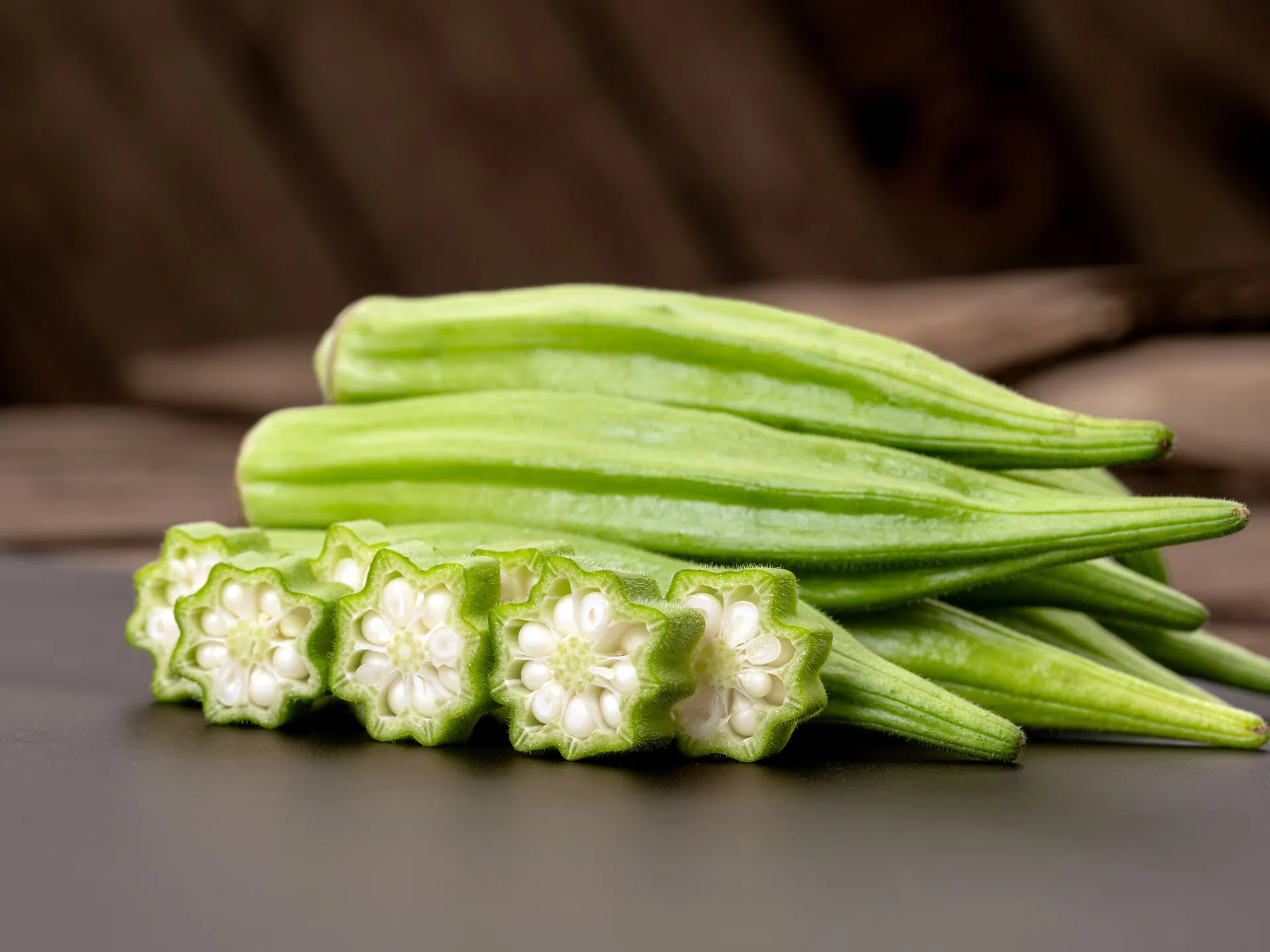
Okra, whose scientific name is (Abelmoschus esculentus L), is a plant that has spread for centuries in Africa, the Middle East, and other regions of the world, and it prefers to grow in tropical and subtropical environments.
Its green pods are characterized by high nutritional value, as they contain carbohydrates, proteins, fiber, and minerals, such as potassium, phosphorus, calcium, and magnesium, in addition to a number of vitamins and amino acids.
Okra also contains active plant compounds, including flavonoids, phenols, and compounds such as isoquercitrin and quercetin-3-O-gentiobioside, which are linked to its antioxidant properties.
As for its seeds, they contain a high percentage of oil, which may range between 20% and 40% of their components, and linoleic acid is one of the most prominent fatty acids found in it.
Why is okra linked to diabetes?
Researchers are focusing in particular on the gelatinous or gummy substance found inside okra pods, which is rich in polysaccharides.
Experimental studies indicate that these compounds may affect cellular pathways related to cellular response to insulin and regulation of glucose metabolism, including the PI3K-PKB/Akt pathway.
Laboratory and animal research has also shown the possibility that some okra compounds may contribute to supporting insulin secretion and protecting pancreatic cells.
But moving from these experimental results to a therapeutic recommendation for humans requires more robust clinical evidence, which is what prompted researchers to test the effect of okra in human trials and systematic reviews.

What do scientific reviews say?
In 2025, the journal Phytotherapy Research published a systematic review and meta-analysis of 6 randomized controlled trials, published up to July 15, 2024, aiming to evaluate the effect of okra in patients with type 2 diabetes.
The results showed that eating okra was associated with a decrease in fasting blood sugar and cumulative blood sugar, while there was no clear effect on insulin levels.
The researchers believed that these results open the door to the possibility of using okra as an auxiliary agent in addition to the usual treatment to control blood sugar, and not as a substitute for it.
However, the strength of the results remained limited due to the small number of studies and participants, in addition to the large differences between the trials in the doses and forms of okra used and the duration of its consumption.
These findings preceded other reviews that found a similar trend. In a systematic review and meta-analysis that included a number of studies on patients with prediabetes and prediabetes, the results showed an improvement in some indicators of blood sugar control after eating okra.
But the researchers also pointed out a clear discrepancy between studies in doses, formulations, and duration of intervention, which makes determining a unified therapeutic dose or an ideal method for eating okra not yet possible.
Experiment on 100 patients
In 2023, researchers published the results of a randomized, double-blind clinical trial that included 100 people with type 2 diabetes.
Participants in the intervention group took 1,000 milligrams of okra powder 3 times daily for 3 months, while the other group received a placebo at the same dose.
Most importantly, participants in both groups continued to take their prescribed diabetes medications throughout the study period.
The results showed a decrease in fasting blood sugar and cumulative blood sugar in the okra group, in addition to an improvement in cholesterol levels, triglycerides, and some indicators of inflammation.
The study did not record clear effects on liver or kidney function or blood pressure associated with eating okra during the trial period.
Mismatched results
On the other hand, the results of all studies were not consistent. In 2025, the journal “Advances in Integrative Medicine” published results in which okra capsules did not show a clear ability to reduce cumulative blood sugar, while their effect on fasting blood sugar and triglycerides was limited.
Although an increase in insulin levels was recorded in some participants, the researchers believed that the evidence does not allow okra to be considered an essential treatment for diabetes.
They called for longer and more extensive studies to determine the true benefit, appropriate doses, and any potential side effects or drug interactions.
How is okra eaten?
Okra can be eaten fresh, dried, or cooked. It is also included in soups, stews, and salads, and its preparation methods vary depending on food cultures.
Research has studied different parts of it, including pods, seeds, peels, leaves, stems and flowers.
But the greatest interest is focused on the pods and the resinous substance contained within them, due to their richness in fiber, polysaccharides, and active plant compounds.
There is not yet a single scientific method that can be described as the best for diabetics, as studies have used okra powder, its extracts, capsules, or different parts of it, in varying doses.
Therefore, converting the results of these studies into a home prescription at a specific dose is not yet based on sufficient clinical evidence.

Can the medicine be replaced with okra?
Here lies the most important point. The positive results that appeared in some studies do not mean that okra can replace diabetes medications, and the majority of the trials that showed benefit tested them alongside the usual treatment and not instead of it.
Some studies have also raised the possibility of an interaction between okra components and some diabetes medications, including metformin, a matter whose nature and extent still requires further clinical studies.
Therefore, eating okra should not prompt the patient to reduce the dose of the medication, stop it, or replace it without consulting a doctor, especially since failure to control blood sugar may lead to dangerous complications on the heart, blood vessels, kidneys, nerves, and eyes.
The current scientific picture indicates that okra is a food rich in beneficial plant elements and compounds, and within a balanced diet, it may help improve some indicators of blood sugar control, but turning it into a “natural treatment for diabetes” is so far beyond what the available evidence allows.
Between the promising results and the limitations surrounding the studies, okra remains a potential auxiliary food and not a substitute for medical treatment.