

Creating integrated systems to manage customers, merchants, orders, payments, fleets and delivery
Developing a technical architecture capable of managing a large-scale multilateral digital system
Seven years ago, it was not expected that a technology company worth talking about outside its borders would emerge from Qatar. At that time, Sununu was just a food delivery app in Doha, within a market with a population of no more than three million people. Today, the company is expanding externally, offering its technical infrastructure to governments and companies wishing to build their digital systems based on an infrastructure that the company has developed over the years. The distance between the two scenes is not measured only in years, but rather in a radical shift in thinking and strategic planning.
This move puts Sununu in front of an experience that differs from the traditional path of delivery companies. Instead of limiting external expansion to transferring its services to new markets, the company seeks to export the technical infrastructure and operational expertise that it has built in Qatar, which is the vision behind the launch of “Swallow Cloud.”
From delivery to an integrated digital system
Swallow not only grew horizontally through geographical expansion, but also expanded within its own system. It started with food delivery services, then added grocery, e-commerce, home services, entertainment and last-mile solutions, along with digital and operational services that required the development of integrated systems for managing customers, merchants, orders, payments, fleets and delivery.
Over time, these systems became an essential part of the platform’s operation, and the challenge went beyond developing a consumer application to building a technical architecture capable of managing a multi-party digital system on a large scale.
By 2024, the company had achieved profitability, tripled its turnover, and was processing millions of transactions annually across multiple sectors. This growth attracted the attention of the Saudi Jahez Group, which acquired 76.56% of Sununu in a deal worth $245 million, with a subsequent acquisition valuation of $320 million, thus recording the largest technology deal in the history of Qatar and the region. But the most important thing that came after the deal was to transform the accumulated experience into the basis for a new model represented by “Swallow Cloud.”
Technology turns into a product
In February 2026, on the sidelines of the Qatar Web Summit, Sununu announced the launch of Sununu Cloud, its technical arm for cloud services, in a move that reflects the company’s transition from using technology to operate its business to offering the technology itself as a product.
The model is based on making the technical infrastructure and information system developed by Sununu available to companies and institutions wishing to create their own digital systems, without the need to develop each component from scratch.
The ecosystem includes consumer application technologies, merchant, driver and fleet management, routing and distribution, digital marketplace tools, loyalty programs, analytics, APIs and cloud architecture.
Thus, the technology that Sununu built and tested over the years has become a framework that can be customized and used in other markets, enabling investors and institutions to save years of development and the costs of building the technical infrastructure and hiring talent and programmers.
Swallow Cloud does not just sell a ready-made application, but rather provides technical components that can be adapted to the needs of each market or organization, transforming it from an operational platform into a digital infrastructure provider.
A global market worth trillions of dollars
This transformation coincides with a major expansion in the global cloud services market, which is estimated at $1.18 trillion, amid expectations that it will triple by 2033, while the Gulf market records annual growth exceeding 20%.
But the opportunity that Sununu is betting on is not limited to developed or saturated markets, but rather extends to governments and companies in Africa, Southeast Asia, and Latin America that are embarking on the digital transformation journey, without wanting to bear the time, cost, and complexity associated with building an integrated technical system from scratch.
The Gulf is for expansion… and the world is a destination
Before heading to more distant markets, Sununu began testing its model’s ability to move between markets. In May 2026, it launched its operations in Kuwait, as its first market outside Qatar, providing grocery, delivery, gifts, and home services through its existing infrastructure, with an eye to expanding towards Oman and Bahrain.
These expansions reveal not only the ability to grow, but also the technology’s ability to adapt to different regulatory environments, consumer patterns, and markets. Here, the Gulf expansion experience turns into a practical test for “Swallow Cloud” and evidence of the ability of the technical infrastructure to work outside the market in which it originated.
Exporting Qatari technology
The importance of Swallow Cloud extends beyond the company itself, as it presents a model for a company that was born and grew in Qatar and seeks to sell its basic technology to governments and institutions outside the country.
For years, digital transformation in the region has been largely associated with relying on technology solutions developed in other markets, while Swallow Cloud offers the opposite path: developing technology locally to meet real operational needs, testing it on a large scale, and then turning it into an exportable product.
This does not mean that Qatar has already become a global center for exporting technology, or that the success of the experiment has become a foregone conclusion, but the trend adds a new dimension to the technology sector in the country. It involves moving from importing digital solutions to developing local technical assets that can compete externally.
Building strong and scalable business models
Mr. Hamad Mubarak Al-Hajri, founder and CEO of Sununu, confirmed that the company has succeeded in establishing its position as one of the most prominent success stories in the Qatari technology sector, as the value has exceeded one billion riyals, confirming the ability of emerging companies launched from Qatar to build strong, growth-able and competitive business models. He said: “Our ambition today exceeds what we have achieved, as we seek to build a Qatari technology company with a regional and global presence, and we have already begun the phase of external expansion from the Kuwaiti market, to be followed by other markets in our regional surroundings according to well-thought-out plans targeting promising growth opportunities.”
Al-Hajri added, “Sunu is not a delivery company in the traditional sense, but rather an advanced technology company. Behind the services that the user sees is an integrated technical system that we developed ourselves, including applications, digital platforms, operations and fleet management systems, e-commerce, and cloud solutions. We seek to transform the technology and expertise we have developed in Qatar into solutions and products that can be expanded and exported to regional and global markets.”
A new stage in the company’s journey
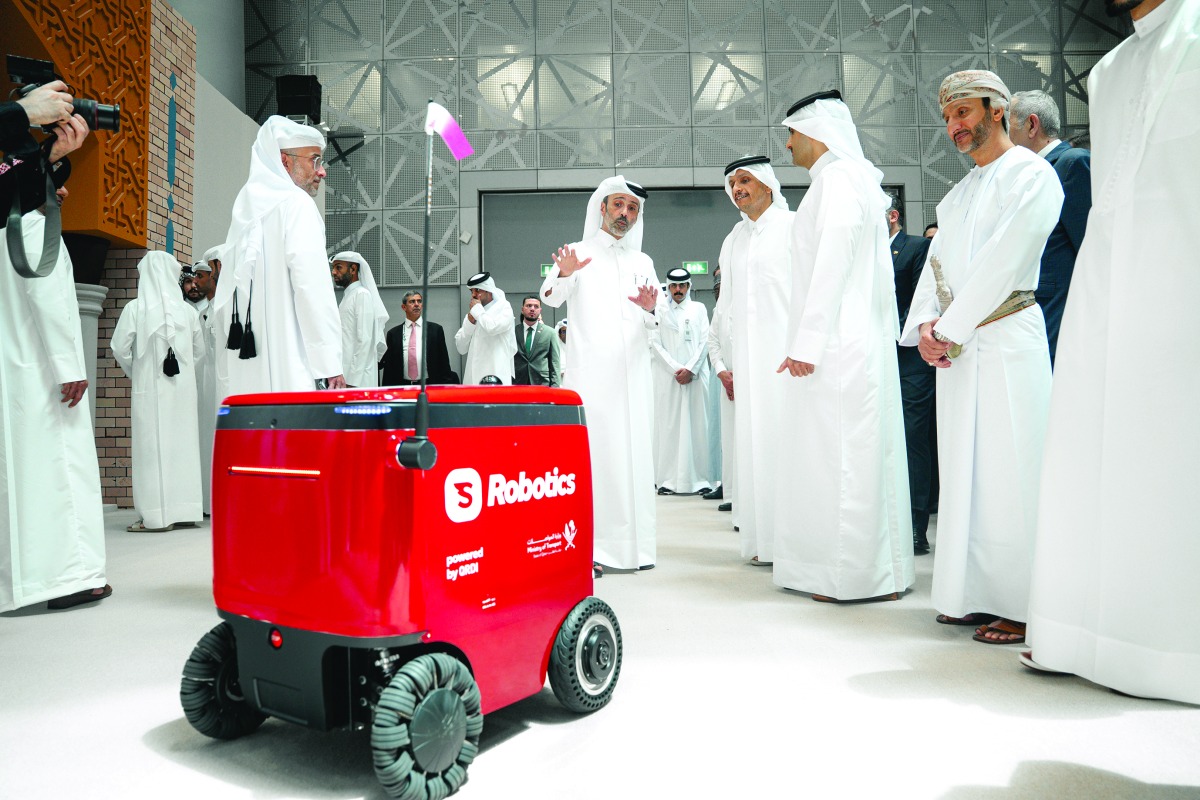
In turn, Mr. Abdulaziz Al-Qahtani, General Manager of Cloud Services and Robotics at Sununu, said that the launch of “Sununu Cloud” during the Qatar Web Summit 2026 represents a new stage in the company’s journey, in which it moves from employing technology to operate and develop its business to providing the same technology as a product and integrated solutions for various institutions and markets.
He added: “Over the years, we built and tested within Sununu an advanced technical system that manages millions of operations and transactions, and today we transform this experience into a digital structure that companies and institutions can benefit from and customize according to their needs, saving them years of development and investment in building systems and technical teams from scratch.”
Al-Qahtani pointed out that the Sununo Cloud system includes consumer application technologies, merchant, driver and fleet management, routing and distribution systems, digital market tools, loyalty programs and analytics, application programming interfaces and cloud architecture.