

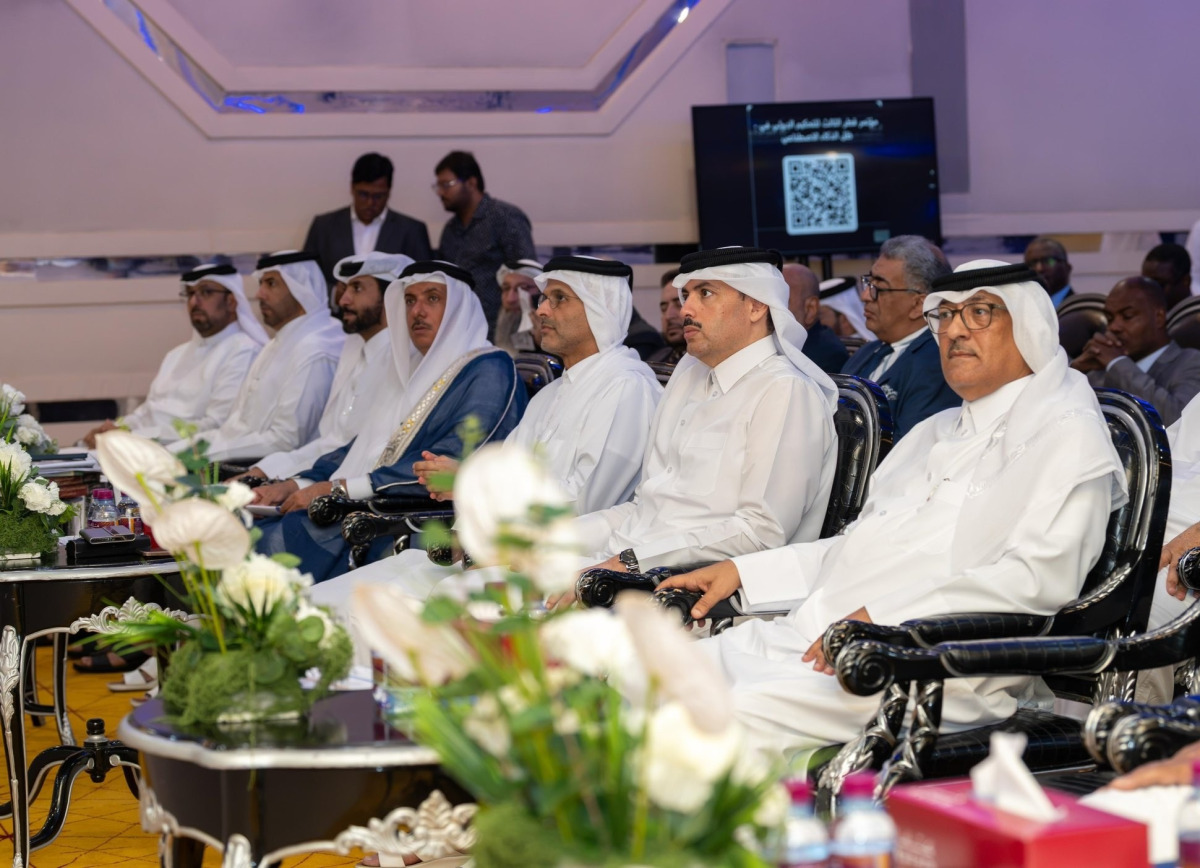
Today, at the Katara Cultural Village Foundation, the thirty-first edition of the “Katara Tech” Forum was launched, which is held in cooperation with the International Academy of Arbitration and Mediation – Carthage, under the title: “The Third Qatar International Arbitration Conference in the Light of Artificial Intelligence – From Traditional Administration to Smart Administration and from Dispute Settlement to Digital Justice,” with the participation of an elite group of experts and specialists in the fields of law, arbitration, management and technology from Qatar and a number of Arab and foreign countries.
The conference was opened with a speech delivered by Dr. Thamer Al-Qadi, Chairman of the Katara Tech Forum and Director of the Information Systems Department at the Katara Cultural Village Foundation, in which he stressed that artificial intelligence is no longer just an auxiliary tool, but has become an active partner in decision-making and the development of justice systems and modern administration.
He said: “The theme of the forum accurately summarizes the path that institutions and individuals are taking towards a future in which technical competence is integrated with legal and ethical integrity, indicating that true digital transformation is not limited to adopting modern technologies, but rather is linked to the ability to employ them within frameworks of good governance, and a safe and reliable infrastructure that guarantees data confidentiality, achieves transparency, and enhances trust between various parties.”
He added: “The rapid developments in generative artificial intelligence models require keeping up with the legal and legislative frameworks of this technical progress, in order to achieve a balance between increasing digital efficiency and adherence to international standards for data protection, and ensuring the responsible and safe use of technology in various fields.”
The Chairman of the Forum stressed that “Katara Tech” seeks to consolidate its position as a leading platform that brings together cultural thought and technical innovation, based on Katara’s belief that technology is not an end in itself, but rather a means to serve humanity, develop institutions, and consolidate the principles of justice.
For his part, His Excellency Sheikh Dr. Thani bin Ali Al Thani, Vice Chairman of the Board of Directors of the Qatar International Center for Conciliation and Arbitration at the Qatar Chamber, stressed in his speech the importance of arbitration as a fundamental pillar for developing the justice system and spreading the culture of alternative means of resolving disputes, which contributes to strengthening the legal and investment environment, and providing flexible and effective mechanisms for resolving disputes.
He pointed out the importance of this step in enhancing academic qualification and preparing specialized cadres capable of keeping pace with developments in the fields of governance and modern management, pointing to the launch of the first specialized master’s program in governance in the State of Qatar, in cooperation with Lusail University.
His Excellency also touched on the growing interest in governance and arbitration issues in the legal arena, in light of the rapid transformations imposed by modern technologies, and the opportunities they provide for developing legal practices and improving dispute settlement mechanisms.
For her part, Dr. Enas Ben Nasr, President of the International Academy of Arbitration and Mediation of Carthage, stressed in her speech that the real challenge in light of the rapid digital transformations does not lie in the adoption of technology alone, but rather in the proper use of modern management tools, and the extent of the institutions’ ability to establish the principles of good governance, transparency, and strengthen oversight mechanisms.
She explained that arbitration and mediation have become effective strategic tools in resolving disputes, which contributes to developing institutional performance and achieving justice, stressing that the success of the shift towards smart management requires the integration of technological development with legal and ethical frameworks, ensuring the responsible use of modern technologies and enhancing confidence in management and justice systems.
The conference program included three scientific sessions that addressed a range of issues related to digital transformation, artificial intelligence, the future of arbitration and modern management, with the participation of experts, academics and practitioners from multiple legal, technical and administrative specializations.
The first session was entitled: “Modern Management and Digital Transformation,” which discussed four scientific papers that dealt with artificial intelligence in dispute resolution, the trend towards an Arab system for smart management, the transition from the paper file to the smart assistant, in addition to strengthening administrative decisions in light of artificial intelligence.
The second session, which was held under the title: “Governance and the Legal and Ethical Responsibility of Artificial Intelligence,” addressed the role of artificial intelligence in commercial arbitration and dispute resolution and artificial intelligence in arbitration of intellectual property disputes.
While the third session was devoted to a topic entitled: “Enhancing institutional efficiency and decision quality in light of digital transformation,” which reviewed international experiences and modern practices in management and dispute settlement, and the individual arbitration strategy, in addition to moving from differences to evidence.
The forum comes within the framework of Katara’s efforts to keep pace with the accelerating digital transformations, and to enhance knowledge dialogue about the role of modern technologies and artificial intelligence in developing institutional performance, improving arbitration and dispute settlement systems, and anticipating the future of digital justice, in light of the successive technological developments the world is witnessing.