

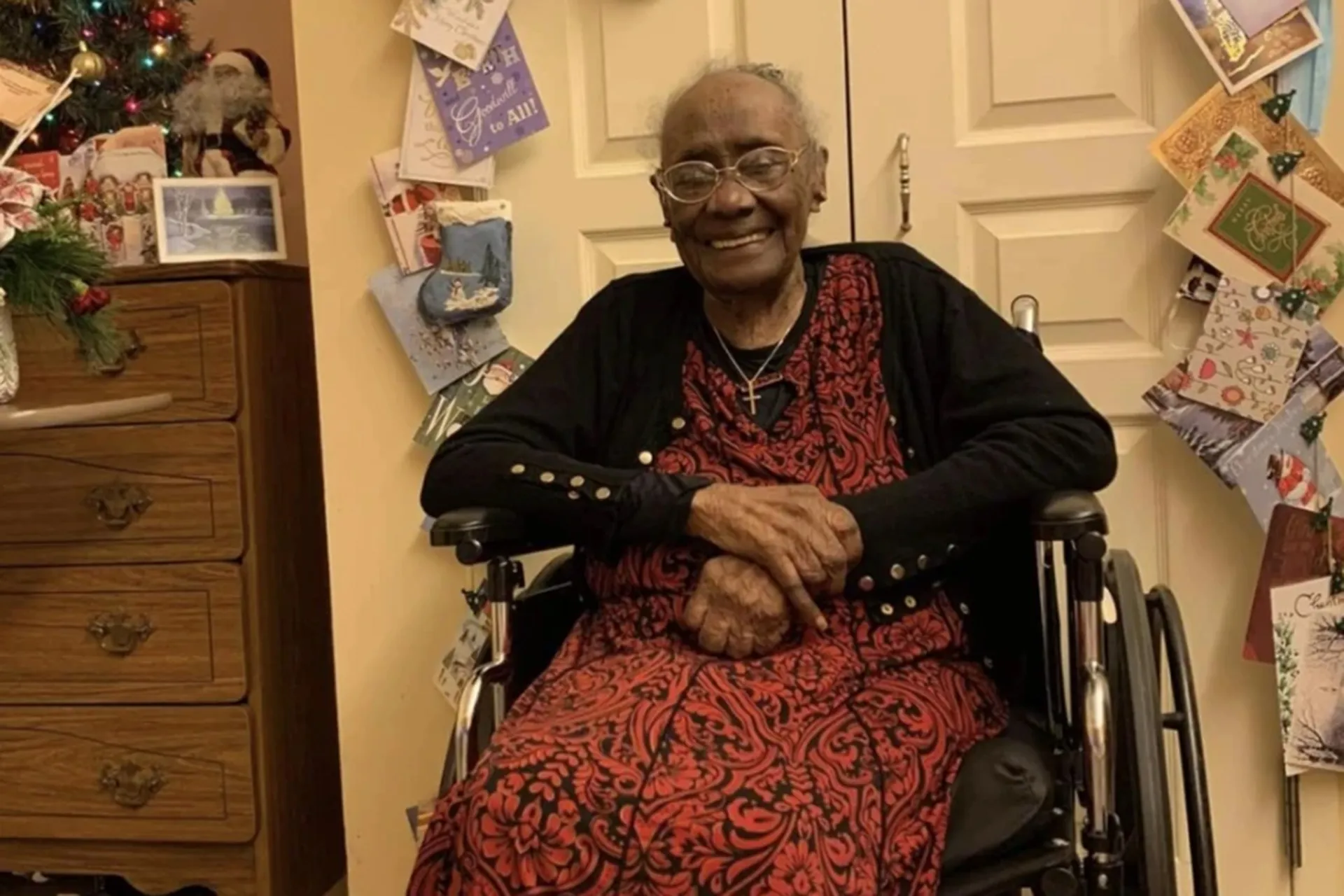
American Naomi Whitehead recently celebrated her 116th birthday, becoming the oldest known person alive in the United States, and the second oldest known living person in the world, in an event that brings to the fore the question that has puzzled scientists for a long time: Why do some people live for more than a century, while most people do not reach this age?
Whitehead was born on September 26, 1910 in the US state of Georgia, and she turned 116 years old on September 26, 2026 in Greenville, Pennsylvania.
The Gerontology Research Group confirmed her age, and LongeviQuest currently classifies her as the oldest living person in the United States and the second oldest known person alive in the world, after Britain’s Ethel Caterham, who turned 117 years old in August 2026.
But reaching such an exceptional age does not seem to be linked to one secret. Recent studies indicate a complex interaction between genes, lifestyle, environment, and factors that scientists are still trying to understand.
The role of genes
For years, scientific estimates have suggested that genetics may explain about 20 to 25 percent of differences in longevity among humans, with the bulk attributable to environment, lifestyle, and other factors.
But a study published in the journal Science in January 2026 reconsidered these estimates, as researchers analyzed more than a century of data derived from 3 sets of twins in Scandinavia, and attempted to separate deaths resulting from external factors, such as accidents, some infectious diseases, and violence, from deaths related to aging and internal causes.
After making this correction, the researchers estimated that the heritability of longevity due to internal factors may exceed 50%.
But the number does not mean that genes directly determine the half-life of any human being, but rather it is a statistical estimate of the amount of difference in lifespans within populations that can be linked to genetic differences in the conditions of the study. The study’s methodology also sparked a scientific debate about how to separate external causes of death from genetic components.
Aging and genetics
It seems that the genetic role becomes more clear in people who reach very exceptional ages. Centenarians who exceed 100 years, especially those who reach 110 years or more, represent a rare group that helps scientists study the mechanisms that may protect the body from diseases associated with aging.
An example is the Spanish signator Maria Brañas Moreira, who died in 2024 at the age of 117, and at the time was the oldest known person alive in the world.
Scientists studied her blood, saliva, urine and gut microbiome before her death, and discovered a host of unusual biological traits, including genetic variants, some of which have been linked to longevity, heart and brain health, and immunity.
She also had good cardiovascular health and low levels of inflammation, and her immune system and gut microbiome showed characteristics similar to those of people decades younger than her. The results will be published in 2025 in the journal Cell Reports Medicine.
However, the researchers stressed that studying one person, regardless of his age, does not allow for the conclusion of a general recipe that guarantees others to reach the same age.
Is longevity passed on to children?
Other evidence suggests that families with centenarians may actually carry some biological advantages; In a large study published in August 2026 in the journal JAMA Network Open, researchers studied data on 4,030 centenarians and comparison groups across 3 long-term studies.
The analysis found that children of those who lived to be 100 years or older had, compared to control groups, a reduction in the risk of death of about 42%, a reduction in the risk of cardiovascular disease by about 33%, and a reduction in the risk of high blood pressure by about 32%.
The onset of high blood pressure was delayed on average by more than 5 years, and life expectancy of death was delayed by about 3 years compared to the other groups. The researchers did not find a clear, statistically significant decrease in the risk of cancer.
But genes are not inevitable. Despite the importance of heredity, DNA analysis cannot accurately predict how long a particular person will live.
Longevity is the result of the interaction of thousands of genetic variables with diet, physical activity, smoking, alcohol, environment, social and economic status, medical care, and diseases to which a person is exposed throughout his life.
Naomi Whitehead herself did not smoke or drink alcohol, according to her biography published by LongeviQuest, and her father lived until his nineties, which prompted her to previously indicate that family history may have contributed to her longevity.
But these observations do not prove that abstaining from smoking or alcohol is the direct cause of her reaching 116 years of age. Rather, they are consistent with extensive evidence that avoiding smoking and excessive alcohol reduces the risk of many diseases that shorten life.
What do we learn from a woman who lived 117 years?
The life of Spanish centenarian Maria Brañas provides an example of the intersection between genetics and lifestyle. She was socially and physically active, followed a largely Mediterranean diet, and ate yoghurt regularly. She was neither a smoker nor a habitual drinker of alcohol.
The researchers observed that she had an intestinal microbiome rich in beneficial bacteria of the “Bifidobacterium” genus, with a composition closer to that found in younger people.
However, the researchers did not say that yogurt or the Mediterranean diet made her live 117 years. Rather, they suggested that her exceptional longevity may have resulted from a rare combination of protective genes, metabolic efficiency, low inflammation, and lifestyle and microbiome characteristics.
A different imprint in the blood of centenarians
Scientists are also looking for indicators that can be measured in the blood of people who live to advanced ages. In a study published in 2025 in the journal Maturitas, researchers compared the metabolic profile of Chinese people with exceptional longevity to younger groups.
They found differences in a number of fats and metabolic molecules, including lower levels of some glycerophospholipids in centenarians.
But researchers treat these substances as potential indicators of longevity, not as a proven cause of longevity.
The bottom line is that there is no recipe that guarantees reaching 100 years or more. Science has not yet discovered a diet, medicine, or habit that can guarantee that a person will live to 100 years or 110 years.
Recent scientific reviews suggest that exceptional longevity results from a highly complex interplay between genetics, gender, metabolism, immunity, heart health, microbiome, lifestyle, environmental and social factors.
Therefore, the stories of centenarians do not provide a “magic recipe” for immortality, but they do give scientists a rare opportunity to find out why the bodies of some people are able to delay the diseases of aging for decades longer than others.
In the case of Naomi Whitehead, we do not yet know whether she carries an exceptional genetic fingerprint similar to that observed in some other centenarians.
But her life, which extended from 1910 until she was 116 years old, provides researchers with another example of the question that still has no complete answer: Why do some people age so slowly?