

A report issued by the PWC company (PWC) was classified as one of the most ambitious and influential countries in the field of electrical mobility in the Middle East, which confirms the state’s strong orientation towards global leadership in this vital sector.
According to the report, the State of Qatar is moving in a rapid pace towards the transformation to electrical movement, in line with the third national development strategy that focuses on sustainability, economic diversification, and technology -paid growth, to achieve Qatar National Vision 2030, indicating that the plans that have emerged in this field played a pivotal role in this transformation, where the electric vehicle strategy was launched, which aims to form electric cars 10 percent of the total Vehicle sales by 2030, in addition to accelerating the development of infrastructure supporting the future of carbon emissions.
The report expected that the percentage of sales of electric battery cars (BeV) in Qatar will increase from 1.1 percent in 2024 to 14.4 percent by 2035, while the percentage of sales of the rechargeable hybrid cars (PHEV) will rise from 0.7 percent in 2024 to 9.6 percent by 2035.
In this regard, the report reviewed the prominent role played by the Ministry of Communications in leading the shift towards sustainable movement, through plans for its work strategies that it launched to support the shift towards electrical transportation aimed at a cleaner, more efficient and environmental awareness.
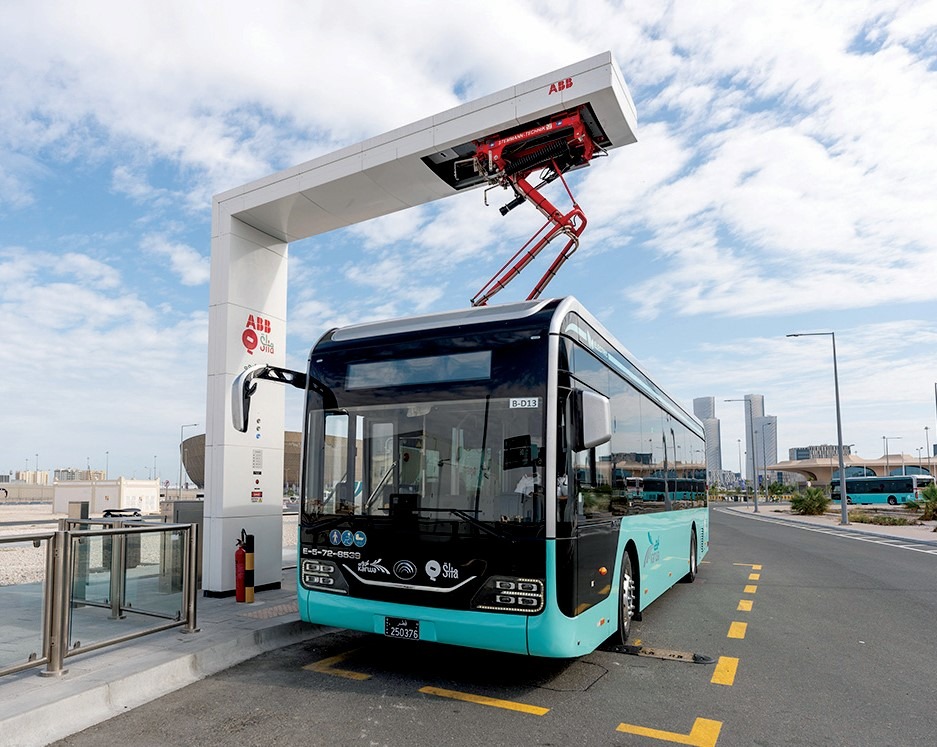
The report pointed out that these plans contributed to the arrival of the percentage of electric buses to 73 percent of the fleet of public transport buses, which reflects a tangible shift towards green transport, and the ministry also played a prominent role in establishing a factory for collecting electric buses in Umm Al -Hawl free area, in cooperation between the Chinese company Ylowing and the “Karwa” transportation company.
And that the FIFA World Cup Qatar 2022 clearly contributed to the state’s capabilities in electrical transportation, as about a thousand electric buses were used to transport fans and visitors, to be the first World Cup in the Middle East to focus in this way on electrical transmission.
The report expected that the shift to electrical transportation accompanied by the expansion of clean energy sources will contribute to reducing carbon emissions in the State of Qatar to about 5 percent compared to full dependence on traditional fuel vehicles, which supports their full commitment to sustainable low carbon transport.
In parallel, the report clarified that the most important engines of strength and excellence in the field of electrical mobility in the State of Qatar are based on its national vision 2030, which integrates sustainability in the core of economic and environmental development, indicating in this regard to the expectations of the growth of the state’s gross domestic product at a rate of 4.1 percent annually until 2029, accompanied by a population increase of about 3.2 million people by 2030, which creates a stable market for vehicles The future, as well as serious efforts to install more than a thousand electric charging units by 2030, supported by building plans about 4 thousand electrical charging units by 2035, as well as the state’s commitment to clean energy production sources with the target of production of 5 GB of solar energy by 2035, ensuring fully feeding the electric network from renewable sources.
The report revealed that the focus on local and global investments in this field contributed to supporting the shift to electrical movement in the country, as the private sector contributed to the launch of an emerging regional manufacturing platform, through the first national brand for Ecotranzit electric cars (Ecotranzit), and the development of a vehicle with a Qatari brand.
Besides, a company (ABB) was established in Umm Al -Hawl Free Zone, which includes a training center and services specialized in infrastructure for charging electric vehicles in cooperation with the Public Works Authority “Ashghal”.
The State of Qatar has also proven that it is an influential global investment partner, with the contributions of the Qatar Investment Authority in the major batteries manufacturing companies such as (SK ON), which puts Qatar among the great players in the global value chain of batteries, in addition to that the state has become an attractive investment destination globally, attracting companies such as Volkswagen, Portra and July to establish its business in the Qatari market.