


The United States recorded a record outbreak of the Cyclospora parasite, with thousands of infections and hundreds of patients hospitalized, while investigations suspect lettuce without access to the responsible producer.
For many, it began with frequent watery diarrhea, cramps, bloating, and severe fatigue, before sporadic cases turned into a widespread wave that spread across dozens of American states.
As of July 16, 2026, the CDC had received reports of 1,645 laboratory-confirmed infections acquired within the United States, distributed across 34 states. The ages of the patients ranged from two to 95 years, and 141 of them were hospitalized, with no deaths recorded.
This represents a sharp increase compared to the same period in 2025, which witnessed the recording of only 249 cases, while the magazine “Nature” described the outbreak as the largest of its kind in the country’s history.
What is the Cyclospora parasite?
Cyclospora caitanensis is a single-celled microscopic parasite that infects the small intestine, and is often transmitted when eating food or water contaminated with the feces of a person carrying the parasite.
The infection is not usually transmitted directly from one person to another; The cysts shed by the infected person need to spend a period of time in the environment until they mature and become capable of infecting a new person. That’s why investigations focus on farms, irrigation water, packing facilities and vegetable distribution networks.
Cases of the disease typically rise during the spring and summer, and previous outbreaks have been linked to salad mixes, cilantro, basil, raspberries, peas and green onions.
Why has lettuce become a culprit?
Michigan was the most troubling; On July 13, its health authorities announced that it had recorded 2,640 reports of infection, compared to only about 40 to 50 cases during a whole year under usual circumstances.
Interviews conducted by the authorities with more than a thousand infected people showed frequent eating of lettuce or salad vegetables, but the investigation did not identify a specific type of lettuce, farm, supplier, or brand as the source of the infection.
Michigan’s numbers don’t necessarily match the CDC’s number of confirmed cases; Due to the difference in the timing of updating data, defining cases, and the laboratory verification stage.
The American Center also announced that it is investigating several disease clusters, including a cluster of more than 400 cases in at least four states, potentially linked to a common source.
A parasite gives itself time to hide
Symptoms usually appear about a week after eating contaminated food, but the incubation period may range from two to 14 days.
By the time diarrhea begins, the patient may have forgotten where they ate the food, discarded the packaging, or the fresh produce has disappeared from the market, which complicates the process of tracing the source.
The task becomes more difficult due to the intertwined distribution networks. Vegetables coming from the same farm may reach different restaurants, stores, and states, and a single salad package may contain ingredients coming from several suppliers.
Symptoms
The most common symptom is recurrent watery diarrhea, which may be severe and sudden, and is accompanied by loss of appetite and weight, bloating and gas, abdominal cramps, nausea and fatigue.
Some patients may suffer from vomiting, body aches, or a slight increase in temperature. A striking feature is that symptoms can subside for several days and then return, and may last weeks or longer if untreated.
Although the infection is not fatal in most cases, prolonged diarrhea may lead to dehydration and malabsorption of nutrients, and complications such as cholecystitis or reactive arthritis may occur in some patients.
Tests
Routine stool examinations may not look for Cyclospora, and conventional screening for parasites and ova may not reliably detect them even in a symptomatic patient.
This is why the Center for Disease Control recommends that doctors request a specific test for Cyclospora when dealing with a patient who suffers from prolonged or recurrent watery diarrhea, especially during the infection season from May to August.
It is possible that the real number of infected people is greater than the official numbers. Because some people do not see a doctor or treat the condition as a passing gastrointestinal flu.
Treatment exists
The usual treatment for confirmed cases depends on a combination of the antibiotics trimethoprim and sulfamethoxazole, in addition to drinking fluids and replacing salts to avoid dehydration. The doctor determines the duration and dose according to the patient’s age, immunity, and health condition.
Antibiotics should not be taken randomly when diarrhea occurs. Because it has many causes, and some patients may suffer from allergies or contraindications to using the drug.
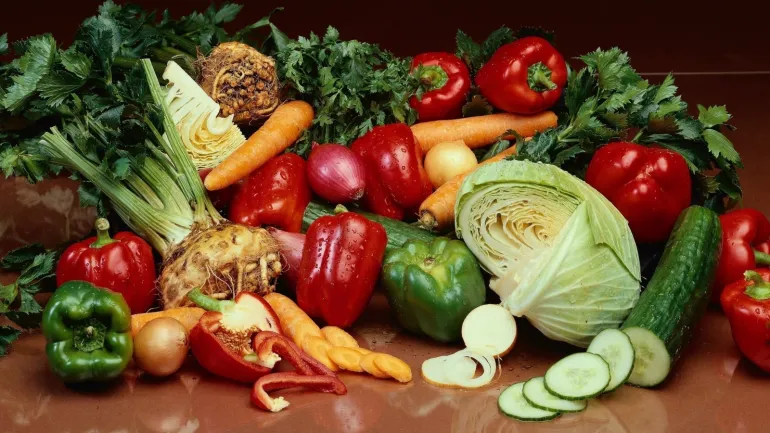
Is it enough to wash vegetables?
Washing vegetables under clean running water helps reduce the possibility of contamination, but does not guarantee complete removal of Cyclospora, and usual chemical disinfectants may not eliminate the parasite.
Michigan authorities recommended that residents of the affected areas temporarily buy whole heads of lettuce instead of packaged mixes, get rid of the outer two or three layers, and then wash the inner leaves well.
She also recommended cooking vegetables that can be cooked to at least 70 degrees Celsius, because heat is more reliable at killing the parasite than washing alone. These were local recommendations related to an ongoing outbreak, and are not evidence of contamination of all lettuce products.
When should you see a doctor?
Repeated or persistent watery diarrhea for days requires medical evaluation, especially if it is accompanied by dizziness, decreased urination, extreme thirst, or apparent weakness.
It is preferable for the patient to tell his doctor what he ate during the previous two weeks, where he bought food, and the restaurants he visited, and to ask about the examination for Cyclospora if the symptoms are consistent with it.
The groups most vulnerable to dehydration and complications, such as children, the elderly, cancer patients, organ transplant patients, and weak immune systems, still need to be careful and seek care early.
Race with a complex food web
Authorities continue to interview infected people, analyze food menus, and track suppliers to farms, but the long incubation period, the speed of vegetable spoilage, and the tangle of distribution make reaching the source like assembling a puzzle with some pieces missing.
Until the responsible producer is identified, the data does not call for general abstention from eating vegetables, but rather for adherence to food hygiene, paying attention to symptoms, and following warnings from local health authorities.