

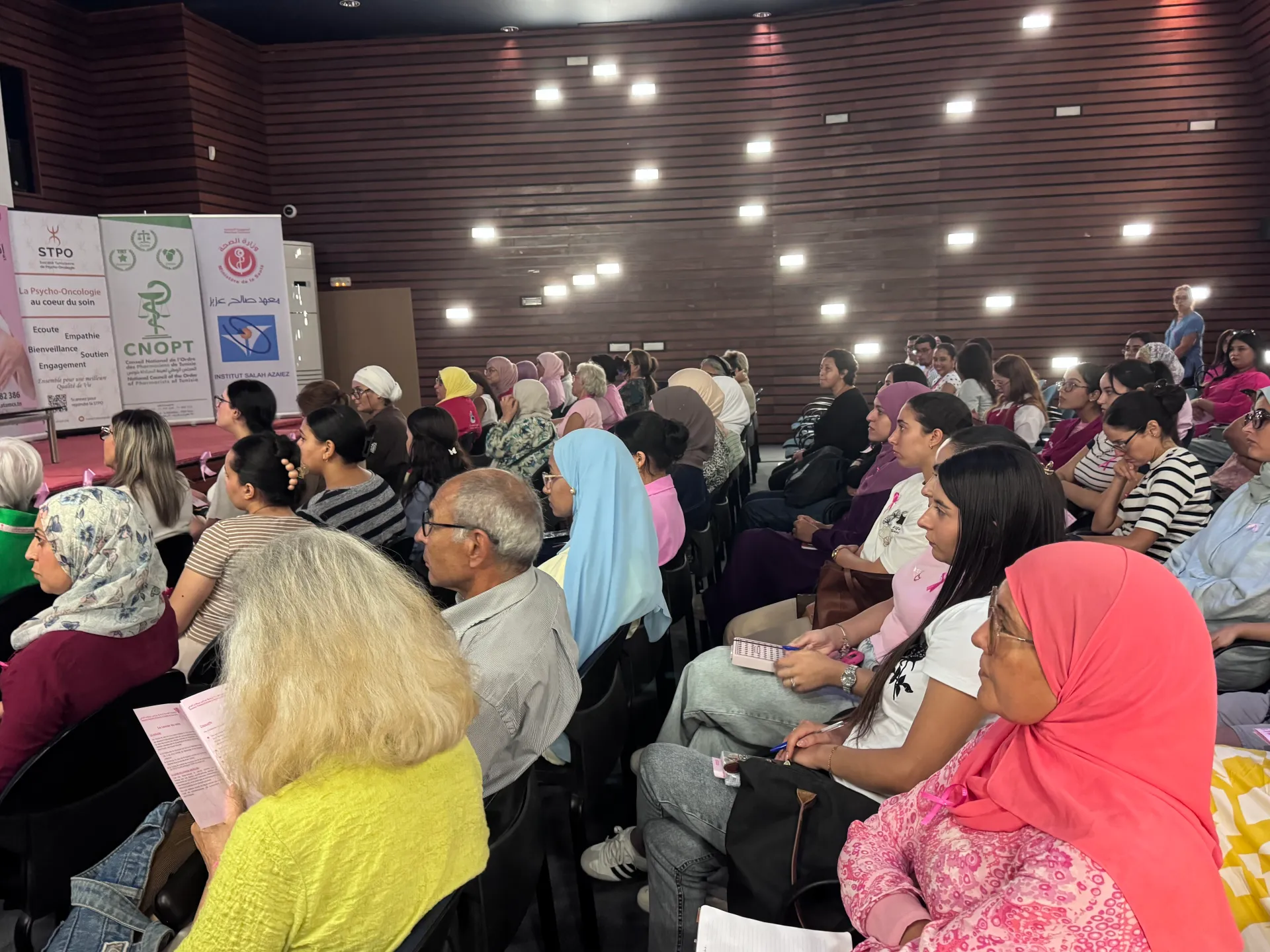
Tunisia- Hakima Alawi was not looking for news that would change her life. She is a 52-year-old doctor. She knows the disease and its details by virtue of her profession. However, her discovery of breast cancer came by chance, at a time when her life was proceeding normally, like many women who plan for tomorrow and think about family and the future.
Hakima told Al Jazeera Net that she discovered she had the disease “by chance,” but she did not panic when she learned about it. After going through the experience, she describes it as harsh, which completely changed her and her outlook on life. From there, she wrote a book titled “To Be Resurrected While You Are Alive.”
Hakima recalls her life before the disease, saying: “Before the disease, a cancer patient lives normally without fears, plans for his future and thinks about his family. After the infection, everything changes.” For her, the future after the diagnosis was no longer what it was before.
From coincidence to investigation
A wise story that summarizes part of the experience of thousands of women with breast cancer, but it raises a question that goes beyond the experience of the disease itself: What if the disease could be detected before it appears or progresses?
In Tunisia, breast cancer represents the number one cancer in women, while health authorities are betting on early detection to detect the disease in its early stages and give infected women greater opportunities for treatment.
Dr. Najla Rashid, a physician and director at the National Office for the Family and Human Urban Development, told Al Jazeera Net that breast cancer is the number one cancer in women, and it has led to the death of many of them.
Rashid explains that Tunisia records between 3,500 and 4,500 new cases annually, noting that disease developments have shown women being infected at early ages.
She says that international recommendations focus on screening at ages between 50 and 52 years, but the appearance of infections at younger ages makes it necessary to begin screening at the age of forty, with repeated mammography examinations every two years.
Rasheed confirms that the state’s policy is based on early detection, as it provides women with a greater opportunity for treatment. Facing the disease does not end when the infection is discovered, as health authorities provide psychological support to patients to help them accept the disease, and accompany them during treatment through specialized clinics.
Early detection
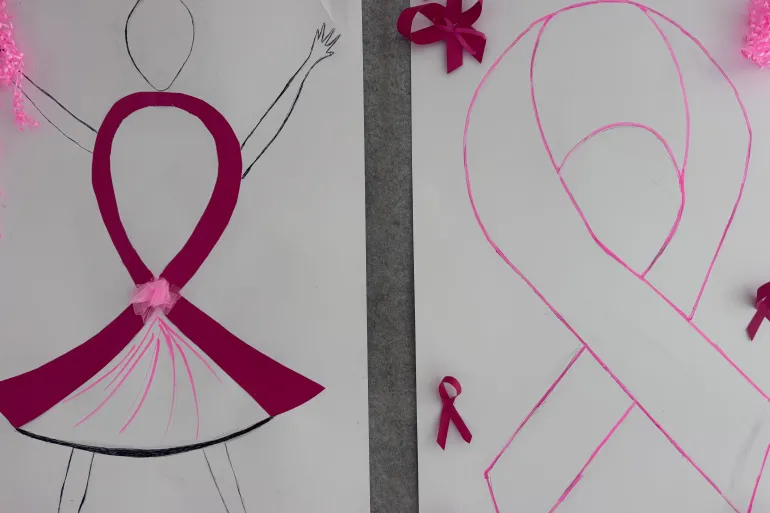
Early detection is not only about discovering the disease before it spreads, but it can also change the nature of the treatment journey that a woman goes through after diagnosis.
Dr. Khaled Rahhal, President of the Tunisian Association for Breast Cancer Care, confirms to Al Jazeera Net that being aware of the disease in its early stages significantly increases recovery rates, and also spares women from long and complex treatment protocols, including chemotherapy.
According to Rahal, dealing with the disease is not limited to diagnosis and treatment, but rather begins with prevention and combating risk factors. He stresses the need to avoid obesity, inactivity, and processed foods, while adhering to breastfeeding as a preventive factor.
It is also recommended to adopt a monthly self-examination as a first line of defense, and to perform a mammography examination periodically every two years upon reaching the age of fifty, or at the age of forty for women who have a hereditary family history of the disease. He believes that awareness and early detection remain the basic foundation for saving women’s lives and increasing their chances of recovery.
The examination is the beginning of a journey
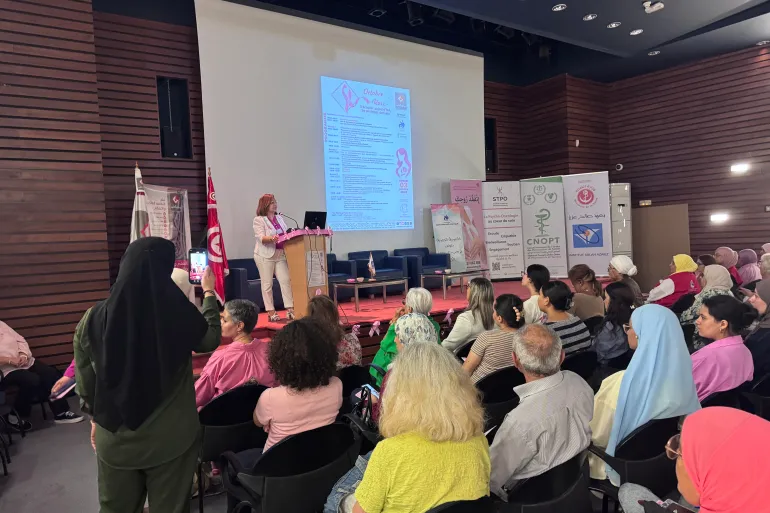
In the Science City in the capital, talk about breast cancer is not limited to the disease itself, but extends to the importance of health information and its role in pushing women to seek early detection.
Safaa Masouri, professor of scientific supervision at the City of Science, says that the institution is keen to keep pace with scientific activities, especially health ones, and to disseminate updated health information. She adds that she is participating in the “Pink October” demonstration to help spread awareness and urge women to seek early investigation, stressing that it gives women a great opportunity for treatment and to avoid the worst.
But between the message reaching the woman and her actual arrival at a health institution, another journey begins, as the investigation is supposed to lead, when there are indicators, to additional examinations, diagnosis, follow-up, and treatment.
October alone is not enough
The Pink October demonstration in Science City combines scientific information with women’s experiences, while health institutions undertake the basic aspect of investigation and diagnosis. The challenge remains to transform the October messages into a healthy culture that continues throughout the year.
For doctors, the main message is not to wait for the disease or its symptoms to appear, and to commit to investigation according to age and risk factors, because early detection can change the course of treatment and chances of recovery.
Behind every number in breast cancer records is a woman with her life, plans, family, and future, and early detection may be what gives her a chance to preserve all of that.