


There is a fundamental difference between a politician questioning a health policy and deciding for himself what should be injected into the bodies of millions of children. The first is a legitimate political right, but the second becomes a serious problem when personal intuition is replaced by scientific evidence, and old doubts are presented in the guise of new science.
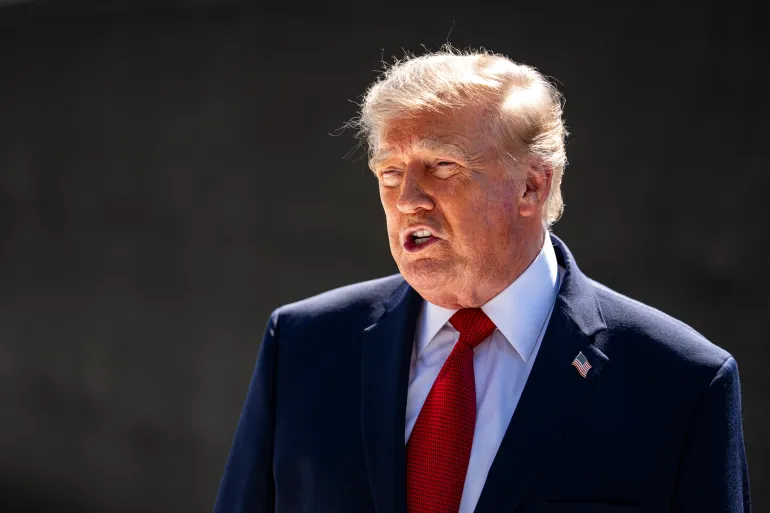
On August 10, 2026, US President Donald Trump signed an executive order with the catchy title: “Providing Gold Standard Recommendations for Childhood Vaccines for Americans.”
But behind the phrase “gold standard” are major changes in American vaccination policy, including reducing the list of routinely recommended vaccines for all children, advocating that vaccines be given in separate visits as much as possible, and most importantly: separating the triple vaccine against measles, mumps, and rubella (MMR = Measles, Mumps, and Rubella) into three individual vaccines when it becomes available in the United States.
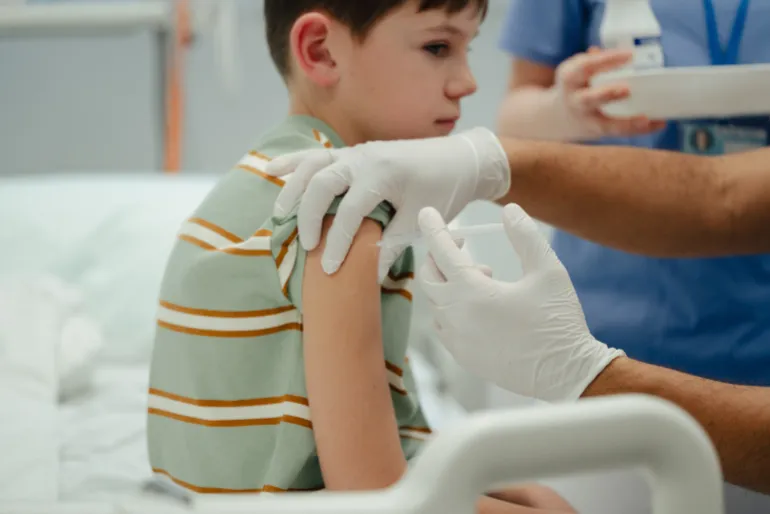
Since the child usually receives two doses of MMR, separating its three components practically means converting two injections into 6 individual injections.
But the question that anyone should ask before changing a medical practice affecting millions of children is very simple: What is the new evidence?
The troubling answer is: There is no new scientific evidence to justify this. Indeed, Trump himself provided, perhaps without intending to, the best summary of the problem. When he talked about separating the MMR vaccine, he said that his position was based on what he “feels,” and he talked about the possibility that the combined vaccine could be dangerous or even “deadly.” When a journalist asked him directly about the evidence for this, he admitted that he had no evidence to prove that MMR was a killer.
Here we should stop. We’re not talking about choosing a white house wall color. We are talking about a health policy that affects millions of children. In science we don’t say: “I feel like there’s a problem, so let’s change the vaccine schedule.” We put forward a hypothesis, then we collect data, then we test it, and then we change medical practice if the evidence changes. As for starting with the result, and then looking for what supports it, this is not a scientific methodology, no matter how much we put in front of it the phrase: “Gold standard science.”
The myth of immune system fatigue
One idea fueling this trend is that giving a child several vaccines at the same time may “stress” his or her immune system. The problem is that this idea seems intuitive only to those who do not know how the immune system works. The child does not live inside a sterile room. From the moment of birth, his immune system is constantly exposed to huge numbers of antigens found in food, air, bacteria, viruses, and the surrounding environment. The antigens contained in vaccines represent a very small portion of this natural burden.
The World Health Organization confirms that giving several vaccines in the same visit is safe, and that combined vaccines do not “strain” the immune system. They also reduce the number of injections and visits and help children complete their program in a timely manner.
We also have actual data and not just a theoretical immunological explanation. In a study published in JAMA, cumulative exposure to vaccine antigens was studied during the first 23 months of life, and researchers did not find that children who were exposed to more antigens through vaccines later developed infections not targeted by vaccines more than others. So where is the evidence that the MMR combination vaccine “strains” a child’s immunity? nothing.
What about autism?
This is the most dangerous point, because it brings to life one of the most studied and debunked medical myths of the past decades. The alleged relationship between the MMR vaccine and autism did not begin with a strong scientific study, but rather with a paper published in 1998 that was later withdrawn after serious problems were revealed, and its author, Andrew Wakefield, lost his medical license in Britain. Since that time, science has not only studied the issue once or twice.
In 2019, for example, a Danish study was published that included 657,461 children. The researchers found no increase in autism risk in children who received MMR, nor did they find an increase even in children at high risk or who had siblings with autism. The adjusted hazard ratio was 0.93, meaning there was no indication of increased risk at all.
The Cochrane review, which included data on more than 1.19 million children in the autism analysis, also concluded that there is no evidence that MMR causes autism.
In December 2025, the World Health Organization’s Global Advisory Committee on Vaccine Safety re-evaluated the evidence published between 2010 and 2025, including 31 preliminary studies, and again came to the same conclusion: there is no causal relationship between vaccines and autism.
How many million more children must we study before the evidence becomes stronger than political “sense”?
Why is MMR unplugged not safer?
Someone might say: What is the harm? Even if dismissal is not necessary, isn’t it better to be on the safe side? no. Because precaution in medicine does not mean doing anything that seems psychologically comfortable. The precaution itself should be based on an assessment of the benefits and risks.
Separating MMR into individual vaccines, there is no evidence to prove that it is safer. Indeed, British health guidelines explicitly indicate that no country routinely recommends giving the three vaccines separately, and that separation leaves children for longer periods without complete protection, increases the number of injections and visits, and may lead to a decrease in vaccination completion.
What is even more surprising is that the individual vaccines that the resolution wants to use are not currently available in the United States. So the executive order itself stipulates that the idea will be implemented when these products become available. In other words, we are not talking about a response to a scientific problem that emerged in the data, but rather about a political decision that first wants to change practice, and then provide the products needed to implement the change.
Kennedy… pledges that did not hold true
The controversy is even more significant when you return to the appointment of Robert Kennedy Jr. as Secretary of Health and Human Services.
Republican Senator and physician Bill Cassidy was reluctant to support it. On February 4, 2025, he announced the reasons for his eventual approval of his candidacy, stressing that “vaccines save lives” and that they “do not cause autism.”
Cassidy said Kennedy and the administration made commitments to him, including keeping the Advisory Committee on Immunization Practices (ACIP) intact and not removing statements from the Centers for Disease Control and Prevention (CDC) website confirming that vaccines do not cause autism.
But in June 2025, Kennedy dismissed all 17 members of the committee, announcing its restructuring. The Ministry of Health justified the move by the need to remove conflicts of interest and restore public confidence.
Then, in July 2026, the CDC page on autism and vaccines was changed to say that the general statement “vaccines do not cause autism” is not, according to the wording of the new page, a claim based on evidence that excludes all possibilities related to all infant vaccines.
However, the same page acknowledges that the evidence regarding the MMR vaccine strongly indicates that there is no link between it and autism, while other CDC pages continue to confirm that numerous studies have not found a relationship between MMR and autism.
Here the question turns from a mere disagreement over a vaccine to a broader question: When scientific committees and official discourse change in conjunction with a change in political leadership, to what extent does health policy remain dependent on evidence rather than political direction?
From scientific skepticism to conspiracy logic
It is important here to distinguish between two things. Questioning the safety of vaccines is not a crime, and monitoring conflicts of interest in pharmaceutical companies and health authorities is legitimate, and even necessary. No human institution is above criticism. But science has a simple rule: You must be willing to abandon your hypothesis when evidence contradicts it.
Conspiratorial thinking works in the opposite way. If studies come up with something he doesn’t like, the researchers are said to be biased. If scientific bodies say the same thing, they are said to be subservient to pharmaceutical companies.
If international institutions reach the same conclusion, they will also become part of the system. Thus, the hypothesis becomes immune to all evidence that could refute it. Here lies the danger of the current path. The issue is no longer simply a re-examination of a scientific question; Re-study in itself is not a problem. The problem is that the political outcome sometimes seems to precede the study.

Children will pay the price
It all happens at a very bad time. In 2026, the United States will witness the worst measles wave in more than 3 decades. As of August 20, 2,777 confirmed cases had been recorded, with deaths recorded, while MMR coverage among kindergarten children had fallen to levels below the 95% necessary to prevent the spread of a highly contagious virus such as measles. Amid these circumstances, health authorities need a simple, clear and reliable message.
But what happens is the opposite: the federal government says one thing, the Academy of Pediatrics says another, and doctors find they have to explain why their recommendations differ from those of their government. The result can actually be measured.
In the AxiosIpsos poll, Americans’ confidence in the federal government’s recommendations for childhood vaccines decreased from 71% in June 2025 to 60% in March 2026. What is interesting is that the decline was not limited to Democrats, but also occurred among Republicans and independents.
In a 2025 KFF/Washington Post poll, 84% of parents trusted the safety of the MMR vaccine, and 81% supported requiring measles and polio vaccination for public school enrollment with some exceptions.
So who is creating the crisis of confidence? It is ironic that an administration says it wants to “restore confidence” in public health while taking measures that have already begun to undermine it.
Science is not administered by executive order
Trump could replace a secretary, sign an executive order, and reorganize a government agency. But he cannot change the result of a study that included 657,000 children with a signature. He cannot cancel a review of more than a million children with a letter. He cannot make the immune system “stressed” because the idea seems logical to him. A relationship between MMR and autism that has not been found by decades of research cannot be turned into a political fact simply by repeating it.
This issue is not a battle between Republicans and Democrats, nor between the right and the left, nor between those who love Trump and those who hate him. It’s a much simpler and more serious question: Do we want our children’s health to be determined by what the evidence shows, or by what a politician feels?
When personal feelings become higher than studies, when scientific committees are reconstituted because their results do not suit the authority, and when hypotheses are presented that have been studied repeatedly as if science had not said anything about them, then we do not regain confidence in science. We’re tearing it down. The price for this demolition may be paid by children who did not participate in this political conflict.