

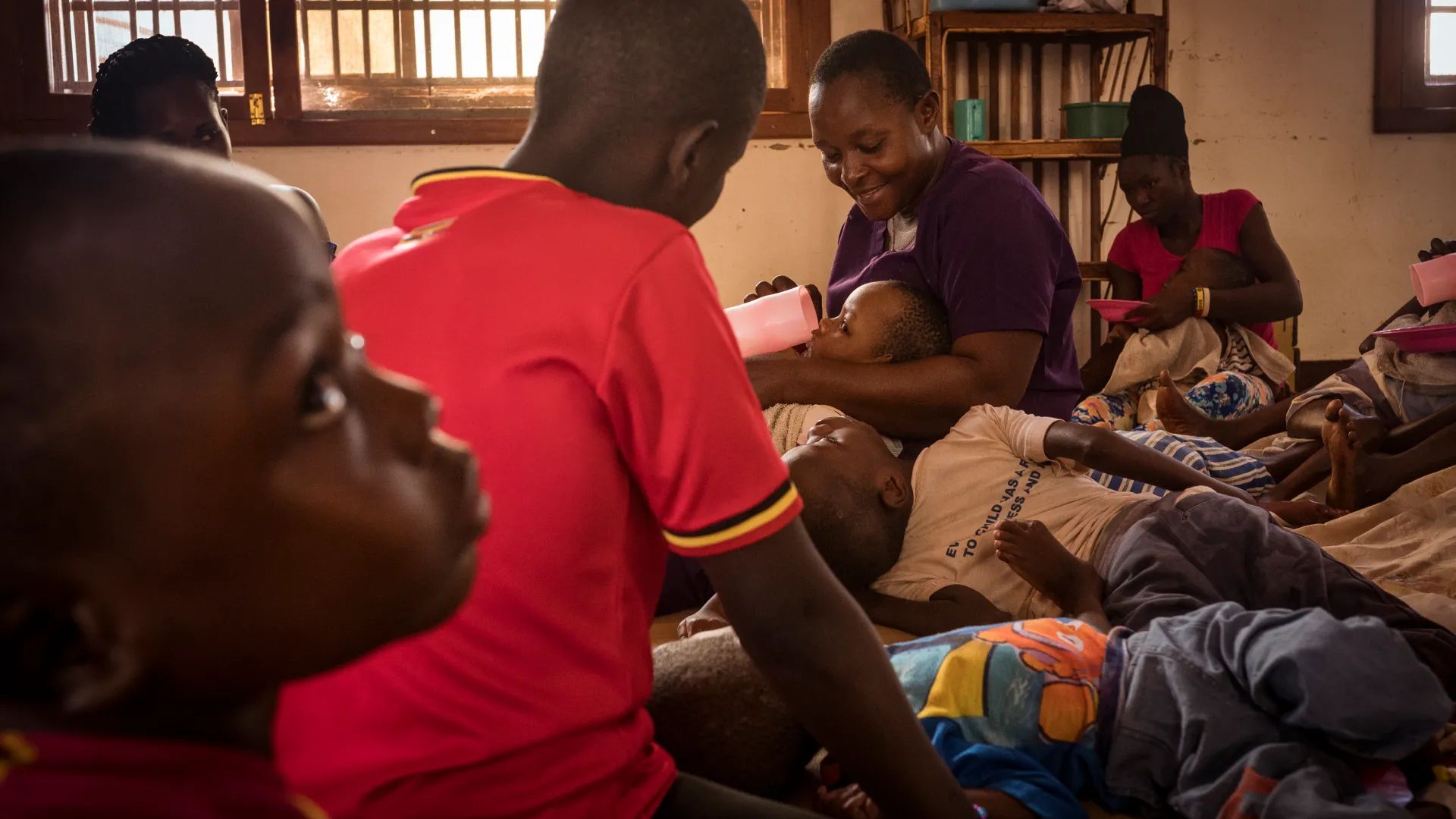
On a muddy, uneven and inherent path in the outskirts of Jinga, east of Uganda, children laugh and play in a courtyard surrounded by green hills and sugar cane farms.
A used child rushes his wheelchair very quickly along the corridor towards a heavy gate guarded by a friendly security guard. On the worn concrete balcony, he laughs loudly while playing with two of his friends a young boy with cerebral ascites (a condition that leads to enlarged skull due to fluid accumulation).
The atmosphere of joy in this place hides the difficult backgrounds of 98 children between the ages of six months and 18. They were all abandoned. Most of them were infants when their fathers left them. Some of them are left at the gate of the complex, and others are in the hospital after their birth. A three -year -old was rescued from his home a few days after his parents disappeared.
In Uganda – the country with a population of about 50 million – more than six million people live these days a disability. Many of them see disability a burden due to a cultural belief rooted as a curse.
Families that include individuals with disabilities are often rejected by their societies, and in the absence of support or knowledge of best practices, they often resort to compulsory restriction or imprisonment. In some cases, the child is abandoned due to social stigma and financial difficulties. Note that about 31 % of families that include people with disabilities live below the poverty line.
The country specializes only 1 % of the health budget to help these families. Andrew Mobangzi, Assistant Commissioner for Disabilities Affairs says it is a “very small amount” and adds: In rural areas in particular, the lack of employees and resources in government clinics leads to long -distance care providers to obtain support.
However, small donor -funded organizations and charities scattered in the country over the past two decades have attempted to bridge the gap in the health system, and to take care of the rights of people with disabilities and defend them.
Edith Lukabwe is one of the leaders of this movement and a sponsor of 98 children in the orphanage known as “House of Hope”. It hopes to educate small groups of its local community will increase awareness and create a more tolerant society. “(People) can then educate their societies … there should not be a cultural stigma,” says Lukabwe.