

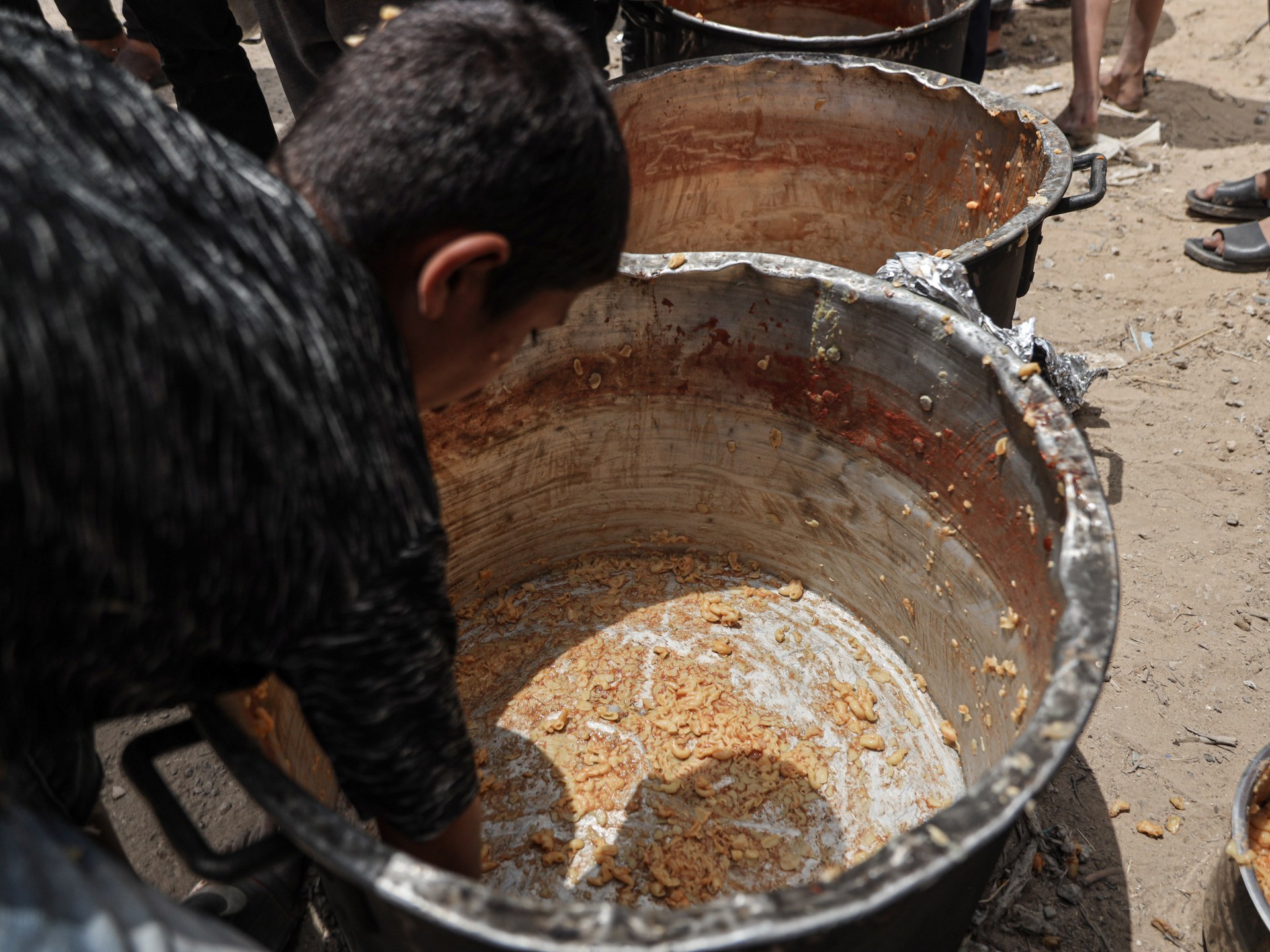
In a statement issued on Sunday evening, July 28, the government media office in Gaza confirmed that the famine is still continuing and even exacerbated, despite the announcement of the Israeli occupation of a “temporary humanitarian truce”, but the trucks that entered the sector not only very few, but that a large part of it was seized in front of the views of the occupation forces, which intentionally obstructing the aid to the official distribution centers, which leads to increased pressure on the population and disturbing efforts Relief.
Famine is still continuing, but rather aggravated, but before we look for the causes of famine, its political consequences and its problems related to the military operation in Gaza, we must first wonder what the famine means from the basis?
In this article of the scientific section of Al-Jazeera Net, we try to answer this question in the most direct and open way, by reviewing what science says at that point, but the following will not be just pure information, but will be written in the image of a scenario, we ask you, dear reader, to live inside it for only 15-20 minutes, and this may help to understand what really happens.
To start the scenario as follows: Suppose with us that for some reason, you were loved in your room and you were never able to get out, perhaps because of an earthquake, God forbid, you happened in the region, you are fine and nothing happened to you but you can never get out because of huge amounts After this meal, you will continue for long days without food until the research forces find you and your graduation from what you are in it, what will happen in your body during that period? How will you feel and what you think?
In the case of prolonged famine, where food is not available for a long time, the human body is subject to radical changes in an attempt to survive, changes that are only described as a very smart strategy, but they are harsh, miserable and very gloomy, to contain the greatest disaster that your body can face, hunger.
First hours: energy supply from the last meal
In the first few hours after eating the last meal, your body still depends on the energy from it, the sugar extracted from bread, fruits and juice rotates between your cells to provide it with energy.
Usually, the emptying of the stomach and the low level of sugar in the blood takes about 6-8 hours after eating, which stimulates the first real hunger attacks. At this point, the hormone grated (which is often called the hormone hormone) rises, reference to the brain that the time of eating has come, it is a usual seizure that you test it until you search for your next meal.
You may hear the sound of your stomach and feel cramping of hunger, and you may feel light dizzy or difficult to focus as soon as the severe hunger is present, and your mood may deteriorate, or get angry and tense, as hunger may make us quickly emotional.
For children, these traces of hunger begin early. Babies and young children have lower energy reserves and faster metabolism, so they may become nervous and weak after just a few hours of not eating.
In fact, infants have a limited stock of energy stored in the form of sugar in the liver, which makes them cannot maintain the level of normal blood sugar except for about 4 hours if they do not eat food, this is the reason for children’s need for frequent meals.
From 6 to 24 hours: exploitation of the first reserves
Once the body is exhausted directly from the last meal, it turns into the use of the stored sugar to obtain energy, where do we get this stored sugar? The answer is the liver and muscles, where sugar (glucose) is stored in the form of a substance called glycogen, and this becomes the next energy source.
During the first day of fasting, the level of the glucagon hormone rises in your body, urging the liver to convert glycogen into glucose sugar again. This tactic can usually meet the energy needs in healthy adults for about 24 hours before glycogen stocks decrease significantly.
During this period of time ranging between 6 and 24 hours, you feel very hungry, and then he recedes and does not continue, but rather passes you in the form of waves.
Physically, you may feel shivering, low energy and hunger pain in the stomach, and it is common to feel a stomach, and even headaches with the progress of this early fasting period.
With the end of the first day of fasting, fast sugar reserves in the body are dramatically exhausted, and here the blood sugar levels begin to decrease significantly.
And reaching this stage in children is more dangerous. The young child after 24 hours of refraining from food will suffer from a severe drop in blood sugar, and he will only have a few other resources that depend on it, and it is likely to have severe weakness, confusion, or even loss of consciousness if it is not helped.
In adults, the inner body reserves can reduce the weight of 24 hours better. Most healthy adults, men and women, can maintain their basic functions during the first day, albeit with difficulty and disorder, they may feel cold as metabolism slows down a little to maintain energy, and the practice of hard physical activity becomes very difficult with the start of fatigue.
This does not pass without a psychological impact, as emotional responses increase, and light discomfort may turn into anger, anxiety and even inherent depression inside you, and this is dramatically due to changes in brain chemistry with a decrease in energy supply.
With the transformation of the body from glucose to fats to obtain energy, your mental purity begins to decline, and you feel difficult to focus, and memory problems, as if there is fog that surrounds your brain, so do not think properly.
The second and third day: shift to fat
After about 48 hours of refraining from food, your body is radically shift in how it gets energy. It has exhausted by this time glucose and glycogen, so what remains for the body?
Here the body moves to the so -called “starvation mode”, which is essentially an adaptation to survive, so the body begins to burn fat stocks as a basic fuel, and there are many of them in the body, in the belly, thighs, arms, under the skin, to the muscles, organs, and even the bone marrow.
The liver converts fat into “ketone bodies”, which are small energy -rich molecules that can be used by many organs, including the brain.
By the third day of complete fasting, the percentage of ketones in the blood rises sharply, and here your brain begins using ketones to meet a large part of its needs.
At this stage, your body has started to dismantle muscle tissue to get certain amino acids that can be converted into glucose. Note that your body is now in urgent need of energy, but there is no longer energy that enters from the outside, so it begins to burn what is stored in its members, and it begins with fat, and now the body turns into protein.
At the beginning of famine (about the second and third day), the body tries to reduce muscle loss (which consists of protein) by increasing fat burning, but muscle breakdown is inevitable, because some biological tissue (such as parts of the brain and red blood cells) still need a amount of glucose that are not provided by fat.
Hence, during the first five days of fasting, the effect of hunger on you can appear, as your weight decreases, not significantly in the beginning.
At this stage, your body is still able to endure, but the body of the child who has a much lower fat to live on, by the second or third day, becomes really slender, very weak, and at risk of organ failure, including the brain if it does not provide him with some nutrition.
Days 4-7: There is no energy to spend it
With the progress of the first week, the body of everything slows down in your body, even your thoughts become less arranged and slow as if the whole world is to move slowly, depressed more, and your emotional expressions decrease to a minimum, and involve yourself, it is only your body adapts to this harsh circumstance, trying to prolong your life in any way.
Because the body has already exhausted everything available, there is only one tactic, which is that the metabolism slows down to the energy conservation, the body tries to reduce the rate of calories burning, due to the lack of new calories.
One way to achieve this is to change hormone levels. For example, the menstrual cycle often stops in women who did not get enough food for a period of time, and in men the testosterone levels decrease, reflecting the body’s inhibition of non -essential functions such as reproduction and muscle building.
Physically, the consequences of approximately a week are without severe food, you feel very weak and cold, it becomes difficult to do more than rest, and only the stillness is aside waiting for any solution, as the body is in a power saving mode.
Blood pressure decreases as a result of low fluid size, and the heartbeat slows down. On the other hand, the immune system weakens severely at this stage, without the basic nutrients, the body cannot maintain its natural immune defenses. In this case, wounds heal badly, and regular cold infection becomes fatal.
Signs of obvious hunger appear by the end of the first week:
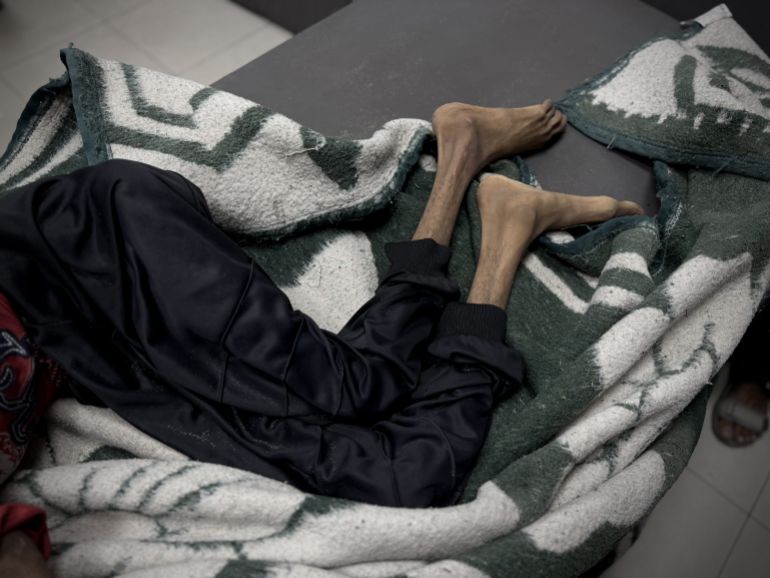
A person seems meager
Bones and bones emerge
Muscle shrinks as a result of protein consumption
The skin becomes thin and dry, and a person may have a scalp rash, which is one of the signs of microorganism.
Ironically, the ankles of the hungry person, his feet, or his stomach may be swollen with fluid, and this is especially noticed in children with severe form of malnutrition, as a lack of protein causes fluid leakage (historically called “cociocor”), and therefore, the hungry child may suffer from flatulence, even with the thinnest body.
As for psychologically, everything is collapsed, the brain suffers from a cognitive collapse and almost complete confusion, with the loss of self -awareness, man is no longer able to distinguish others or respond to external stimuli. In this case, some may experience psychotic attacks, as they act in strange and illogical ways, believing that they are in a different reality.
You are now in a threat to your life, you will lose a large percentage of body weight. The medical references indicate that the loss of more than 10% of body weight due to hunger is dangerous and can cause severe side effects, but by the seventh day, this threshold exceeded the loss of about 18% of the weight.
After one week: critical levels
If the famine continues for more than a week, the situation becomes more dangerous, the body consumes everything, now only one option is to consume muscle tissue and organs as a fuel. Simply put, the body begins to “devour” itself to survive.
Fat decomposing, and this includes the most important muscle ever, it is the heart. The heart muscle can weaken itself as a result of the drain of protein from all parts of the body, as the imbalance of electrolyte, such as potassium, magnesium and phosphate, are exacerbated, which are essential for heart functions and muscles, and are disrupted due to insufficient intake and continuous tissue deterioration.
In fact, the main cause of death in hunger is often a heart attack, which often occurs due to irregular heartbeat caused by electrolyte disorders and the deterioration of the heart tissue.
Besides, the failure of the organs in other forms of risks is that the liver may develop severe fatty changes that lead to its failure, and the kidneys may fail (especially in the case of dehydration), and the digestive system loses its ability to absorb nutrients properly, and weakens the intestinal wall and its cells die.
Currently, the immune system is in a state of chaos, and it is likely that the infection is likely to be a simple bacterial infection or viruses because the body does not have the resources needed to combat it.
In terms of nervousness, chaos is continuing, a person suffers from confusion, seizures, or coma, and it is lukewarm and not responding to anything, and in historical accounts of famines or strikes on food in prisons, people who are hungry in the final stage often lying in almost mobility, with a shallow breathing, slow and low pulse.
Without medical intervention, death is inevitable at this stage, and the question about “How long can a person live in this case?” In this case, a person is waiting for death.
It is different from person to person, but while maintaining water eating, most people cannot survive for more than two to two months without food, and in cases of strike on documented food, death usually occurs between 45 and 61 days of complete hunger, this is for you as an adult, but children are often the first to surrender, perhaps during the first week.