

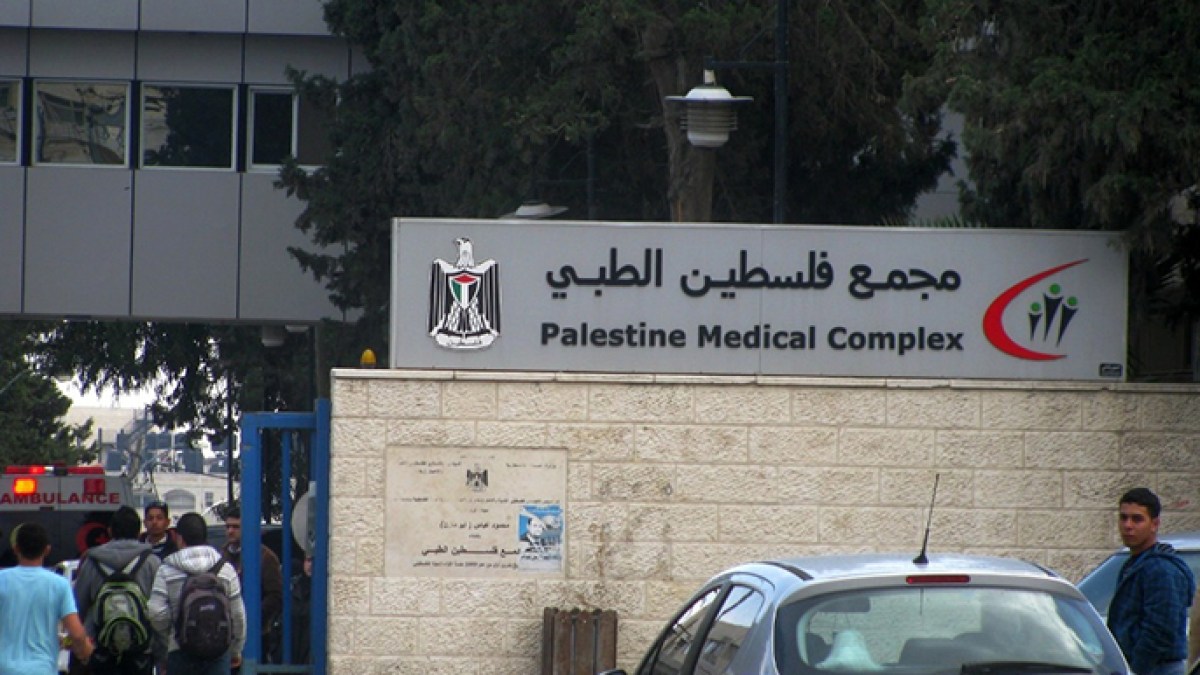
Ramallah- With the continuation of the financial crisis that the Palestinian Authority suffers from as a result of Israel’s detention of clearing funds, vital sectors are threatened to stop work – the most prominent, the most important of which is the health sector – due to the accumulation of government debts in favor of employees and the private sector.
According to what the government announced after an emergency session to discuss the financial crisis on July 17, the value of the detained funds exceeds 9.1 billion shekels (about 2.64 billion dollars), stressing that “the matter was greatly reflected in the government’s ability to fulfill its financial obligations towards various vital sectors, especially the health sector and its lack of drugs and medical supplies,” and warned of paralysis that may affect this sector.
Clearing money is tax revenues that Israel gathered through the outlets that it controls for the goods received to the Palestinian territories, and since 2019 I began deducting them under various pretexts, and in the last 3 months, nothing of them has not turned.
Below, through a set of questions, Al -Jazeera Net sheds light on the health sector in the West Bank in particular after the occupation was destroyed by the same sector in Gaza during the extermination war, the impact of the financial crisis on pharmaceutical companies, and to what extent this sector can withstand.
-
What is the size of the health sector in Palestine? What is the government’s share of it?
According to the report of the Ministry of Health for the year 2024, the number of hospitals operating in the West Bank is 60, of which 19 follow the government, and the rest is either eligible or tracking the private sector and UNRWA, and includes 4,441 beds.
On the other hand, the number of hospitals operating in the Gaza Strip reached 35 at the end of 2022, but the majority of them today are outside the service as a result of the extermination war. During the war, 10 field hospitals were established until the end of 2024.
The Palestinian health system consists of 4 main sectors: the government health sector and includes the Palestinian Ministry of Health, military medical services, the United Nations Relief and Works Agency, civil organizations and the private sector, and all participate in providing health care services to citizens at various levels, but the government sector is the most affected.
Until the end of 2024, the number of human medical cadres working in the facilities of the Palestinian Ministry of Health reached 56 thousand and 373 in the West Bank and Gaza Strip.
-
How many beneficiaries of Palestinian health services in the West Bank? What is the extent of the expenses and revenues of the Palestinian Ministry of Health?
The total number of outpatient clinics and emergency departments in the West Bank hospitals reached about 3 million references, and 178,384 surgeries were conducted, and about 88 thousand births were recorded during 2024.
According to its annual report, the Ministry’s expenses in 2024 amounted to two billion and 523 million shekels (the dollar equals 3.45 shekels), distributed by one billion shekels (39.9%) for salaries, about 959 million shekels to buy service from outside the ministry, including medical transfers, 421.5 million shekels to buy medicines, vaccines, medical supplies, approximately 136.5 million shekels I went to operating expenditures.
On the other hand, the Ministry’s revenues for the same year amounted to about 368 million shekels, through general revenues for primary health care, public revenues for government hospitals, public revenues for administrative centers and health insurance revenues.
The number of beneficiaries of health insurance amounted to about one million and 400 thousand people, of whom are unemployed, martyrs, registered in the Ministry of Social Development, the Prisoners Authority and government sector employees.
A government warned #Palestinian AuthorityToday, Thursday, the repercussions of the comprehensive war launched by the Israeli occupation on the Gaza Strip, and the continuation of its escalatory policies in the West Bank, as well as continuing to detention of Palestinian clearing money.
The government said, in an official statement, that it is facing a stifling financial crisis that threatens … pic.twitter.com/aqc0uhtnc2
Quds Press Agency (@qudspressingy) July 17, 2025
-
Where does the Palestinian government get medicines?
The Ministry of Health gets most of its drugs through private companies, including imported drugs.
In an interview with the official radio at the end of last July, Dr. Fathi Abu Maghli, a member of the Board of Directors of the Palestinian Pharmaceutical Industries Federation, said that national companies cover 55% of the needs of the local market, and 45% of the needs of the Ministry of Health within its bids, pointing to a plan to cover 70% of the needs of the local market and 60% of the Ministry of Health’s need until 2030.
Abu Mughali pointed to the destruction of drug factories in Gaza, and the loss of the Gaza market, which was between 25 and 30%, while 6 work factories in the West Bank continued, estimating the value of investment in the pharmaceutical sector at about 120 million dollars.
-
What is the size of the shortage of medicines and medical supplies?
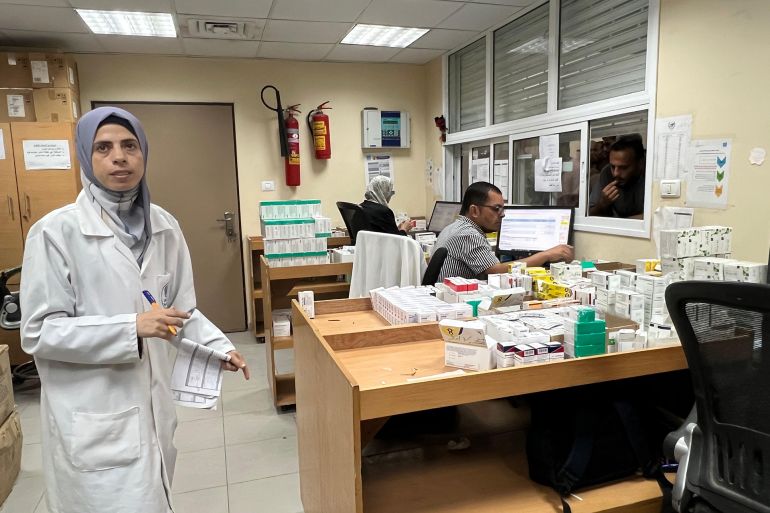
The beginning of 2025, Undersecretary of the Ministry of Health, Wael Al -Sheikh for official radio, stated that the ministry suffers from a shortage of medicines and medical consumers.
The sheikh pointed out that 120 drug items are not available, 20 of which are oncology medications, while 420 items of medical consumer are zero in the ministry, pointing to a long waiting list for operations in government hospitals, and transferring emergency operations to private or private hospitals due to this deficiency.
He added that the ministry’s debt is approximately 3 billion shekels, the largest part of them for private and private hospitals, followed by the medicine and medical consumer bill, which is cumulative debts over the years.
According to the report of the Ministry of Health for the year 2024, the list of basic drugs circulated in the institutions of the Ministry of Health contained 459 effective drugs represented by 650 medicines in various pharmaceutical forms, and it was 81.4% in the central pharmaceutical warehouse during the year 2024.
Director of the Government Communication Center d. Muhammad Abu Al -Rab to Radio Voice of Palestine:
• The occupation continues to freeze clearing funds, which constitute 68% of the income of Palestine, which weakens the government’s ability to meet the needs of the various sectors, pointing to continuous political and diplomatic efforts to restore these funds, describing the financial siege …
– Al -Quds Newspaper (@AlqudsNewsword) August 6, 2025
-
How much is its debts for the benefit of pharmaceutical companies? How did it reflect on companies and their ability to supply medicines to the Ministry of Health?
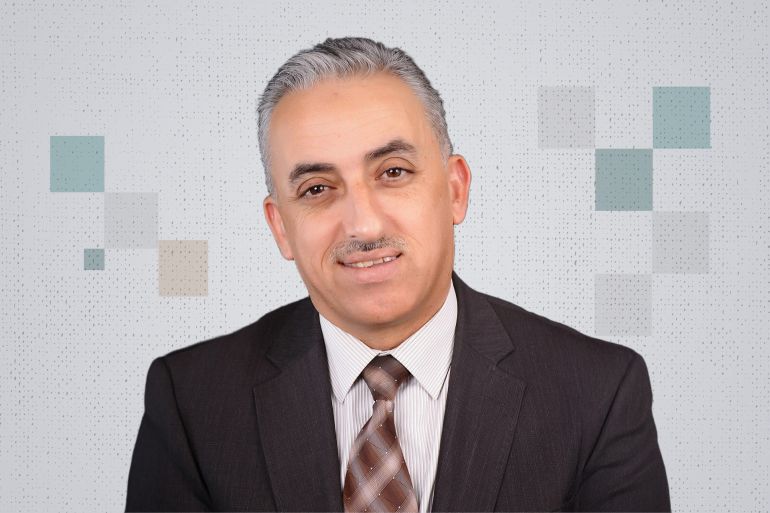
Muhannad Habash, Executive Director of the Federation of Medicines, Muhannad Habash, told Al -Jazeera Net that the total size of the accumulated debt on the government for the benefit of companies supplied to medicines, equipment, supplies, and medical and laboratory materials of the Palestinian Ministry of Health is about one billion and 100 million shekels.
Habash added that the accumulation of debt directly affected companies and some of them to continue supply to the Ministry of Health and Military Medical Services except in the minimum, due to the draining of their financial capabilities due to high financing expenses, explaining that companies resorted to banks to cover their expenses and then were unable to take more loans.
He stressed that the companies’ inability to supply to the government sector threw its shadow over the supply of the private sector, including hospitals that accumulate their debts over the government, and thus became a city for pharmaceutical companies.
Habash revealed the increase in the items of medicines whose balance has become zero in the warehouses of the Ministry of Health, where many pathological cases were transferred from government hospitals to private hospitals due to the lack of medicines, explaining that 13% of the drug items are not available in the warehouses of the Ministry of Health.
He said that the deficiency can be possible if it is related to chronic and normal diseases, but a risk that intensifies when the deficiency reaches life -preserving medications, surgeries, organ transplantation, blood diseases and cancer.
-
How did companies and government try to overcome the crisis?
Within the endeavors to resolve the crisis, Habash pointed out a previous agreement with the Ministry of Finance stipulating regular batches, and that the debt size does not exceed 750 million shekels to reduce bleeding and not to exacerbate the crisis, but everyone lost control and debt exceeded this amount.
After a long commitment to payments in the amount of 30 million shekels for all companies to continue, even in the minimum supply, Habash pointed out that the payments have decreased in half in recent months, warning of “a very high danger to the health sector, and perhaps a complete stop.”
He pointed out that the supply is now limited to “some vital medications that maintain the patient’s life, but if the situation continues as it is, the supply of these items will stop also.”
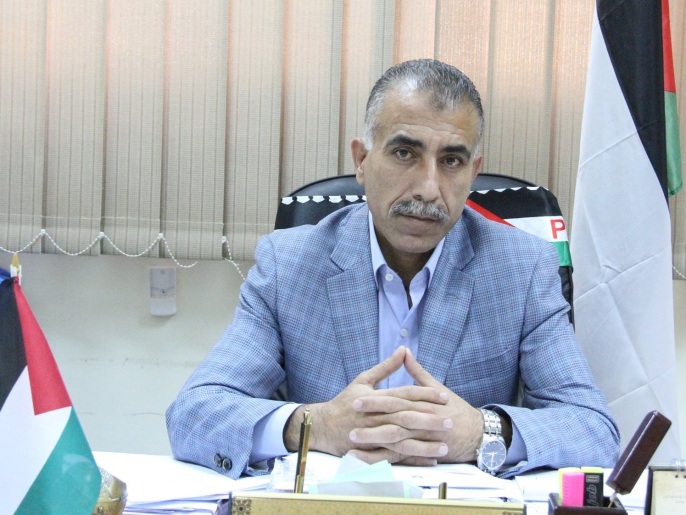
On July 10, the General Accountant at the Ministry of Finance, Mohamed Rabie, announced in a press conference that all debts on the government amounted to 13 billion dollars distributed between the private sector, banks, employees, their dues and retirees.
Rabie added that the total employee dues amounted to $ 1.8 billion and debt for the private sector 1.6 billion dollars, and 4 billion under the settlement of the Palestinian Retirement Authority, explaining that hospitals and medicines constitute 70% of the private sector debt.
-
What about the future of health services?
The head of the health professions unions, Osama Al -Najjar, tells Al -Jazeera Net that providing supplies is very difficult, noting that the debts of supply companies have accumulated, and that they have to take loans from banks until the highest allowable ceiling for borrowing reached.
Al -Najjar added that “the lack of medicines and supplies will enter the entire health sector in a very difficult tunnel,” noting that “a shortage of approximately 700 items between drugs, laboratories, medical consumers and equipment missing with zero in warehouses, and therefore this matter increases and does not say.”
He continued, “The situation is very dangerous to the services provided as a result of the non -receiving of their salaries and their inability to reach their workplaces, a very negative impact on the services provided.”