

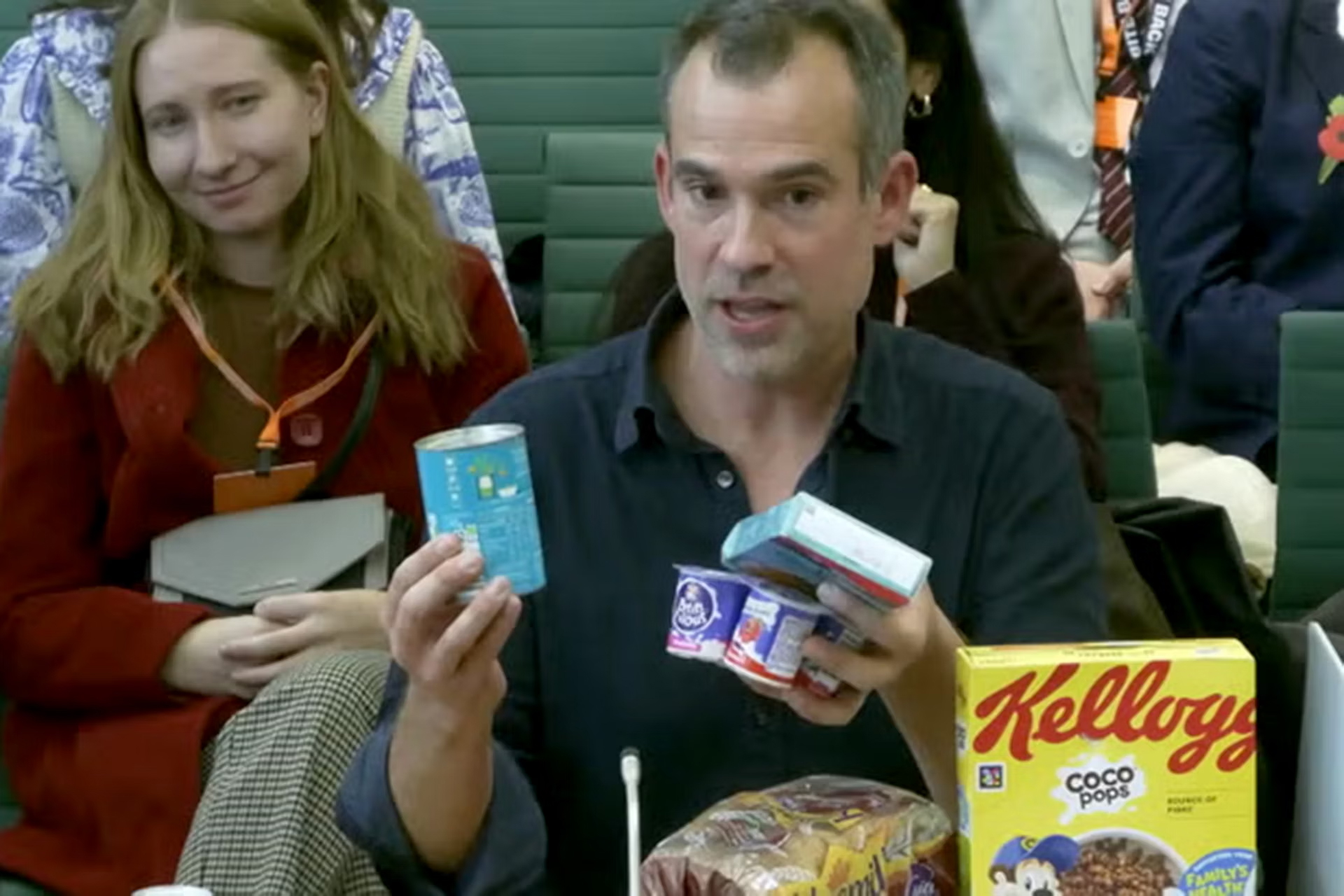
Professor Chris Van Tulleken, professor of global health at University College London and presenter of a program on the British BBC channel, warned members of the British House of Commons that major food companies are feeding children to death with meals that parents mistakenly believe are healthy, when in fact they are ultra-processed and genetically modified to cause harm.
This took place in a meeting held by the Health and Social Welfare Committee in the British House of Commons on November 5, about ways in which the government can intervene to reduce obesity rates.
He stated, according to the British Daily Mail website, that weak regulations allow companies to deceive parents into believing that the meals they provide to their children are healthy.
He added that this causes them to gain weight and fuels an “obesity pandemic” in the country. Professor Van Tulleken explained that the crisis is driven by commercial interests at the expense of people’s health.
He stressed that a typical diet seen as healthy – which might include baked beans, fish fingers, whole grain bread, yogurt and breakfast cereals – would result in a person eating more than the recommended daily level of calories.
He added: “Everything in the packaging, marketing and regulations indicates that they are healthy. There is not a single red flag on any of these products, and none of them contain a high percentage of fat, salt or sugar, but you will definitely eat a lot of calories if you eat this type of food. This food was designed so that you cannot eat according to your appetite, but rather it was designed precisely and intelligently to exceed the appetite.”
He continued, “When we talk about the personal responsibility of parents, how do you go to a store and say: Well, all these things say they are healthy, and there are no marketing restrictions, there is a monkey on the box and it claims that it supports the health of my family?”
Obesity is rampant in primary schools
Professor Van Tulleken said products could be labeled and taxed in a way that would shift people’s shopping habits to a much healthier diet.
This comes after new figures revealed that one in 10 children (10.5%) in the first year of primary school in England suffers from obesity.
This percentage rises to 22.2% of children in sixth grade, according to data from the National Program for Child Measurement in the United Kingdom.
Professor Van Tulleken called for cartoon characters to be removed from common baby food packaging, and urged governments to put in place stricter regulations on unhealthy substances.
He also called on food charities and decision-makers to sever their ties with the food industry, which deliberately markets products that contribute to exacerbating the crisis that has been going on for three decades.
“The pandemic of obesity and other diet-related diseases is driven by commercial incentives,” he said.
Professor Van Tulleken said the reason there was no clear definition of unhealthy food was “decades of industry interference, interference by food companies”.
He assured members of parliament, “We do not need more research to take effective political action.”
Cooperation and transparency
On the other hand, a spokesman for the Food and Drink Federation, a British trade body, said: “Food and drink manufacturers produce a wide range of foods, from everyday foods and drinks, such as frozen peas, bread and breakfast cereals, through to sweets and pastries.”
“Companies have made a series of changes over many years to make the foods and drinks we all buy every day healthier, in line with independent government guidance,” he added.
The spokesman explained, “The products of the Food and Beverage Union members offered for sale in stores and supermarkets now contain a third less salt and sugar, and a quarter fewer calories compared to 2015. He added: Let everyone be confident that the success of policies and regulations on the ground requires close consultation and cooperation between the government and the industrial sector.”
He stressed that the industrial sector’s cooperation with the government is characterized by transparency, and in many cases is subject to formal rules related to conflicts of interest.