

The Sudanese army announced the restoration of control over Umm Siala locality, located in northern Kordofan state, in a qualitative development that tightens the stranglehold on the supply lines of the Rapid Support Forces. Al Jazeera correspondent Hassan Razzaq (from Omdurman) reported that army sources confirmed this important field development.
The correspondent explained that the importance of this strategic locality may be the greatest in North Kordofan, surpassing the importance of “Umm Dam Haj Hamad” and Kazkel, given that it is located on the upcoming supply lines for the Rapid Support Forces in North Kordofan. He stated that “Umm Sayala” locality is located approximately in the middle of this vital and important road.
According to the report, the Sudanese army’s control over this region means a restriction on the supply lines coming to the Rapid Support Forces from their bases in the Darfur states to North Kordofan. The correspondent described this development as qualitative and new in the course of the ongoing battles.
This development came after the Sudanese army sent military reinforcements to northern Kordofan state during the recent period, as it now controlled the cities one by one.
Army field commanders revealed clips showing their control of military vehicles and equipment following clashes with the Rapid Support in Babanusa (West Kordofan), one of the largest cities in the state, and the army announced that it had repelled an attack by the Rapid Support on the leadership of the 22nd Division in the city.
The report explained that Babanusa is considered of great importance as it is the last site controlled by the army in West Kordofan, as well as its proximity to oil production fields and South Sudanese oil refineries.
Course of other operations
Within the framework of the strategic analysis, the report pointed out that these developments will of course affect the course of other operations, whether in South or West Kordofan, and pointed out that the three states of Kordofan (North, South and West) became the focus of attention after the Rapid Support was able to control the five states of Darfur.
The correspondent confirmed that all indicators point to the continuation of the military escalation in these three states in Kordofan, where the Rapid Support Forces are heading towards them after taking control of Darfur.
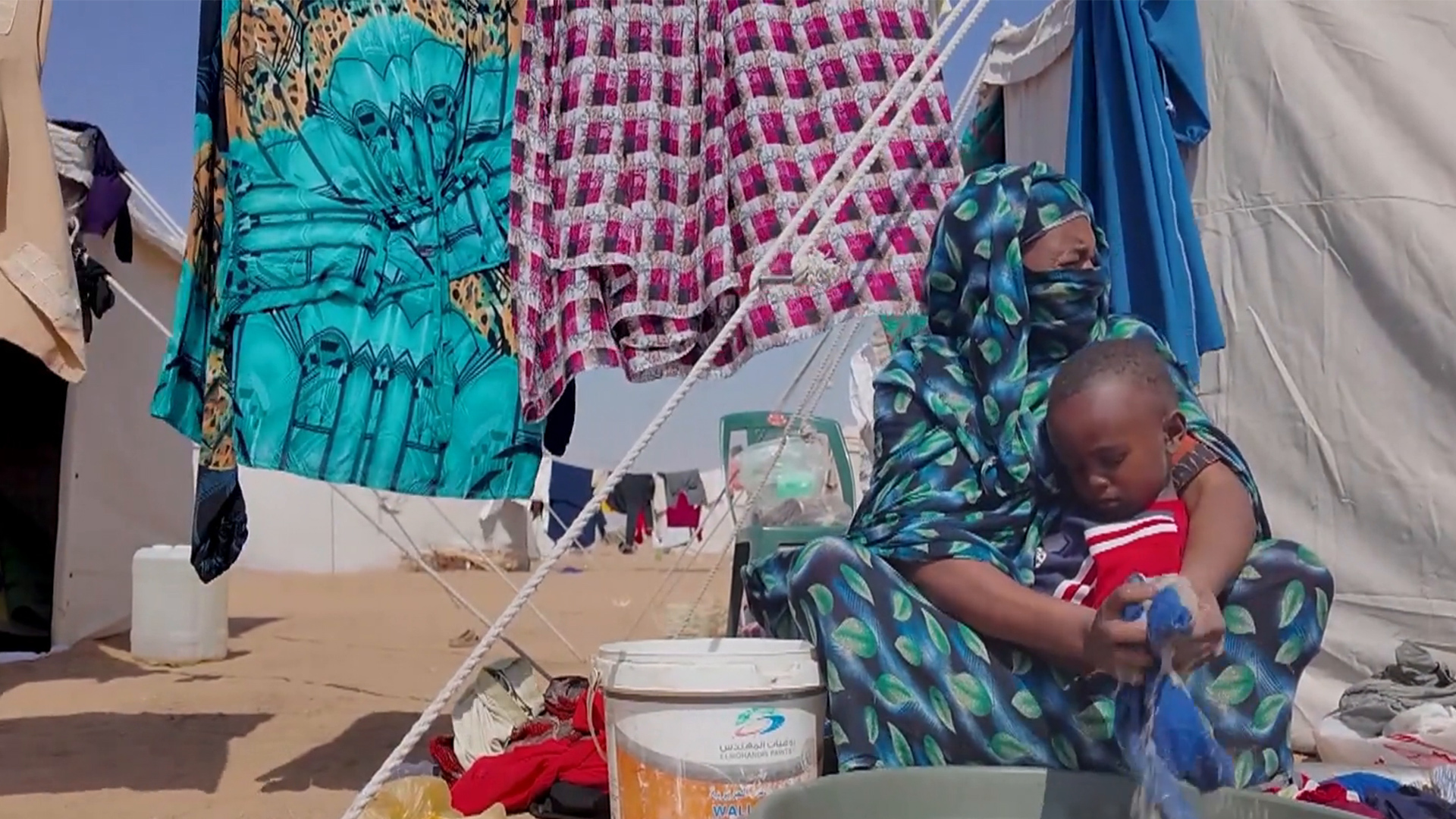
On another level, the camps for the displaced in northern Sudan reflect the tragic human face of this ongoing war.
The displaced Sudanese woman, Kifah, gave birth to her baby girl inside the Al-Afad camp for displaced people, east of the city of Al-Dabba, after a harsh journey and bitter suffering. Her joy for her newborn daughter was overshadowed by her deep sadness over the loss of her husband, who was killed two days before the fall of the city of El-Fasher.
She recounted that her husband was killed on Thursday, just as El Fasher fell the following Saturday, leaving her alone with her daughter to face a harsh new reality.
In a related context, the displaced woman Fatima is trying to adapt to a new reality in the camp after her arrival from the city of El Fasher last month, and she is haunted by painful memories of the violations she was exposed to there that seemed shocking and horrific.
Fatima recounted painful details about the flogging she was subjected to at the hands of more than 7 Rapid Support soldiers, with some demanding her death and others flogging her. She talked about their cutting off her clothes and taking away her phone and money, at a time when she was carrying her child in her lap, trying to protect him.
Fatima is receiving treatment in Zamzam camp after the physical harm she suffered.
Multiple violations
Regarding the general conditions in the camp, Al Jazeera correspondent Osama Sayed Ahmed explained that the displaced people do not face bombing that disturbs their sleep in this camp, but their reality has taken other forms of suffering.
There are many pictures of the violations that the displaced were subjected to before their arrival. Each of them has a chapter in a tragedy and a sad story of suffering that has not yet ended. The journey of misery and fear ended with them heading to Al-Afaad camp, which now houses 1,050 families displaced from North Darfur and Kordofan, and they are in dire need of all humanitarian and medical assistance.
In the context of the increasing humanitarian challenges, the Director of the International Organization for Migration in Sudan, Muhammad Rifaat, revealed the arrival of more than 90,000 displaced people from the El Fasher region or its city, and he expected that these numbers would begin arriving in the camps in the near future, which will lead to an increasing deficit in the services provided.
The displaced people need a lot of assistance, as they have been in difficult conditions for more than 18 months, and many malnutrition and chronic diseases have spread among them.
The local authorities in the city of Al-Dabba are working to evacuate 90 waiting stations and transfer the displaced to Al-Afad camp as their influx continues. Although the conditions in the camp are not ideal, the displaced are seeking first to survive in light of these harsh conditions that combine the effects of field war and the worsening humanitarian crisis.
The displacement crisis increased after the Rapid Support Forces seized El Fasher last October 26 and committed massacres against civilians, according to local and international institutions.
It is noteworthy that since April 2023, Sudan has witnessed a military conflict between the army and the Rapid Support, which has led to the deaths of tens of thousands and the displacement of about 13 million people, in addition to the exacerbation of a humanitarian crisis described as one of the worst in the world.