

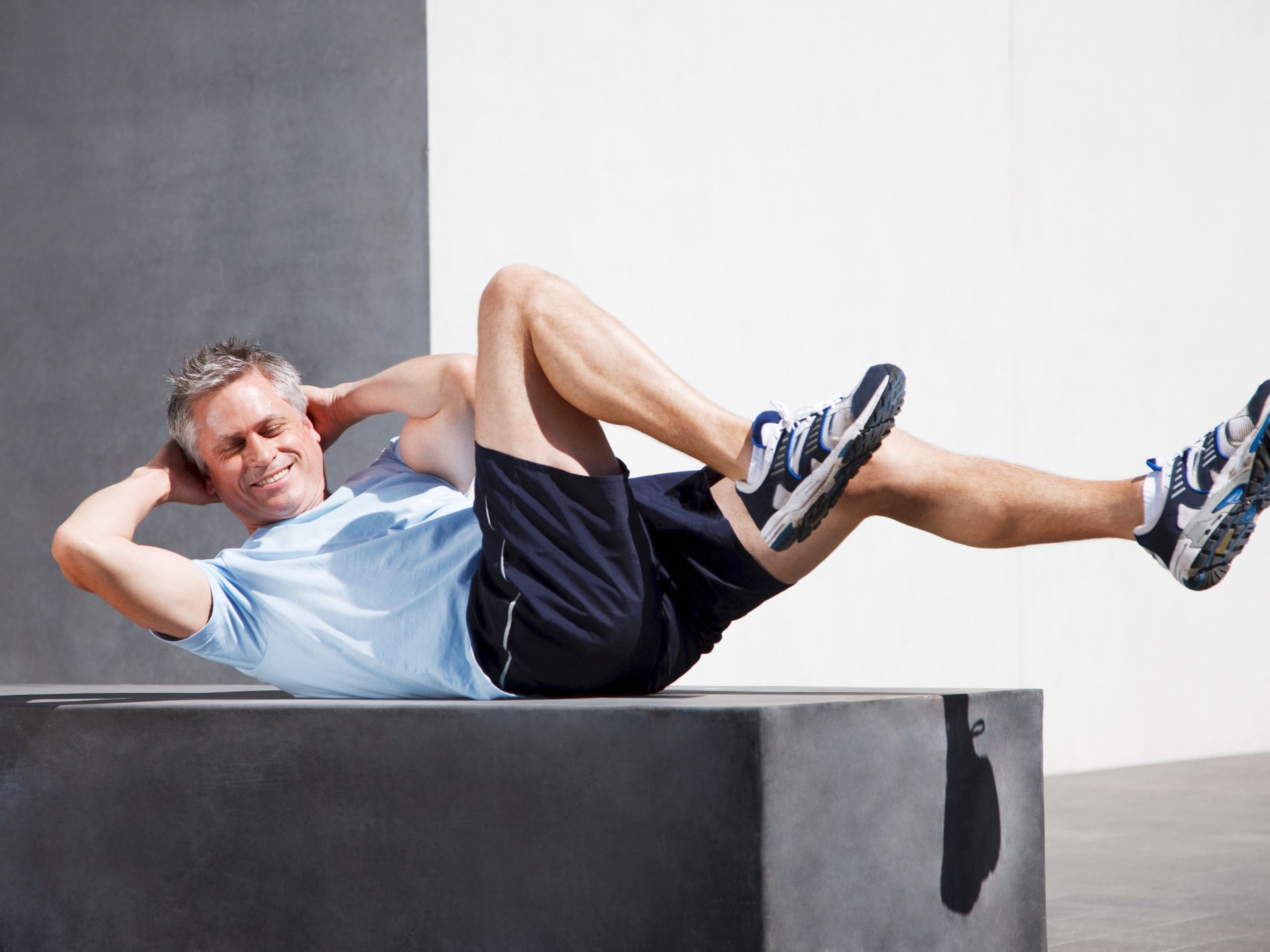
While almost everyone can do abdominal exercises, many do not. In this report, we provide you with the number of repetitions of abdominal exercises that you can do according to your age.
In fact, exercise physiologists and trainers alike say that sit-ups are accessible exercises for all age groups and have significant health benefits.
It helps build the trunk muscles, which work together not only to keep the body upright, but are the foundation of a healthy back and good posture, which helps avoid back pain and prevent osteochondritis, which causes cartilage to separate from the bones inside human joints.
As we age, good trunk strength helps us deal with wear and tear on the spine and helps protect us from falling. All functional movements, from sitting to walking, require trunk strength.
“The trunk muscles don’t work in isolation,” says physical therapist Nell Meade. “They work as an integrated system to stabilize your entire body during realistic movements.”
Therefore, focusing on exercises that target contact with the deep trunk muscles, as well as the rectus abdominis, which are located closer to the surface, can help reduce the risk of injury, especially in the lower back, as they strengthen the muscles and tissues of the spinal area.
In fact, many exercise physiologists say that if your goal is to leave the gym with a toned stomach, you’re missing the mark, although that’s not entirely impossible.
Abdominal muscles
The abdominal muscles are just one of the major muscle groups that make up the torso; It also includes the deep muscles in the spine, hips, pelvis and back, as well as the smaller muscles along the spine and diaphragm.
How many abdominal exercises should you be able to do as you age?
According to Nico Schwandt, a physiologist who specializes in pain and chronic disease: People between the ages of 30 and 39 should be able to perform 40 repetitions of sit-ups at least two or three times a week.
As we age, this number decreases slightly, but people between the ages of 50 and 59 should still be able to perform about 20 sit-ups a few times a week. For people between the ages of 60 and 69, all is not lost yet, as the trainer recommends about 10 abdominal exercises for this age group.
He told The Telegraph: “These numbers are indicators that you should aim for, provided you have the right technique and a reasonable level of fitness.”
However, according to personal trainer Ben Simpkins, it’s not just repetition, one of the key elements missing from most core exercises is rotation and variation.
He adds, “Do not waste your energy on endless abdominal exercises, but rather include as many variations as possible that challenge the torso muscles in different ways, in order to help target the deep muscles that wrap horizontally around the waist.”
Many everyday activities we do without thinking, such as walking, stretching to reach the top rack, and even unloading the dishwasher, require rotation of the body, so it’s a good idea to train the oblique muscles to protect the spine.
Gymnastics-like exercises that use body weight to build muscle are also great for your abdominal muscles, says trainer Liz Marsland.
How to perform abdominal exercise
For beginners, the most important thing is to focus on form, starting with low, perfectly performed repetitions before increasing the weight. “The goal of the pull-up is not to sit, but to create a controlled flexion of the spine, shortening the distance between the rib cage and the pelvis without the hips taking over the posture,” says Josh Silverman.
1- Lie on your back with your feet hip-width apart. Your lower back should remain in contact with the floor at all times to keep your abdominal muscles tight, which helps build strength.
2- Exhale and lift the upper part of your body off the mat, vertebra by vertebra. The exercise range should stop when your shoulder blades no longer touch the floor.
3- Inhale and return to the starting position, being careful not to lower your chin and strain your neck.