

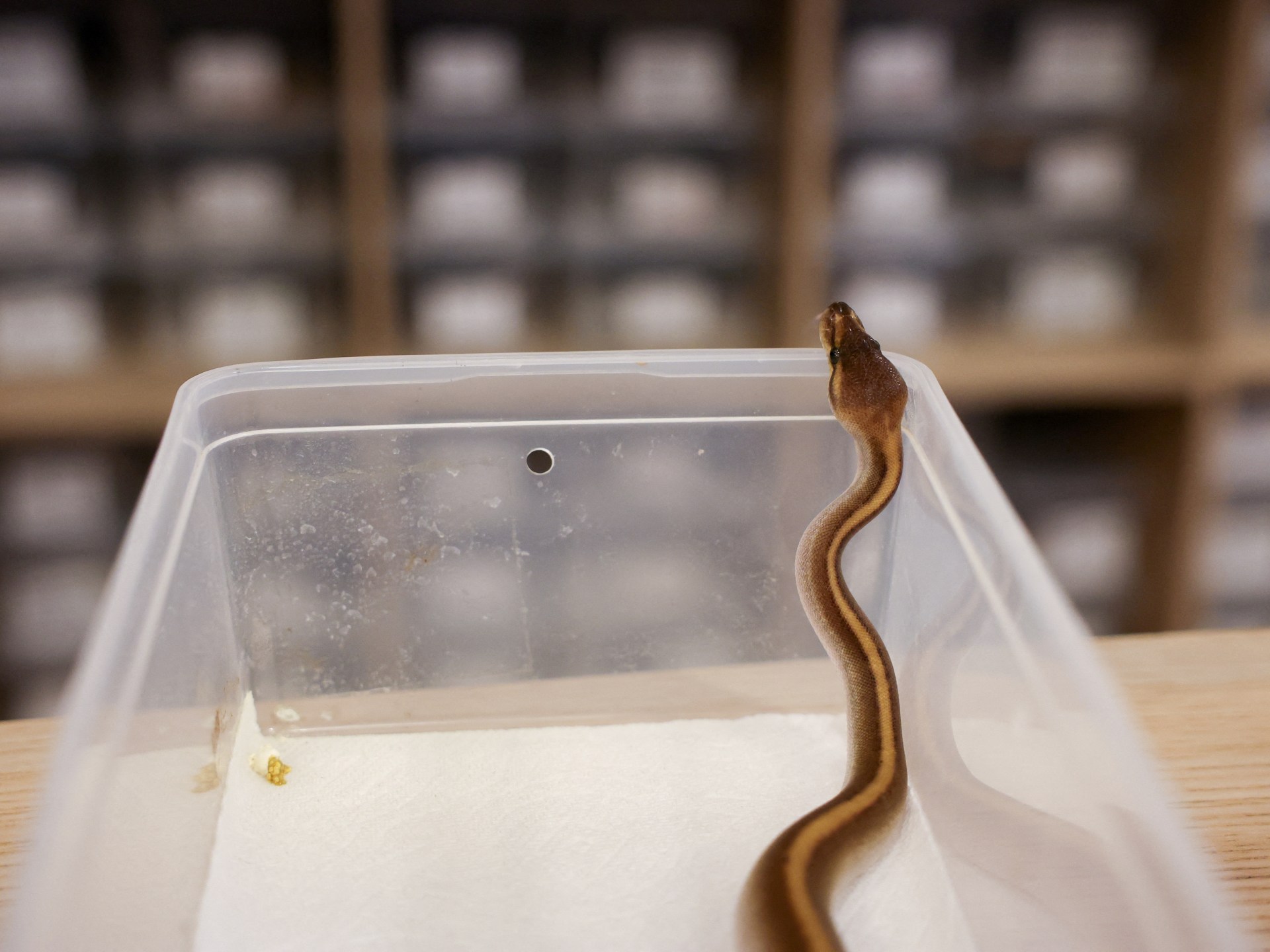
Preliminary laboratory tests suggest that messenger RNA technology, first used in COVID-19 vaccines, may help prevent muscle damage caused by snake bites.
Researchers from the University of Reading in England explained that the same mRNA technology used in coronavirus vaccines could help prevent muscle damage in snake bite victims and the associated effects that persist even after treatment.
Current antivenoms are effective in stopping the venom in the bloodstream, but they have difficulty reaching damaged muscle tissue around the site of the bite.
The researchers used tiny fat particles to encapsulate messenger RNA molecules in order to produce protective antibodies against the muscle-destroying venom secreted by the pit viper, which lives in Central and South America.
The researchers noted in the journal Trends in Biotechnology that in laboratory experiments on human muscle cells, protective antibodies appeared within 12 to 24 hours after injection of fat molecules carrying messenger RNA.
In mice, a single injection of mRNA protected muscle tissue from damage caused by the toxin when given 48 hours before exposure to the toxin, and the vaccine also preserved muscle structure integrity.
Researchers have yet to develop a version of the treatment that can be given after exposure to the toxin, rather than before. However, they said their approach could work alongside traditional antivenoms.
The researchers added that antibodies transmitted via messenger RNA can protect local tissues that antitoxins cannot reach, in addition to neutralizing toxins in the blood circulation.