

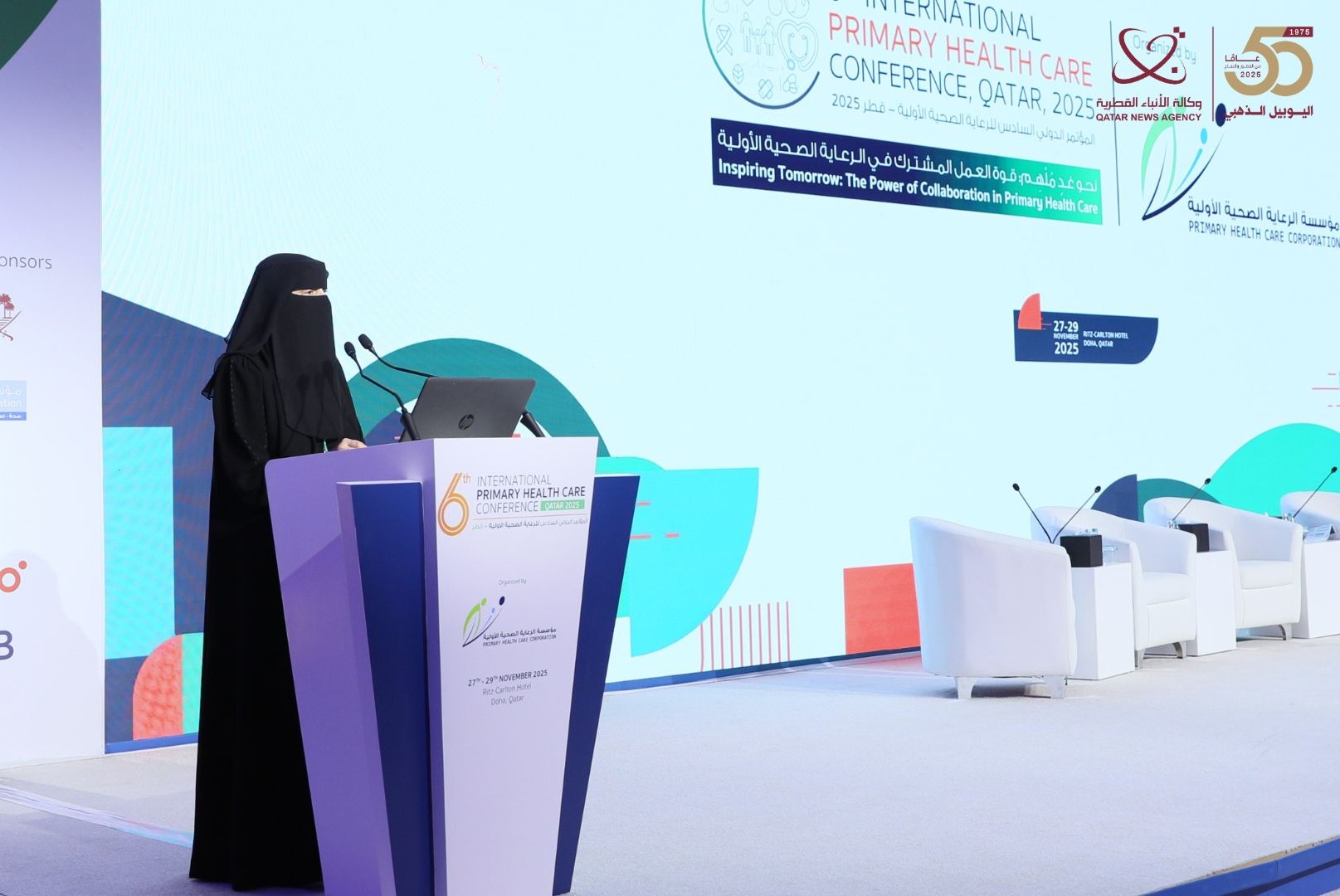
The Sixth International Conference on Primary Health Care – Qatar 2025 emphasized the importance of enhancing the research skills of clinical doctors (practitioners) and decision makers, and providing the necessary resources to the Primary Health Care Corporation to support health planning, policies and prevention.
At the conclusion of its activities on Saturday evening, the conference also stressed the importance of establishing comprehensive support for lifestyle, obesity, and self-management through organized digital programs, dealing with obesity as a chronic disease that requires psychological and social care, and the necessity of developing a multidisciplinary workforce through partnerships between academic institutions and the health sector to enhance empowerment and achieve the goals of Qatar Vision 2030, as well as enhancing employee well-being and mental health and providing a safe and supportive work environment to prevent job burnout, in addition to enhancing the mental health of adolescents through early detection, and establishing clear referral paths within a national policy. All inclusive.
Among its recommendations, which were followed in the closing session by Dr. Maryam Ali Abdel Malik, Director General of the Primary Health Care Corporation and President of the Conference, the conference called for developing national policies to regulate complementary medicine and integrate it into the health care system in a safe and sustainable manner, and to expand digital health services by supporting health information exchange systems and patient applications and accelerating services, as well as enhancing the integration of artificial intelligence technologies into the electronic medical record while protecting privacy and clinical responsibility, and also enhancing drug safety and unifying procedures followed at the health system level.
During the closing session, Dr. Maryam Ali Abdel Malik delivered a speech in which she expressed her pride in the qualitative successes achieved by the sixth edition, and indicated that teamwork and the spirit of partnership were among the most prominent factors in this success in terms of organization and results.
She pointed out that the three days of the conference witnessed scientific sessions and interactive discussions, which addressed the themes of innovation, health transformation, prevention and enhancing human health, with the participation of experts from various countries of the world.
She stressed that the conference was able this year to produce important scientific outputs that will have a direct impact on strengthening the primary health care system in Qatar and supporting future development plans, adding that the work under the conference slogan actually embodied the value of cooperation between health institutions and cadres to achieve a healthier and more sustainable future.
Qatar’s firm commitment to developing the health sector
She stressed the importance of these recommendations as they are a summary of 3 days of rich scientific discussions, and represent a road map for developing the primary health care system and enhancing the quality of services, and contributing to enhancing the process of innovation and raising the quality of health care provided to society.
At the conclusion of her speech, she expressed her deep thanks to all the participating experts, speakers, and local and international health bodies, praising their presence and scientific contributions that enriched the dialogue and pushed towards applicable future visions.
The sixth edition of this conference was held under the slogan “Towards an Inspiring Tomorrow: Joint Workforce in Primary Health Care,” which embodies Qatar’s firm commitment to developing the health sector, based on a national vision that puts people at the heart of development. The conference also witnessed a wide participation estimated at about a thousand experts, doctors, and specialists from several countries, making it one of the most prominent scientific gatherings in the region, and an important platform for exchanging experiences and knowledge, as it reviewed in this context over the course of its days a wide range of advanced topics in the field of primary health care, through discussion sessions. Workshops presented by a group of international speakers and experts also gave researchers the opportunity to present their research and present the results of recent studies that can be applied in developing primary care services inside and outside Qatar.
On the sidelines of the conference, which targeted doctors, nurses, pharmacists, laboratory technicians and other workers in the health care system, medical students and those interested in developing their scientific and practical skills, a specialized exhibition was held during which the latest medical innovations and health technologies were presented by many relevant local and international institutions.