

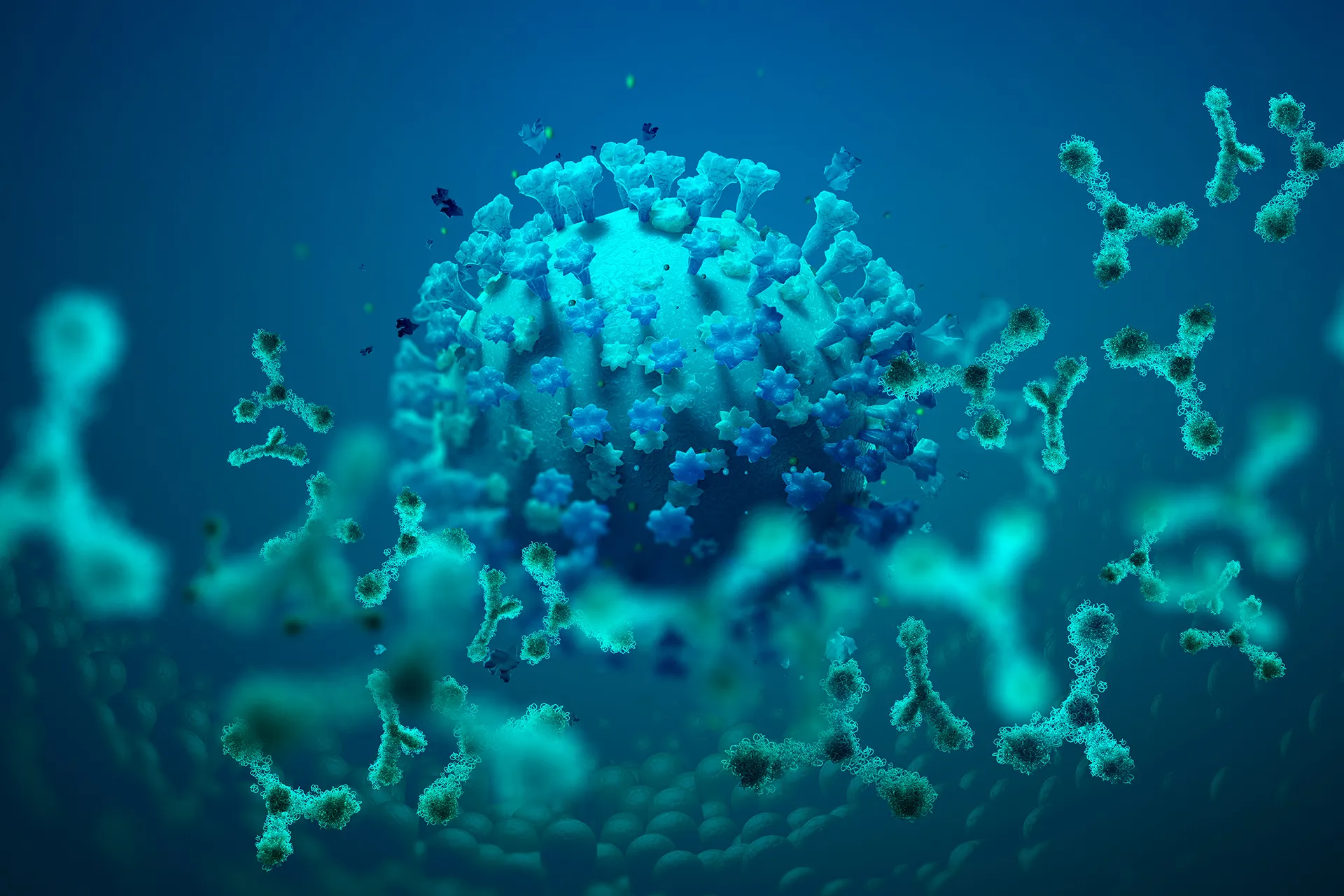
A recent study has explained the complex relationship between having an autoimmune disease and an increased risk of developing lymphoma later, in a discovery that researchers consider an important first step towards developing preventive strategies and more accurate treatments for patients.
How does the immune system work?
The immune system is designed to protect the body from viruses and bacteria, but in cases of autoimmune diseases it turns on the body’s own cells and attacks them, as happens in diseases such as lupus, rheumatoid arthritis, Hashimoto’s, Sjögren’s, and psoriasis.
The immune system depends on two main types of white blood cells: B cells, which produce antibodies to recognize foreign objects, and T cells, which regulate the immune response and support or inhibit the activity of other cells. In the normal state, this cooperation works with extreme precision to ensure the protection of the body without harming it.
When defense turns into danger
The study – conducted at the University of Oslo – was published in the journal Nature Communications last February, and provided a new explanation for this connection, which has remained mysterious for years.
The results showed that the defect begins when the interaction between B and T cells becomes excessive and unregulated, so the cells enter a state of continuous activation.
Professor Bjarne Bogen from the University of Oslo, one of the researchers, says in the study statement that this abnormal activation initially leads to autoimmune diseases, but over time it may contribute to the development of lymphoma.
Two signals drive the pathological course
Researchers have identified two main signals behind this imbalance. The first occurs when B cells mistakenly recognize body components as foreign bodies and begin partial activation.
The second signal occurs when T cells recognize part of the antibodies produced by B cells, which doubles their activity.
Under normal conditions, regulatory T cells control this reaction and maintain it within safe limits, but in some cases this mechanism fails, and the activation turns into a chronic and uncontrolled state.
From immune dysfunction to cancerous transformation
The study shows that chronic activation of immune cells does not come without a cost. As cells continue to divide, the possibility of dangerous genetic errors increases, and over time, B and T cells may turn into cancer cells.
Thus, the immune response that begins as an autoimmune disease may become a major factor in the development of lymphoma, which explains the link that has long puzzled scientists.
A new horizon for treatment and prevention
This discovery provides a clear biological explanation for the relationship between immune diseases and lymphoma, and opens the door to the development of therapeutic approaches targeting the early stages of immune dysfunction.
Bogen points out that understanding this mechanism may enable the disruption of harmful immune activation before it worsens, which may help reduce the risk of cancer in patients, and perhaps stop the progression of the disease before it reaches its dangerous stages.
The risk exists but is limited
On the other hand, Dr. Hossam El-Deeb, a consultant in rheumatology and immunology, explains that the risk – although it exists – does not necessarily mean that all autoimmune patients will develop lymphoma.
He points out that Sjögren’s disease is most closely associated with an increased risk, while the rates remain lower in other diseases such as lupus, rheumatoid arthritis, psoriasis, and Hashimoto’s disease.
He also confirms that there is not yet a specific preventive protocol for these tumors, due to their low incidence rates.
Follow-up and lifestyle
Doctors stress the importance of regular medical follow-up for patients with autoimmunity, because of its role in early detection of any abnormal changes.
They also advise patients to follow a healthy lifestyle that includes balanced nutrition, getting enough sleep, and avoiding stress and anxiety, as this has a role in reducing disease activity and reducing its complications.
At the heart of this scientific discovery stands a simple human truth: that the device that was created to protect us may, under certain circumstances, turn into a source of danger. Between this delicate balance, hope remains pinned on science for a deeper understanding, alleviating anxiety for patients, and giving them a chance for a safer life in the face of a disease that may begin silently.