

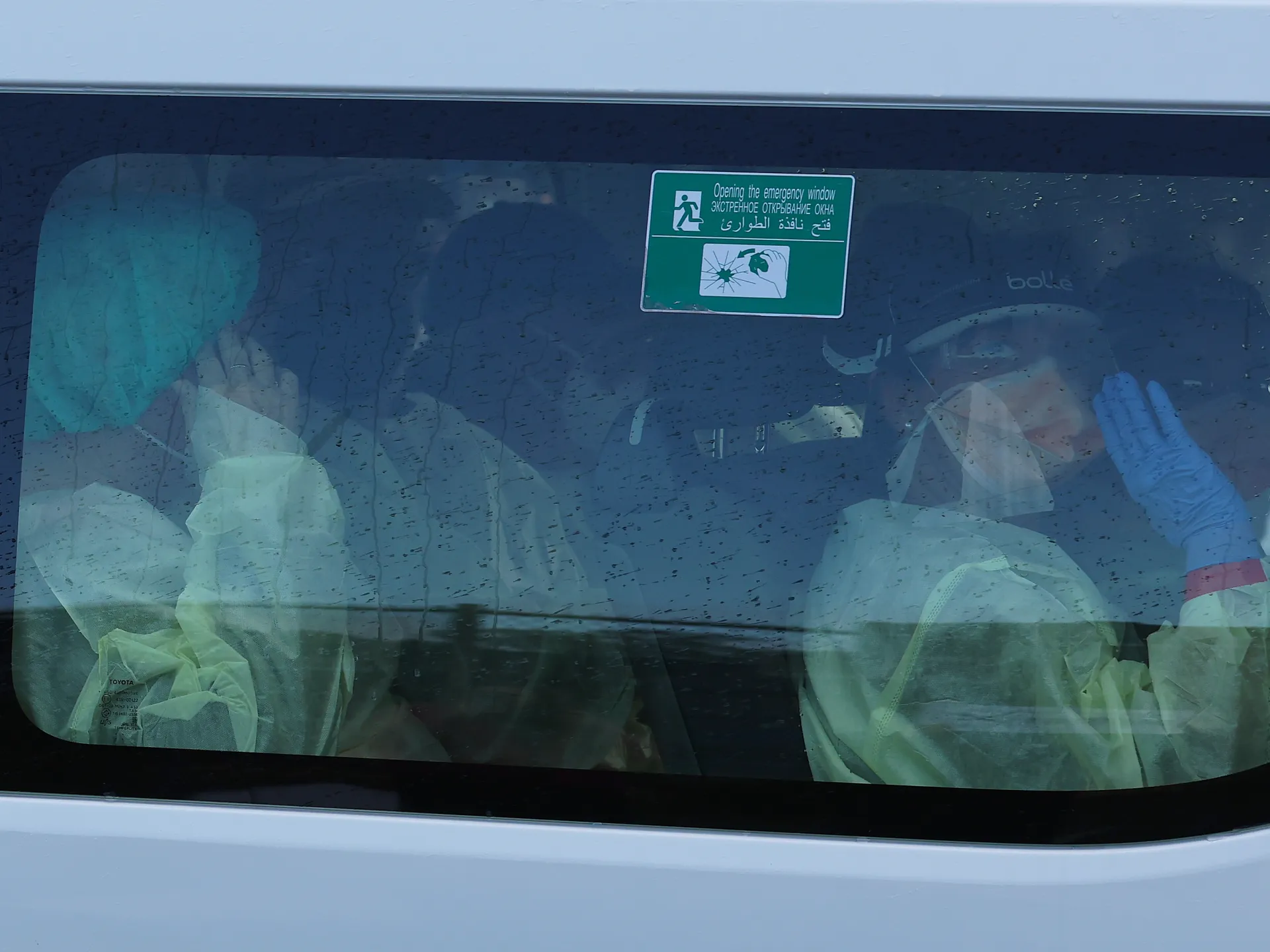
Although experts have confirmed that the risk of the global spread of the Hanta virus is still limited, images of infections and circulating news bring back feelings of anxiety and uncertainty to people around the world. This fear often stems from the difficulty of understanding the nature of the virus or predicting the extent of its spread, so fear of the Hanta virus has become a topic of interest to specialists in the field of psychological and social health.
The German magazine “Der Spiegel” interviewed social psychologist Judith Baltzukat and obtained answers from her about the reason for fear of the virus and how to overcome the anxiety resulting from its news.
- 1- The Hanta virus is very different from the Corona virus, and experts do not expect it to spread globally. However, many people fear a second pandemic. Why?
This may be due to the presence of similarities between the outbreak of the Hanta virus and the beginning of the outbreak of the Corona virus. At the beginning, the Corona virus seemed to be far away, as it originated from China, and at that time there was talk of a disease affecting the lungs, and the World Health Organization did not initially recommend any special measures. Today we once again see people wearing protective clothing and masks, and these images may raise anxiety or awaken fears that people thought they had overcome.
- 2- Is there a kind of “collective memory of the pandemic” being evoked now?
This topic is subject to scientific controversy, but every person over the age of 10 or 11 can remember the Corona pandemic, and each of us has a touching story to tell. We have seen what the virus has done to us, to our friends, to our relatives, and to society as a whole.
- 3- Is the fear of a new pandemic irrational?
Sometimes fear takes irrational paths, which makes it difficult to control, but fear at its core is useful, as it acts as a counselor that warns us of dangers. Fear is a general and vague feeling, while apprehension is linked to something specific. Therefore, in the case of the Hantavirus, it is better to talk about apprehension rather than fear, because fear helps us direct our attention towards the potential threat so that we can confront it, while fear and apprehension are closely linked to a loss of a sense of control, and fear of the Hantavirus is a fear of something unseen.
- 4- Why is everyone afraid of the Hanta virus?
This is related to a personality trait called “neuroticism,” and the person with this personality always feels tension and negative emotions. People with high neuroticism feel negative emotions such as tension, self-doubt, and fear to a greater extent, and they may collapse quickly under pressure.
- 5- How does this happen?
We learn from others and from what things we fear. Feelings of anger, sadness, and bad moods are easily transmitted between people. Feelings are often transmitted in very subtle ways. Primitive emotional contagion occurs automatically without us noticing that we have been affected by the feelings of others. Negative emotions are usually transmitted more easily than positive ones.
- 6- What affects people’s mood more: a specialist who says that the Hantavirus does not pose a major danger, or news of a new infection or death from the virus?
This varies from person to person, and the way information is presented plays an important role. People prefer concrete and visually clear information, but scientists often speak in very abstract language. If we listen to a virologist and only understand half of what he says, we may feel anxious, even if this scientist is trying to reassure us.
- 7- How can we avoid infection with fear of the Hanta virus?
We can protect ourselves from negative emotional contagion by recognizing that other people’s fear may affect us negatively. It is also preferable not to over-follow Hantavirus news on news sites and social media, as constantly browsing worrying news causes stress, psychological and physical exhaustion, and fear. It is also useful to talk about concerns with a friend, life partner, or colleague and discuss the arguments for and against the possibility of a new pandemic, as this gives a greater sense of security.