

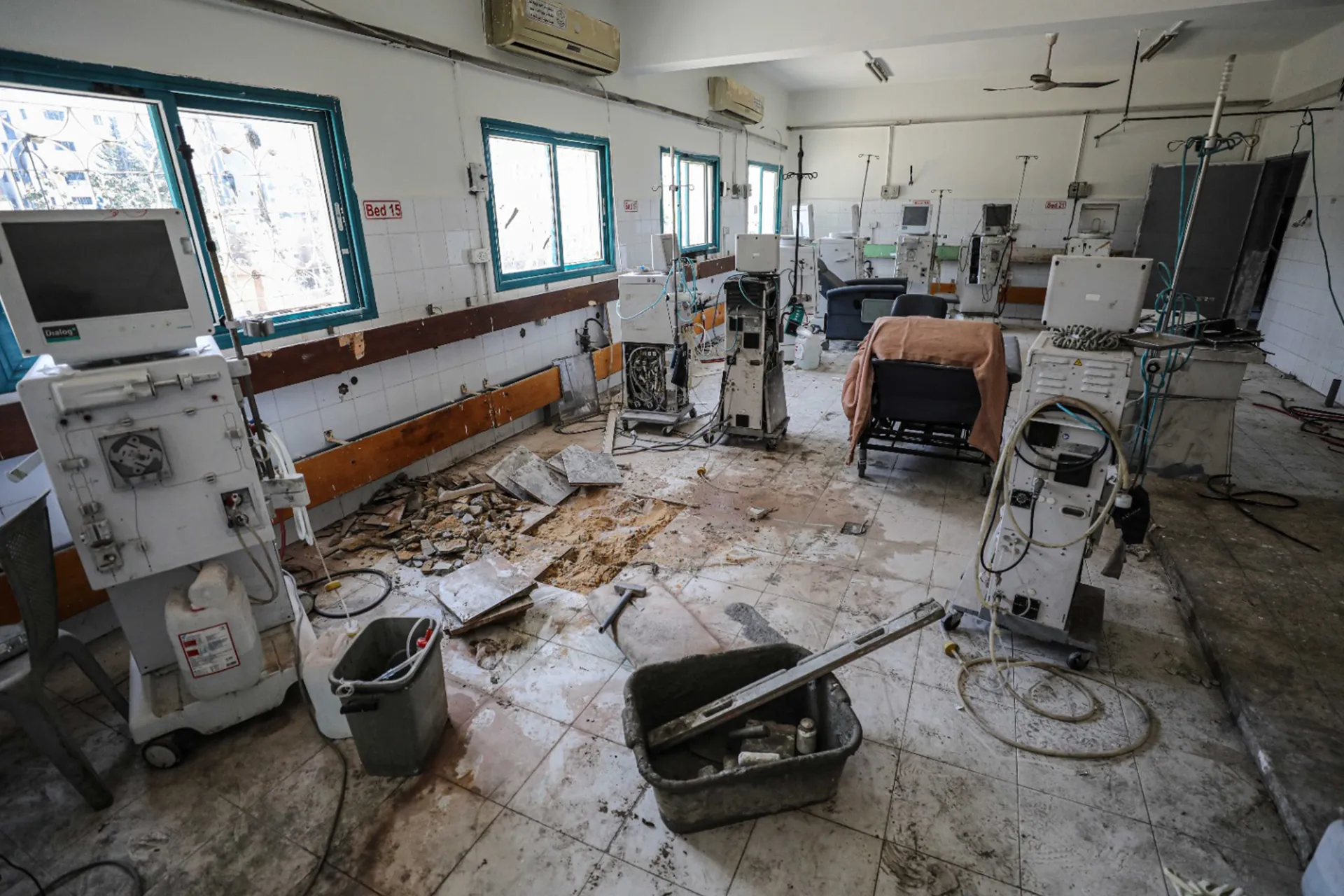
Gaza- While the Israeli occupation army continues its siege of the Gaza Strip, the health sector is suffering from a severe and increasing shortage of medicines and medical supplies, causing deaths among Palestinians.
Contrary to Israeli data about the introduction of tons of medicines, sources in the Ministry of Health in Gaza reveal – to Al Jazeera Net – in numbers the extent of the shortage of medicines, the nature of the effective types, and the effects of the lack of types of medicines, stressing that the medical system is still unable to meet the minimum escalating need.
The Israeli army announced the entry of hundreds of trucks loaded with medical equipment, which it described as “modern and advanced,” for the field hospital affiliated with the International Committee of the Red Cross.
The army said that the shipment includes artificial respirators, treatment rooms, generators, medicines, tents and dozens of beds, claiming that it will “bring a significant improvement” in emergency, care and maternity services.
Misleading advertisement
In response to the IDF’s announcement, the Gaza Ministry of Health said the Israeli narrative was “misleading.”
The Ministry’s Director General, Mounir Al-Barsh, told Al Jazeera Net that none of the aforementioned equipment entered any government facility, nor was it delivered to the official health system, which receives the overwhelming majority of the wounded and sick.
He added that everything that was brought in was allocated to the field hospital and its stores only, without anything reaching the operating rooms, intensive care, emergency care, or children’s nurseries.
He describes the portrayal of the shipment as support for the health sector as “an attempt to beautify a catastrophic reality,” noting that hospitals operating in Gaza “operate at minimum capacity ceilings” and lack the most basic supplies.
The health sector in Gaza, Al-Bersh says, does not need flowery statements, but rather real, fair and comprehensive access to life-saving supplies, before new names are added to the lists of victims.
50% shortage of medicines
In turn, the Ministry’s Director General of Pharmacy, Thikri Abu Qamar, confirmed that the numbers provided by the occupation “create a false impression of the abundance of medicine.”
He added that most of what comes in are simple solutions and medications that do not cover the actual need. He revealed – to Al Jazeera Net – that the pharmaceutical shortage is approximately 50%, while the shortage of medical consumables reaches about 60%, at a time when the stock of laboratory materials decreased to a level that caused the cessation of many basic tests.
He also points out that many of the items included in the lists of need – prepared by the Ministry in cooperation with the World Health Organization – do not obtain the occupation’s approval to enter, including medications for chronic diseases such as hypertension, diabetes, thalassemia, glandular diseases, and rheumatism, in addition to the continued ban on anesthesia, cancer, and vaccinations, and the complexity of the conditions for storing and monitoring sensitive medications.
The shortage also extends to basic supplies, such as gauze, syringes, platinum, and surgical adhesives, as well as spare parts for devices, generators, and the fuel needed to operate them. As this shortage continues, human losses have become more apparent, according to the Palestinian official.
Deaths and waiting lines
For his part, Director of Information at the Ministry of Health, Zaher Al-Wahidi, says that the lack of medicine has caused the death of about 100 patients, while more than 20,000 are waiting for their turn on medical referral lists for treatment outside the Gaza Strip.
Al-Wahidi told Al-Jazeera Net that, “Despite the occupation’s pledge in the ceasefire agreement to allow the exit of 50 patients per day, the actual rate did not exceed 11 patients on the best days, which led to the death of 1,581 patients due to their inability to exit or receive treatment inside Gaza.”
While the occupation continues to promote the pumping of medical aid into the Gaza Strip, this is nothing more than media hype that does not change anything in an increasingly harsh reality, according to the information director.
This medication shortage, lack of equipment, and loss of medical supplies, as documented by Dhikri Abu Qamar, do not remain mere numbers on paper, but rather their tragic effects are directly reflected in the lives of people in Gaza.
Hundreds of oncology and dialysis patients died, while the number of dialysis patients decreased from 1,100 to 670 patients, meaning the loss of about 41% of them, as a result of medication deficiency or the inability of many to access treatment during the genocide.
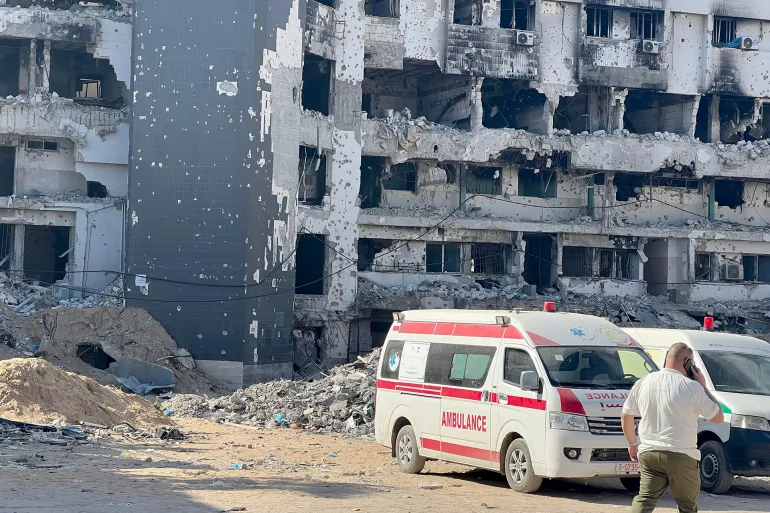
This is what the genocide left behind
In a previous statement to Al Jazeera Net, Undersecretary of the Ministry of Health Maher Shamiya said that the genocide war put 18 out of 38 hospitals completely out of service, while the rest of the facilities operate within a partial scope in parallel with the collapse of clinical capacity to critical levels.
However, the heaviest loss was human; Gaza lost 1,701 medical personnel as martyrs and 363 detainees, and about 700 doctors left the Strip during the war, a large number of whom had specific specialties.
Shamiya pointed out that the medical devices sector has suffered an almost complete collapse. There are no MRI machines left in Gaza, and only 6 out of 17 computed tomography (CT) machines remain, and they are at risk of stopping due to a lack of spare parts.
As for traditional radiology machines, their number decreased to 23 out of 75, while the number of dialysis machines decreased to only 93 out of 170.
As for the ambulance fleet belonging to the various sectors in the Gaza governorates, it lost more than half of its 200 vehicles, between destruction and confiscation.
At the laboratory level, the percentage of destroyed equipment reached 48.1%, including the public health laboratory responsible for examining food, water, and medicines, making the ability to control epidemics almost non-existent.